India's Concerns About Pakistani Military Leadership
India's Concerns About Pakistani Military Leadership
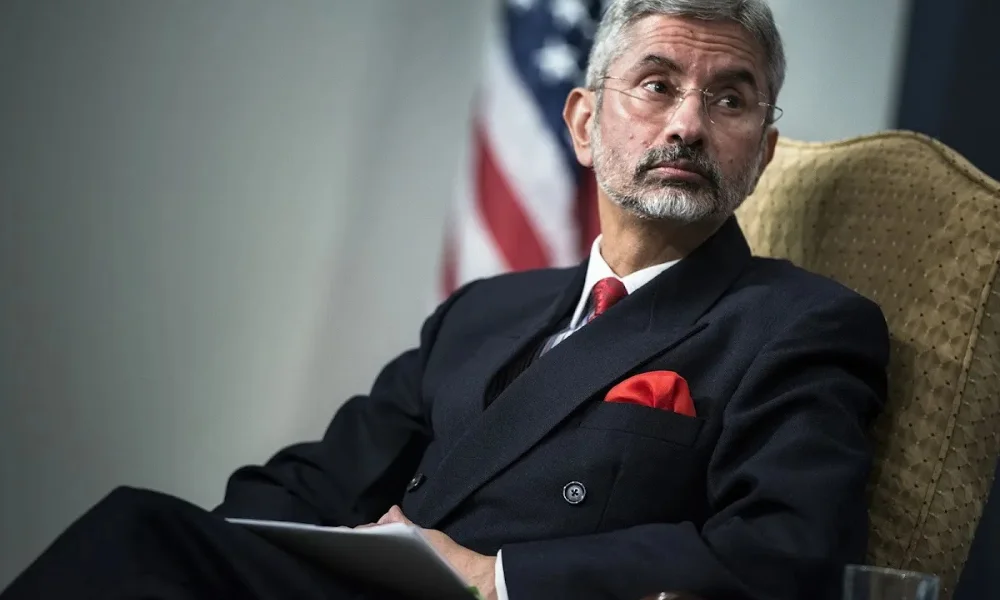
External Affairs Minister S. Jaishankar's recent comments on Pakistan's military leadership have drawn significant attention in strategic and diplomatic circles. Speaking at the Hindustan Times Leadership Summit 2025 in New Delhi, he drew a sharp comparison between how people often differentiate between “good” and “bad” terrorists and how the quality of military leadership can also vary. By referring to Pakistan's Army chief Asim Munir in this context, Jaishankar underlined that India views the Pakistani military establishment as a central source of many of its persistent challenges, particularly in the realm of security and cross-border tensions.
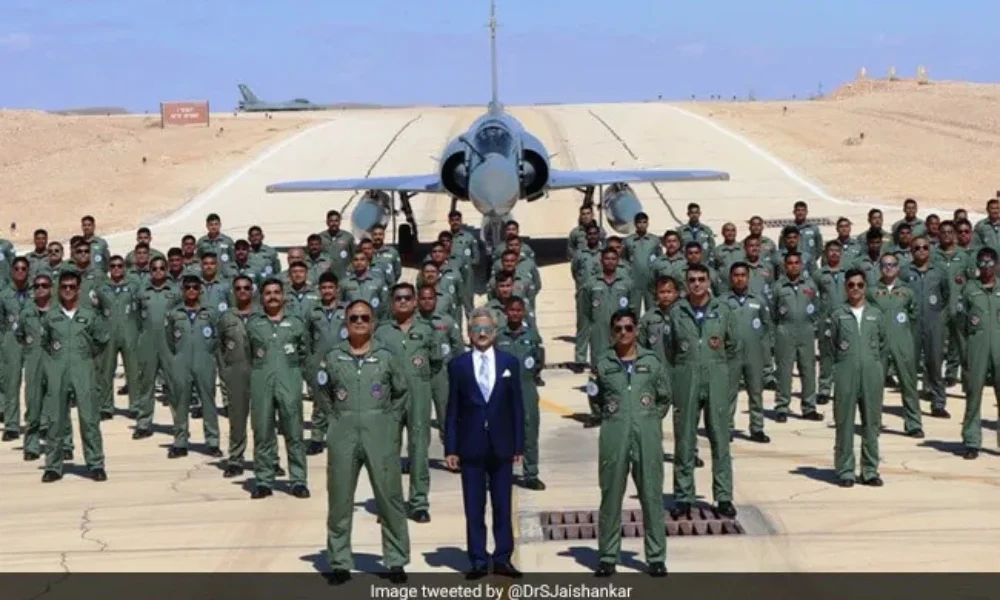
Jaishankar's remarks come at a time when India-Pakistan relations remain strained, and any statement from a senior Indian minister naturally becomes a point of intense discussion. He emphasized that while the Pakistani military continues to play a decisive role in shaping Pakistan's posture towards India, New Delhi must avoid becoming overly fixated on its western neighbour. According to him, the difference in capabilities, global reputation and long-term trajectory between the two countries is already evident, making it unnecessary for India to constantly measure itself against Pakistan in every domain.
Jaishankar's Remarks at HT Leadership Summit 2025
At the Hindustan Times Leadership Summit 2025, often seen as a platform where leading policymakers outline key positions and signal future directions, Jaishankar's comments carried the weight of official thinking in New Delhi. He used clear and direct language to underline how India perceives the Pakistani Army's role in bilateral tensions. The remark that “many of our problems emanate from there” was a pointed reference to the long-standing concerns over cross-border terrorism, proxy conflicts and the influence of the military over Pakistan's political and security decisions.
At the same time, he cautioned against what he described as an “over obsession” with Pakistan. Rather than allowing itself to be diplomatically boxed into a corner, India, he suggested, should focus on its own growth story, capabilities and expanding partnerships. By framing the issue in this manner, Jaishankar positioned India as a country that is aware of regional threats but is not willing to let them dominate its larger strategic agenda or define its identity on the global stage.
Pakistani Military Establishment and India's Security Challenges
By directly highlighting Pakistan's Army chief Asim Munir, Jaishankar put the spotlight on the Pakistani military's central role in shaping policies that affect India's security. For decades, India has maintained that cross-border activities, support for non-state actors and instability along the Line of Control and the international border are closely linked to decisions taken within the Pakistani military establishment. His remarks reinforce that this fundamental assessment has not changed and remains a key factor in how India frames its Pakistan policy.
At the same time, his choice of words suggested that India does not see merit in endlessly debating the internal dynamics of Pakistan's leadership. Instead, the focus is on managing the consequences of those decisions in a firm yet measured manner. By stating that the gap in reputation and capability between the two countries speaks for itself, Jaishankar presented India as a rising power that prefers to invest energy in its own development, rather than in constant comparisons with a neighbour frequently battling political and economic crises.
h3 style="margin: 0 0 15px 0; font-size: 16px; color: #222222; font-weight: 600; border-left: 4px solid #ff6200; padding-left: 10px; text-align: left;">India's Rising Global Profile and Strategic PrioritiesAnother key theme in Jaishankar's intervention at the summit was India's emergence as a major global player. He described India as a “big country, rising, and expected to occupy more important place,” underlining the narrative of India as a leading voice in global affairs. This perspective shapes how New Delhi approaches both regional challenges and wider international partnerships, and it also informs how India wishes to be seen by the global community - not through the lens of traditional rivalries alone, but as a country with independent weight and influence.
For such a country, Jaishankar stressed, it is crucial that key relationships remain in good shape. This includes not only immediate neighbours but also all major powers that play a role in the evolving global order. Ensuring that these relationships are stable, productive and respectful of India's core interests is central to the country's foreign policy agenda. In this context, his comments can be seen as part of a broader effort to explain India's diplomatic choices to both domestic and international audiences, especially at a time when each major engagement is closely watched as breaking news and a significant foreign policy update.
Balancing Ties with Russia amid Putin's Delhi Visit
Jaishankar also addressed questions about Russian President Vladimir Putin's visit to India and what it signifies for New Delhi's external engagements. He underlined that for a country of India's size and ambition, it is vital that relationships with long-standing partners such as Russia remain on solid ground. The visit itself is viewed as an important diplomatic event and a latest development in India-Russia ties, reflecting ongoing cooperation in areas like defence, energy, trade and strategic coordination, even as the global environment continues to evolve rapidly.
Without going into technical details or specific agreements, Jaishankar's message was that India intends to maintain robust working ties with Moscow while also strengthening its partnerships with other key players. This approach is consistent with India's long-standing emphasis on having multiple options, diversifying its strategic engagements and avoiding overdependence on any single partner. In the context of global headlines and breaking news alerts, the Putin visit is therefore presented not as an isolated event, but as part of a carefully managed pattern in India's foreign policy.
Managing Relations with the United States and Other Major Powers
One of the key questions posed to Jaishankar at the summit was whether Putin's visit might complicate India's ongoing trade negotiations and broader engagement with the United States. His response was clear and unambiguous: he disagreed with the notion that India's ties with one major power should be seen as limiting its relationship with another. He pointed out that it is well known globally that India maintains relations with all the major countries of the world, and that this pattern of engagement is an integral part of New Delhi's strategic thinking.
Jaishankar also made it clear that no country can expect to have a “veto” or a controlling say over how India structures its relations with others. This statement was significant because it highlighted India's unwillingness to be drawn into exclusive alignments or zero-sum choices. At a time when global politics is often described in terms of blocs and hard alliances, India is signaling that it will continue to act on the basis of its own interests, whether the issue is trade talks with the United States, defence cooperation with Russia or engagement with other important partners in Asia, Europe, Africa and beyond.
Strategic Autonomy at the Core of Indian Foreign Policy
Throughout his comments, Jaishankar returned to one central idea: India must retain its “freedom of choice” in foreign policy. He explained that for a country like India, it is essential to maintain good cooperation with as many players as possible, without allowing external pressure to dictate its decisions. This approach, often described as strategic autonomy, has become a defining feature of India's global posture. It allows New Delhi to navigate complex issues, from regional security challenges to big-power rivalry, while keeping its own long-term interests at the forefront.
By linking this principle of strategic autonomy with his observations on Pakistan's military leadership and India's key relationships with Russia and the United States, Jaishankar provided a cohesive view of how New Delhi sees the world today. India is not ignoring the realities of its neighbourhood, including the role of Pakistan's Army chief Asim Munir and the issues that stem from across the border. At the same time, it is positioning itself as a confident, rising power that manages multiple major relationships, seeks balanced partnerships and insists on its right to make independent choices. In essence, his remarks at the Hindustan Times Leadership Summit 2025 offer a snapshot of India's current foreign policy thinking, framed as a clear news update on how the country intends to navigate a complex and rapidly changing international environment.
Facebook Comments






-
 Explore the upcoming Tamil film Maaman - cast, sto...
 -
 Read the ACE (2025) movie review starring Vijay Se...
 -
 Check out Maaman's 1st day box office collection a...
 -
 Explore tourist family reviews for Maaman movie –...
Popular Posts
Vote / Poll
Recent Posts



Recommended Posts

-
 Discover the best schools in Nagercoil f...
 -
 Discover the top-rated preschools in Nag...
 -
 Explore the best schools in Nagercoil th...

Comment / Reply From