Vande Mataram: A 150-Year-Old Heritage Under Discussion
Vande Mataram: A 150-Year-Old Heritage Under Discussion
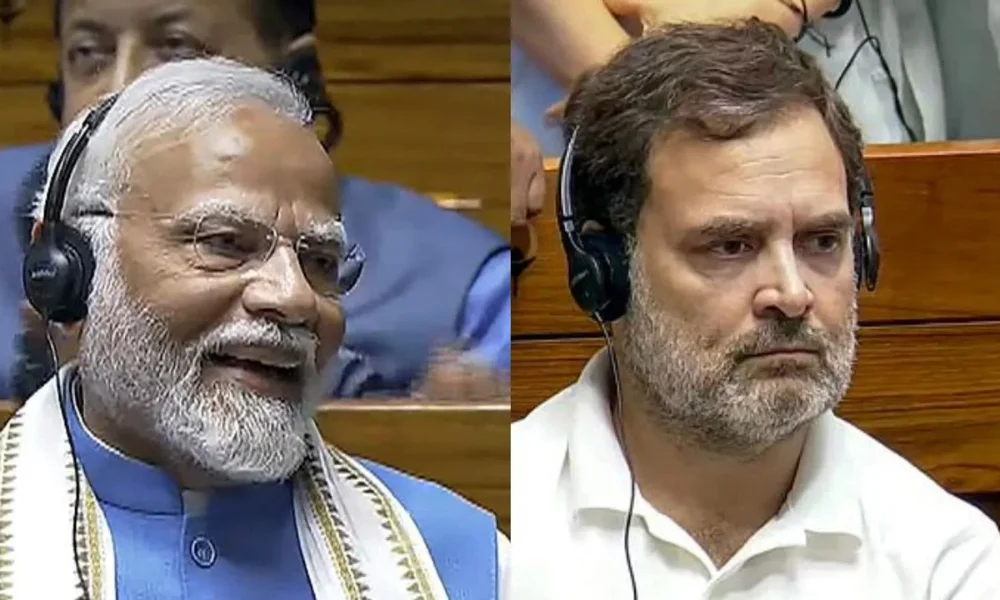
Vande Mataram has once again moved to the center of national conversation as Prime Minister Narendra Modi initiates a Lok Sabha debate to mark 150 years of the iconic composition. Written by Bankim Chandra Chatterjee in 1875, the song evolved from a literary creation into a powerful symbol of resistance during the freedom movement. Today, it returns to the spotlight not only as a historic milestone but also as a fresh flashpoint in the ongoing political contest between the Bharatiya Janata Party (BJP) and the Congress. The current discussion is framed as a tribute, yet it also doubles as a sharp exchange of accusations, interpretations, and ideological claims over the legacy of India's national symbols.
The renewed focus on Vande Mataram coincides with a wider debate about cultural heritage, national identity, and how historical decisions taken before Independence continue to shape present-day politics. As news reports and live updates from Parliament highlight the intensity of the exchanges, the controversy is no longer confined to the past. It is playing out in real time as a political narrative about who truly represents patriotism, who respects national icons, and how inclusive a national song should be in a diverse, multi-faith democracy.
Historical Roots of Vande Mataram and Its Freedom Movement Role
Bankim Chandra Chatterjee composed Vande Mataram in the late nineteenth century, at a time when anti-colonial sentiment was slowly gathering strength. The song first appeared in his novel and then gradually moved beyond literature into public life. For many freedom fighters, it became a rallying cry against British rule. Processions, meetings, and protests often echoed with the chorus of Vande Mataram, turning the piece into an emotional anchor for a generation seeking liberation. It was not just a tune but a shared language of defiance and hope, carried by volunteers, students, and leaders across regions.
Over time, the song grew into something larger than a patriotic chant. It represented the image of the motherland, depicted as a nurturing and powerful presence. The verses praised the land, its rivers, fields, and people, and for many, this poetic imagery fused seamlessly with political aspiration. As India's freedom struggle intensified, Vande Mataram was frequently treated as a symbol of unity and sacrifice, featured prominently in public gatherings even before any formal constitutional status was attached to it. This historic association is one reason the current debate over its stanzas and usage carries such emotional weight.
Why the Tune Ignited a Controversy in National Politics
The controversy is centered on the later stanzas of Vande Mataram, where the motherland is invoked through the names and imagery of Hindu goddesses such as Durga, Lakshmi, and Saraswati. While many saw this as poetic metaphor, others felt it blurred the line between a national song and a religious hymn. As India's political leadership tried to build a broad, inclusive, anti-colonial front, these religious references created unease among some Muslim members and other communities who preferred a more neutral, non-theological expression of patriotism. This tension between devotional language and inclusive nationalism remains at the heart of the present dispute.
In 1937, this unease led the Indian National Congress to formally consider how Vande Mataram should be used in national gatherings. The outcome was not a rejection of the song but a carefully framed compromise. The party decided that only the first two stanzas would be sung at official events. These verses primarily describe the beauty and bounty of the motherland and avoid direct references to particular deities. The reasoning, as recorded at the time, was that this limited version would still honor the song's emotional and historical power while reducing the possibility of alienating sections of the population in a multi-religious society.
Congress' Stance and the 1937 Compromise
The Congress leadership of that era, including Jawaharlal Nehru, viewed the decision on Vande Mataram as a delicate balancing act. The party acknowledged the song's central place in the freedom struggle and did not wish to sideline it. At the same time, it was sensitive to concerns voiced by Muslim members and leaders who felt uncomfortable with the explicitly religious content in the later verses. On the advice of cultural figures such as Rabindranath Tagore, the Congress opted to retain the song in public life but limit the portions used at official functions to the first two stanzas.
Importantly, the Congress resolution made it clear that individuals were free to sing other songs or even other parts of Vande Mataram outside formal national gatherings. The restriction applied only to what was officially adopted at Congress sessions and later at national ceremonies. From the party's perspective, this was an attempt to keep the national movement united, reassure minority communities, and still honor a cherished symbol of resistance. The present leadership of the Congress continues to frame the 1937 move as a principled effort to balance patriotism with inclusivity rather than an act of appeasement.
BJP's Rebuttal and Prime Minister Modi's Remarks
The BJP has taken a sharply critical view of the 1937 compromise and has used the 150-year anniversary to re-open the debate in Parliament and in the public sphere. Prime Minister Narendra Modi has argued that the decision to drop certain stanzas of Vande Mataram symbolized a mindset that eventually contributed to the partition of the country. In his speeches and interventions, he has described the removal of portions of the song as the “tearing apart” of a national icon, suggesting that it was a first step toward accepting a politics of division shaped by sectarian demands.
BJP leaders have also used historical correspondence and documents to question the intentions of the Congress leadership of the time. They argue that if Vande Mataram truly united freedom fighters, there was no need to edit it for fear of offending any group. In contemporary political messaging, this line of argument allows the BJP to position itself as the defender of unfiltered patriotism, while projecting the Congress as a party that compromised on national symbols under what the BJP describes as a sectarian or vote-bank approach. These claims are repeatedly amplified across news reports, political speeches, and social media updates as the debate continues.
Nehru's Viewpoint and Letters to Subhas Chandra Bose
A key element in the latest wave of controversy comes from letters written in 1937 by Jawaharlal Nehru to Subhas Chandra Bose. These letters, circulated again recently by political spokespersons, shed light on Nehru's understanding of Vande Mataram. In the correspondence, Nehru suggests that reading the song as literal goddess worship is not necessary. He views the verses as metaphorical and argues that, taken as a whole, the song is harmless and patriotic. At the same time, he acknowledges that some parts may not fit with emerging modern ideas of nationalism and that genuine concerns of communities must be addressed, even if narrow sectarian pressures should not be encouraged.
The interpretation of these letters has now become a point of dispute in itself. BJP voices claim that Nehru “maliciously” brushed aside the devotional aspect of the song, while Congress leaders argue that his position was more nuanced, seeking to protect both the song's dignity and the unity of a diverse movement. The recent resurfacing of these exchanges is shaping the latest round of televised debates, online discussions, and breaking news coverage, with each side highlighting different lines and phrases to support its political stance.
Religious Sensitivities, Inclusivity, and National Symbols
The Vande Mataram discussion is not just about one song. It touches on a larger question: how should a diverse country choose, interpret, and present its national symbols? Supporters of the original, full version of the song emphasize its historic role in uniting people against colonial rule. Critics of using all the stanzas in official spaces point to the need for religious neutrality in state functions, especially in a country where large populations do not worship the deities mentioned in the verses. This tension between cultural tradition and constitutional secularism continues to shape the debate and ensures that the issue remains a live, evolving story rather than a closed historical chapter.
For many citizens, the current controversy is also a reminder of how emotional responses to national songs and anthems can become political tools. Questions of who stands, who sings, which verses are recited, and how often they are used in public ceremonies are frequently framed as tests of patriotism. As coverage of the latest Lok Sabha debate circulates across television, digital news platforms, and social media feeds, these symbolic questions are once again being presented alongside daily political updates and commentary on governance, rights, and representation.
Congress, BJP, and the Battle to Own Patriotism
The current exchange over Vande Mataram is also a contest over political branding. The Congress argues that its 1937 stand was guided by inclusion and respect for all faiths, and that its leaders then and now have consistently honored the song. Party president Mallikarjun Kharge has pointed out what he calls a paradox: he claims that those who now project themselves as the strongest guardians of patriotism did not historically lead the freedom struggle where Vande Mataram gained its prominence. This line of argument tries to connect present-day positions with earlier political histories and freedom movement credentials.
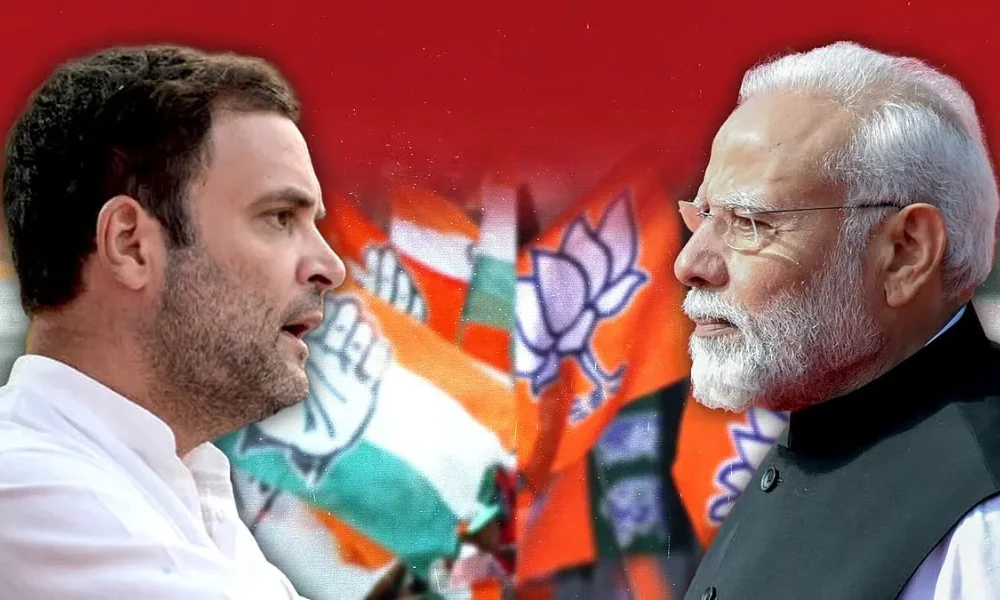
The BJP, in response, has framed the Congress stance as a long-running pattern of compromising on national pride to please specific groups. By linking the 1937 decision to the broader story of partition, BJP leaders aim to suggest that the Congress underestimated the dangers of dividing national sentiment along religious lines. Within this framework, the party presents itself as restoring what it sees as the original, undivided emotional power of Vande Mataram. As the anniversary debate unfolds, both sides are clearly using the song not just as a cultural reference but as a political marker in an ongoing competition over narrative and identity.
Why the 150-Year Milestone Matters Today
The 150-year mark offers a natural moment for reflection and reassessment. For cultural historians, the anniversary is an opportunity to revisit how Vande Mataram moved from text to tune and from novel to national space. For political actors, however, it doubles as a powerful platform to restate positions and mobilize public opinion. The Lok Sabha debate featuring the Prime Minister is part tribute and part political signal, highlighting how deeply intertwined cultural memory and electoral politics have become. The timing also ensures that every statement made in Parliament quickly travels through news alerts and trending updates, reaching audiences far beyond the chamber.
As the discussion continues, the anniversary is likely to prompt more commentary, opinion pieces, and expert analyses. Many will examine the original literary context of the song, others will revisit parliamentary records and resolutions, and some will trace how Vande Mataram has been used in films, rallies, and public ceremonies over the decades. All of these strands feed into the present news cycle, where readers and viewers look for detailed reports, balanced explanations, and the latest political reactions to understand why a 150-year-old composition still shapes the national conversation so strongly.
Facebook Comments





-
 Explore the upcoming Tamil film Maaman - cast, sto...
 -
 Read the ACE (2025) movie review starring Vijay Se...
 -
 Check out Maaman's 1st day box office collection a...
 -
 Explore tourist family reviews for Maaman movie –...
Popular Posts
Vote / Poll
Recent Posts



Recommended Posts

-
 Discover the best schools in Nagercoil f...
 -
 Discover the top-rated preschools in Nag...
 -
 Explore the best schools in Nagercoil th...

Comment / Reply From