Putin Visits India Amidst Ukraine Peace Push
Putin Visits India Amidst Ukraine Peace Push
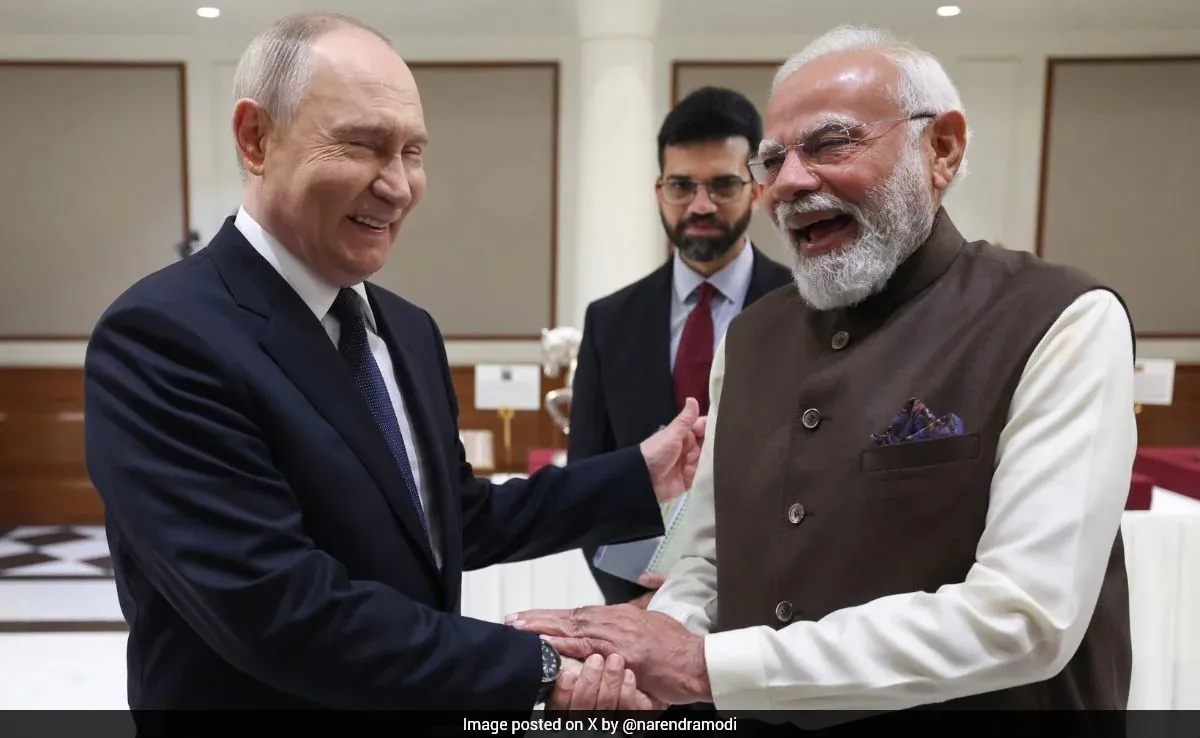
Russian President Vladimir Putin's latest visit to New Delhi has quickly emerged as a major breaking news development in global politics. It is his first trip to India since Russia launched its full-scale invasion of Ukraine almost four years ago, and it takes place at a time when Moscow faces mounting pressure to agree to a peace roadmap. The visit is not just a routine diplomatic engagement, but a carefully watched latest update in the evolving triangle of relations between India, Russia and the West, particularly the United States.
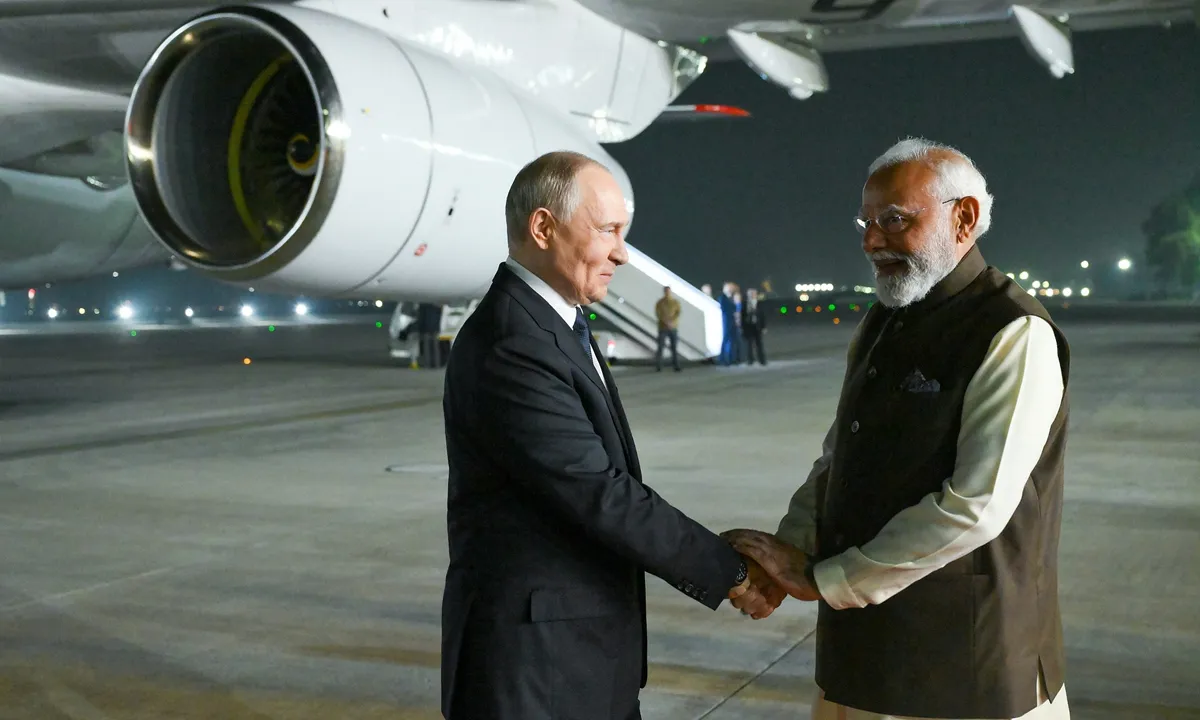
As Putin landed in New Delhi on Thursday evening, Indian Prime Minister Narendra Modi broke with standard protocol and personally received him on the tarmac. The warm handshake and familiar embrace were more than a ceremonial gesture; they served as a visual signal to the world that India continues to value its long-standing strategic partnership with Russia, even as it deepens ties with Western powers. This news report on the visit highlights how India is once again performing a difficult balancing act in a highly polarized international landscape.
Arrival in New Delhi: Optics and Symbolism
Putin's arrival in New Delhi is rich with symbolic value. It underscores that despite international criticism over the Ukraine conflict and sanctions imposed by Western nations, Russia still enjoys high-level access to key partners like India. For New Delhi, the optics are equally important. By extending a warm welcome, India signals that it will continue to pursue an independent foreign policy, guided by its own strategic and economic interests rather than external pressure.
The meeting on the very first evening between Modi and Putin at the prime minister's residence set the tone for the visit. Away from cameras, the two leaders were expected to exchange frank views on the war in Ukraine, the state of the global energy market, and the direction of the India-Russia partnership. While official statements may remain cautious, this latest development indicates that both sides see value in preserving high-level communication at a critical geopolitical juncture.
Strain in US-India Relations and Strategic Tightrope
Putin's visit does not occur in isolation. It overlaps with a period of friction between India and the United States, particularly over New Delhi's continued imports of discounted Russian crude oil. Washington has responded with increased duties on Indian goods and warnings of sanctions targeting energy trade linked to Russia. These measures have complicated India's efforts to keep stable ties with both Russia and the West, adding a layer of tension to every high-level interaction with Moscow.
For India, the challenge is to maintain strategic autonomy while avoiding a direct confrontation with any major partner. The US remains a crucial collaborator in technology, defence co-production and Indo-Pacific security, whereas Russia is still a key supplier of weapons, energy and political support in multilateral forums. This visit becomes a live update on how India intends to manage its overlapping interests in a world defined by sharper geopolitical rivalries.
India's Historical Balancing Act and Non-Aligned Legacy
Since independence in 1947, India has formally avoided becoming part of any military bloc. During the Cold War, it championed the Non-Aligned Movement, seeking to stay equidistant from both the US-led and Soviet-led camps. In practice, however, India's relationship with the Soviet Union grew particularly close from the 1960s onwards, with Moscow emerging as a major defence supplier and diplomatic backer, especially on issues relating to Pakistan and China.
After the Cold War, India diversified its partnerships, expanding economic and security ties with the United States, while retaining core defence and energy cooperation with Russia. This dual-track strategy allowed New Delhi to benefit from collaboration with both sides. However, the Ukraine conflict and the resulting sanctions regime have introduced new complexities. The current news update on Putin's visit reflects the stress on India's balancing act, as it tries to protect its long-term interests without appearing to side too strongly with one camp.
What Is Scheduled for Putin During the Visit?
During his visit, Vladimir Putin has a packed schedule that includes official ceremonial events, high-level meetings, and strategic discussions. He will first receive a formal welcome at Rashtrapati Bhavan and meet President Droupadi Murmu. After this, he will visit Raj Ghat to pay homage to Mahatma Gandhi. The most crucial part of the visit will take place at Hyderabad House, where Putin and Prime Minister Narendra Modi will hold detailed talks on defence, energy, and trade cooperation.
Ceremonial Events and High-Level Meetings
Putin's 30-hour schedule in India is densely packed with official events and strategic discussions. On Friday morning, he is slated to receive a ceremonial welcome at Rashtrapati Bhavan, the presidential residence, followed by a formal meeting with President Droupadi Murmu. This is a traditional but important step, reflecting the institutional respect accorded to visiting heads of state and government in India.
Putin is then scheduled to pay homage at Raj Ghat, the memorial dedicated to Mahatma Gandhi. This stop is now standard protocol for visiting foreign dignitaries, but it also gives leaders an opportunity to associate themselves with Gandhi's legacy of peace and nonviolence—an image that contrasts sharply with the ongoing war in Ukraine. The symbolism is not lost on observers following this breaking news report.
Hyderabad House Talks and Business Engagements
The core of the visit lies in the talks at Hyderabad House, where Modi and Putin are expected to review the full spectrum of the India-Russia partnership. Defence cooperation, energy trade, nuclear collaboration and connectivity projects are likely to dominate the agenda. Officials may also explore new mechanisms for settling trade in national currencies and reducing exposure to Western financial sanctions, a crucial issue for both sides.
Following the leadership-level discussions, both sides are expected to interact with top business representatives. Russian officials from the defence and energy sectors, including state arms exporters and oil companies, form a key part of Putin's delegation. Their presence reveals a strong focus on practical outcomes, not just political signalling. The visit is being closely monitored as a latest development in India's trade and investment landscape, especially in sectors where Russia seeks to deepen long-term engagement.
Why Is the Timing of the Visit Significant?
The timing of Putin's visit is significant because it coincides with the 25th anniversary of the India-Russia strategic partnership, making it a symbolic moment to reaffirm long-standing ties. It also comes after disruptions caused by Russia's invasion of Ukraine, which led to postponed summits and strained global relations. With increasing geopolitical tensions, Western sanctions, and shifts in global power dynamics, the visit allows both countries to show that their partnership remains active and resilient. For Russia, it highlights that Moscow is not isolated, while for India, it reinforces its strategy of maintaining balanced relations with major global powers without aligning exclusively with any side.
Strategic Partnership Milestone and Interrupted Summits
This visit marks the 25th anniversary of the formal India-Russia strategic partnership, launched during Putin's first year in top office. For years, annual summits alternated between the two countries, cementing a habit of regular top-level engagement. That routine, however, was disrupted in 2022 after Russia's full-scale invasion of Ukraine. The scheduled summit was postponed, reflecting the complications introduced by the conflict and the sanctions regime that followed.
Putin's absence from the 2023 G20 summit in New Delhi, partly due to concerns surrounding the International Criminal Court warrant, further added to speculation about the future of these summits. When Modi visited Russia in 2024, it signalled a desire to restore normalcy. Putin's current trip to India therefore becomes a key update in the continuity of this long-term strategic framework and an attempt to show that the partnership is still active despite global headwinds.
Ukraine Conflict, Global Image and Domestic Messaging
The timing is also important for Russia's domestic and international messaging. At home, Putin can present the visit as proof that Russia is not isolated and still maintains strong ties with major democracies. Globally, the trip serves as a reminder that despite Western sanctions, Moscow retains influential partners in Asia. For India, meeting Putin at this moment allows it to position itself as a country that can engage with all sides, potentially offering quiet channels of communication on issues such as the Ukraine peace process.
Observers see this as a significant news development because it intersects with parallel diplomatic efforts aimed at exploring off-ramps from the Ukraine conflict. Even if India does not act as a formal mediator, its interactions with both Kyiv's allies and Moscow give it a unique vantage point in shaping conversations around future peace proposals.
What Is on the Agenda for India and Russia?
The agenda for India and Russia during Putin's visit mainly focuses on strengthening defence, energy, and trade cooperation. Both sides are expected to discuss the purchase and maintenance of Russian defence equipment, including missile systems and aircraft, as well as ways to deepen collaboration in joint production and technology sharing. Energy will be another key pillar, with talks likely on long-term arrangements for oil and gas supplies, payment mechanisms, and investment in refining and infrastructure. They are also set to explore options to diversify trade beyond oil, including pharmaceuticals, machinery, and agriculture, while finding ways to reduce the growing trade imbalance. Overall, the agenda aims to protect core strategic interests on both sides amid global sanctions, shifting alliances, and the ongoing Ukraine conflict.
Defence, Energy and Technology Cooperation
Defence cooperation remains a pillar of India-Russia ties. Analysts expect Putin to push for fresh agreements on missile systems, fighter jets and maintenance packages for equipment already in Indian service. India, while diversifying its defence imports, still relies on Russian-origin platforms for a substantial share of its arsenal. Talks may therefore focus on ensuring reliable supplies of spares, local production options and protection from secondary sanctions that could disrupt future deliveries.
Energy is another core area. Discounted Russian crude has significantly reshaped India-Russia trade figures, vaulting Russia into a leading position among India's oil suppliers. But recent tariff hikes and sanctions threats from the United States are challenging this model. The two sides may explore alternative routes for energy payments, long-term supply contracts and investment in petrochemical and gas infrastructure. These deliberations form an essential part of the latest report on how both countries intend to manage risk in a sanctions-heavy environment.
Is Trump an Overshadowing Factor in the Visit?
The policies of US President Donald Trump, in his second term, loom large over the visit. After initially tolerating India's purchase of Russian oil as a stabilizing factor in global energy markets, Washington has shifted to a more confrontational approach. Higher tariffs on Indian exports and sanctions on key Russian energy firms have raised the cost of India's continued engagement with Russian crude. This places New Delhi in a difficult spot, where each decision on oil imports has wider diplomatic implications.
For India, the question is not only about short-term price advantages but also about long-term access to markets in the US and Europe. Every breaking news update on tariffs, sanctions and waiver policies is closely studied in New Delhi. Putin's visit, therefore, is taking place under the shadow of this evolving US posture, and any joint statements or energy-related announcements will be examined for hints on how India plans to navigate these pressures.
India-Russia Trade Prospects and Labour Links
India-Russia trade has expanded rapidly since 2022, rising from about $10 billion to nearly $69 billion, driven largely by crude oil. However, the trade remains heavily one-sided, with Indian exports—mainly pharmaceuticals, machinery and chemicals—accounting for only a small portion of the total. As oil volumes face potential reduction due to sanctions pressures and policy shifts, both sides are forced to rethink the sustainability of their current trade pattern.
One emerging area of cooperation is labour migration. Russia is projected to face a multi-million worker shortage by 2030, and Indian workers could help fill that gap in sectors such as construction, services and industry. Carefully designed labour mobility agreements, skill recognition frameworks and social protection mechanisms could transform this idea into a new growth driver for bilateral ties. As a latest development report, this angle shows how the relationship is adapting beyond traditional defence and energy pillars.
At the same time, India is negotiating trade and economic agreements with the US, the European Union and the Russia-led Eurasian Economic Union. Each negotiation has its own sensitivity, and any move favouring one partner can be perceived as a signal by others. This makes the Putin-Modi summit a high-stakes moment in New Delhi's broader strategy to remain a multi-aligned power in a fragmented world. The outcome of the visit will be watched closely by analysts looking for the next breaking news shift in global alignments related to the Ukraine peace push and beyond.