Delhi MCD Bypoll Results 2025: BJP Leads 7 of 12 Wards, AAP Wins 3 in Key Delhi Test
Delhi MCD Bypoll Results 2025: BJP Leads 7 of 12 Wards, AAP Wins 3 in Key Delhi Test
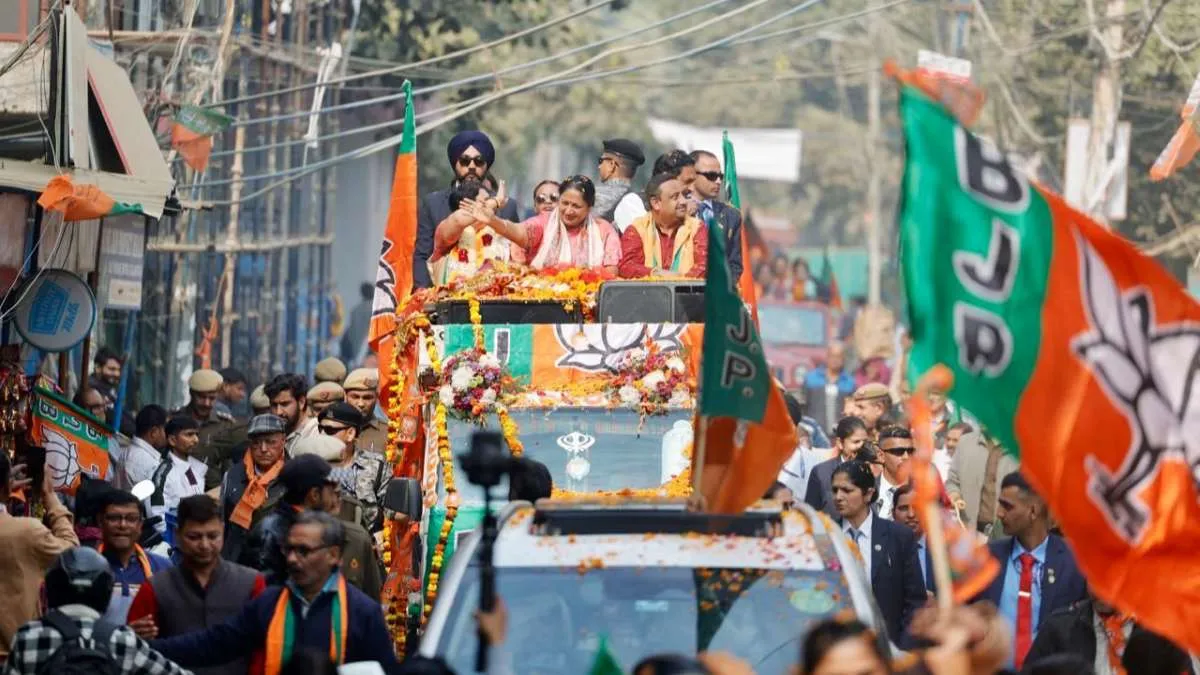
The Delhi Municipal Corporation (MCD) bypoll results for 12 wards have delivered a clear message from the capital's voters. In this high-stakes civic mini-election, the Bharatiya Janata Party (BJP) has emerged as the leading force with victories in 7 wards, while the Aam Aadmi Party (AAP) has secured 3 seats. The Congress has opened its account with 1 ward and the All India Forward Bloc (AIFB) has picked up 1 crucial seat. Spread across important localities from Chandni Chowk in the old city to Dwarka in the southwest, these results are being seen as a sharp indicator of the evolving political mood after the recent change of government in Delhi.
The bypolls were necessitated after several sitting councillors moved to higher offices, including the Delhi Legislative Assembly and Parliament, leaving 12 civic wards vacant. Voting was conducted on 30 November 2025 with heavy security arrangements, extensive CCTV coverage and paramilitary deployment to ensure a smooth and peaceful polling process. Despite the high-profile nature of the contest, turnout remained modest at around 38.51%, significantly lower than the participation seen in the 2022 full MCD elections, where over half of the electorate had cast their vote. For parties, however, the political signal from each ward is far more important than the turnout number itself.
Ward-Wise Snapshot: From Chandni Chowk to Dwarka
The bypolls covered 12 wards scattered across the city, bringing both upscale colonies and dense traditional neighbourhoods into focus. Voters in these pockets responded to local issues such as sanitation, parking, water supply, market congestion, internal roads, unauthorised constructions and the overall responsiveness of the civic administration. At the same time, the broader backdrop of the 2025 Delhi Assembly results and the newly installed BJP state government added an extra layer of political interest to this civic contest.
| Ward | Winning Candidate | Party |
|---|---|---|
| Greater Kailash | Anjum Mandal | BJP |
| Shalimar Bagh B | Anita Jain | BJP |
| Ashok Vihar | Veena Asija | BJP |
| Chandni Chowk | Suman Kumar Gupta | BJP |
| Chandni Mahal | Mohd Imran | All India Forward Bloc |
| Dwarka B | Manisha Devi | BJP |
| Dichaon Kalan | Rekha Rani | BJP |
| Naraina | Rajan Arora | AAP |
| Sangam Vihar A | Suresh Choudhary | Congress |
| Dakshin Puri | Ram Swaroop Kanojia | AAP |
| Mundka | Anil | AAP |
| Vinod Nagar | Sarala Chaudhari | BJP |
.webp)
Party-Wise Performance: BJP Holds Edge, AAP Retains Core Pockets
From a party perspective, the bypoll results underline the BJP's organisational hold on key urban and semi-urban pockets of Delhi. By recording victories in Greater Kailash, Shalimar Bagh B, Ashok Vihar, Chandni Chowk, Dwarka B, Dichaon Kalan and Vinod Nagar, the party has demonstrated that its vote base, built over several cycles of municipal politics, remains largely intact. Many of these wards were already BJP strongholds, and retaining them in a lower-turnout bypoll is being read as a sign that core supporters stayed loyal even after the change in power at the state level.
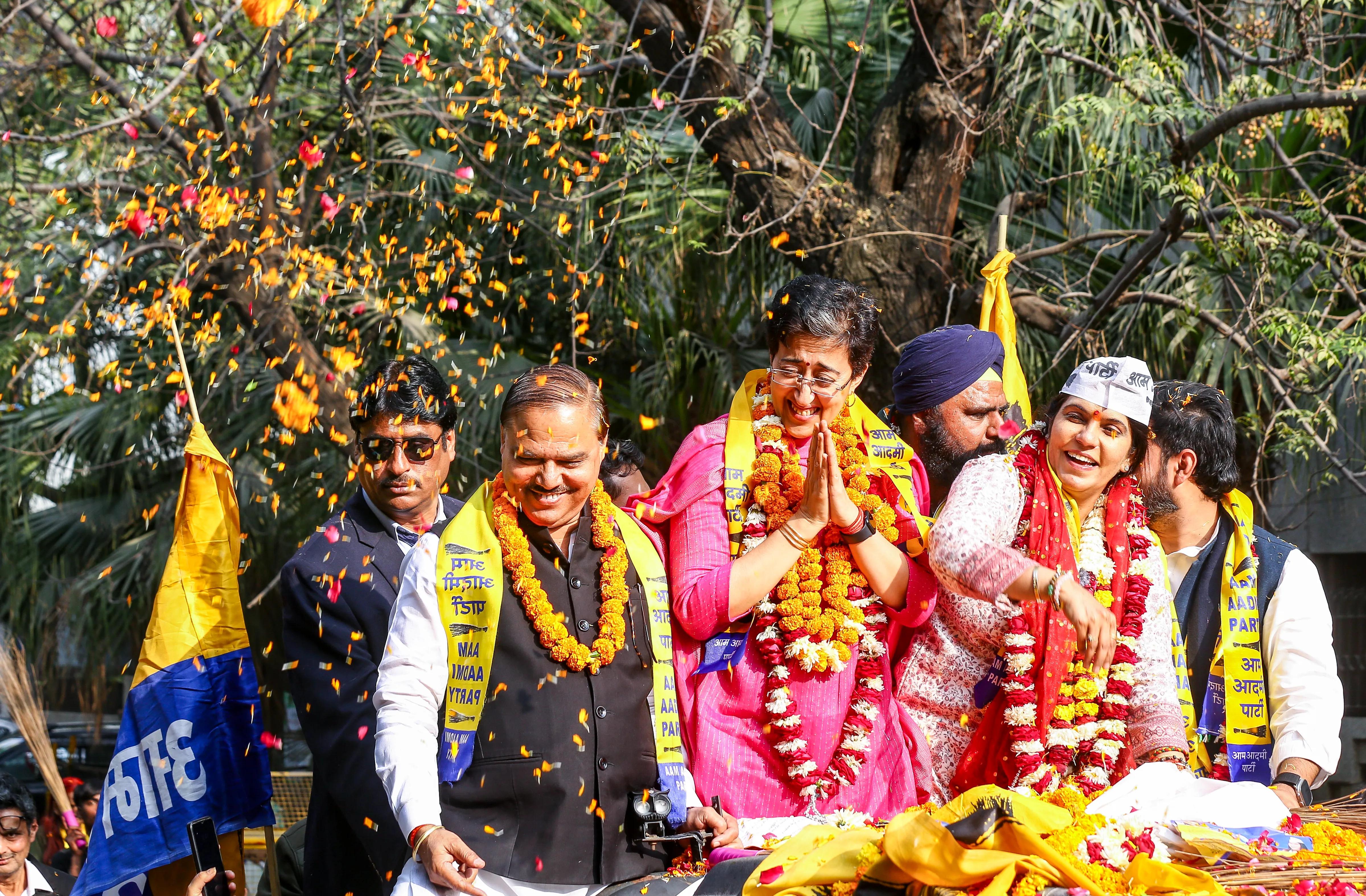
For AAP, three wins—Naraina, Dakshin Puri and Mundka—offer a mixed outcome. They show that the party continues to enjoy pockets of concentrated support, especially in working-class and resettlement areas where its earlier focus on subsidised services and civic grievance redressal built goodwill. However, the overall result also highlights that AAP has lost numerical ground in the corporation compared to the last full civic election, and will need to recalibrate its grassroots strategy if it wants to challenge the BJP's dominance in local bodies again.
The Congress, securing Sangam Vihar A, has taken a small but symbolically significant step. Even a single ward win matters in a landscape where the party has, in recent years, often struggled to stay visible in urban Delhi politics. The All India Forward Bloc's victory in Chandni Mahal adds further diversity to the house, reflecting how local networks, community leadership and micro-level campaigning can sometimes break through the dominance of bigger parties, especially in tightly knit old-city neighbourhoods.
Party-Wise Performance: BJP Holds Edge, AAP Retains Core Pockets
While headlines focus on who won which ward, the turnout figure tells another story. With just over one-third of eligible voters stepping out, the bypolls saw a quieter response compared to the more charged 2022 MCD election. Bypolls traditionally attract lower participation, but in a city as politically aware as Delhi, this number still stands out. Voters here might be experiencing a degree of electoral fatigue after back-to-back campaigns—from civic polls to assembly elections and national-level contests.
At the ward level, however, the mood is shaped far more by day-to-day civic realities than big slogans. Overflowing drains, broken pavements, encroached footpaths, irregular garbage lifting, parking chaos and patchy street-lighting remain recurring issues in many parts of the city. Candidates who managed to convince local residents that they could push files, follow up with engineers, and ensure timely execution of small works appear to have been rewarded at the ballot box. In that sense, the Delhi MCD bypoll results function like a civic “report card” on how residents judge their immediate environment and the people they trust to fix it.
Old City vs New Colonies: How Different Neighbourhoods Voted
One of the most interesting takeaways from the Delhi MCD bypoll results is the contrast between older, tightly packed neighbourhoods and relatively newer colonies. In historical pockets such as Chandni Chowk and Chandni Mahal, voters weighed long-standing local equations, trader networks, religious institutions and community associations when casting their ballots. Chandni Chowk backed the BJP's Suman Kumar Gupta, continuing a pattern of support for the party in this iconic business hub, while Chandni Mahal chose Mohd Imran of the All India Forward Bloc, reflecting a more diverse and localised political fabric.
In contrast, areas like Greater Kailash, Shalimar Bagh B, Ashok Vihar and Dwarka B are shaped by a different voter profile—more apartment complexes, RWAs, gated societies and daily concerns around parking, park maintenance, waste segregation and urban mobility. Here, the BJP's clean sweep signals that its messaging on stability, continuity and coordination between the state government and the municipal corporation has resonated with residents looking for predictable local governance and timely responses to civic complaints.
Impact on MCD House and Future Civic Politics
Numerically, seven out of twelve seats may appear small in a 250-member MCD. Yet, every additional councillor alters the internal arithmetic of standing committees, ward committees and key panels that decide budget allocations, infrastructure priorities and policy implementation. For the BJP, these bypoll wins tighten its grip on crucial decision-making spaces, allowing it to push through its civic agenda with fewer hurdles. For AAP and other parties, the result serves as a reminder that even a handful of wards can tilt equations in debates over local taxes, parking fees or redevelopment plans.
The Delhi MCD bypoll results also arrive well before the next full civic elections, which are due in 2027. That leaves all parties with valuable time to study micro-trends—street by street, block by block. Which booths saw sharp swings? Where did turnout collapse? Which localities stayed loyal despite anti-incumbency chatter? Answers to these questions will guide future candidate selection, campaign design and booth-level worker deployment as the capital heads towards its next round of municipal and assembly contests.
What the Delhi MCD Bypoll Results Signal for Voters
For ordinary residents, the immediate expectation from these newly elected councillors is straightforward: visible, practical improvement in everyday civic life. Whether it is faster desilting of drains before the monsoon, better garbage collection routes, more frequent fogging drives in mosquito-prone localities or smoother coordination with PWD and other agencies on road repairs, citizens will judge their councillors on delivery, not on slogans. Each ward has effectively given its representative a fresh five-year mandate to act as a bridge between the lane and the civic headquarters.
As governance continues under the new political alignment in both the Delhi Assembly and the MCD, the 2025 Delhi MCD bypoll results will be closely watched by analysts, parties and residents alike. From Chandni Chowk's bustling markets to Dwarka's expanding residential sectors, each ward's verdict forms a small but important piece of Delhi's larger political and civic puzzle, offering a real-time update on how the city's voters currently view their leaders, their neighbourhoods and the promises made in their name.