Work Culture Comparison: India versus Singapore

Work Culture Comparison: India versus Singapore
An Indian professional named Aman, presently employed in Singapore, has sparked a fresh round of debate and breaking news discussion on social media after sharing a video comparing work culture in India and Singapore. His remarks, framed around leave policies, working hours, and everyday workplace conduct, have resonated with many young professionals who feel trapped between traditional expectations and modern ideas of work-life balance. The viral update has quickly turned into a wider conversation about trust, autonomy, and how employees are treated in different corporate environments.
In his Instagram video, Aman contrasts how employees in India often feel the need to justify every absence from work, while in Singapore, he experiences a more professional and straightforward system built on trust. His observations, shared in a simple and relatable tone, have been widely shared, commented on, and discussed as a latest development in the ongoing debate around Indian work culture. The story continues to gain traction as more users share similar experiences from various countries and industries.
Time Off Approval Variations and Leave Culture
One of the most striking points Aman raises is how employees request leave in India compared to Singapore. In India, he notes that staff frequently feel obligated to “beg” for vacation time, often presenting personal, emotional, or emergency-related reasons to make their absence appear justified. The language used is usually deferential, almost like a student asking a teacher for permission. This style of communication reinforces a power imbalance where the manager is seen as a gatekeeper not just of tasks, but of the employee's personal time.
By contrast, in Singapore, Aman describes a clear and professional approach to leave. Instead of pleading, employees simply inform their managers about their planned time off. The communication is direct and factual, often structured as an “out of office” notice rather than a request in need of emotional validation. This difference is not only about phrasing; it reflects a deeper cultural approach to employment, where time off is recognized as a legitimate and necessary part of professional life, not a privilege granted on a case-by-case basis.
His update suggests that in a healthier, more evolved workplace, employees are treated as responsible adults capable of managing their schedule. Paid leave is part of their rights and compensation, not a special favor. The viral report has led many viewers to question why, in several Indian offices, workers still feel anxious before sending a leave request email or message, worried about how their managers might react.
Work-Personal Life Division After Office Hours
Another key issue Aman highlights is the strict separation between work time and personal time in Singapore. He notes that after 6 pm, his phone belongs to him, not his manager. In practical terms, this means no work calls, no late-night messages demanding immediate responses, and no guilt for being unavailable once office hours are over. This simple rule mirrors a broader respect for personal boundaries that many professionals worldwide increasingly expect as a basic standard.
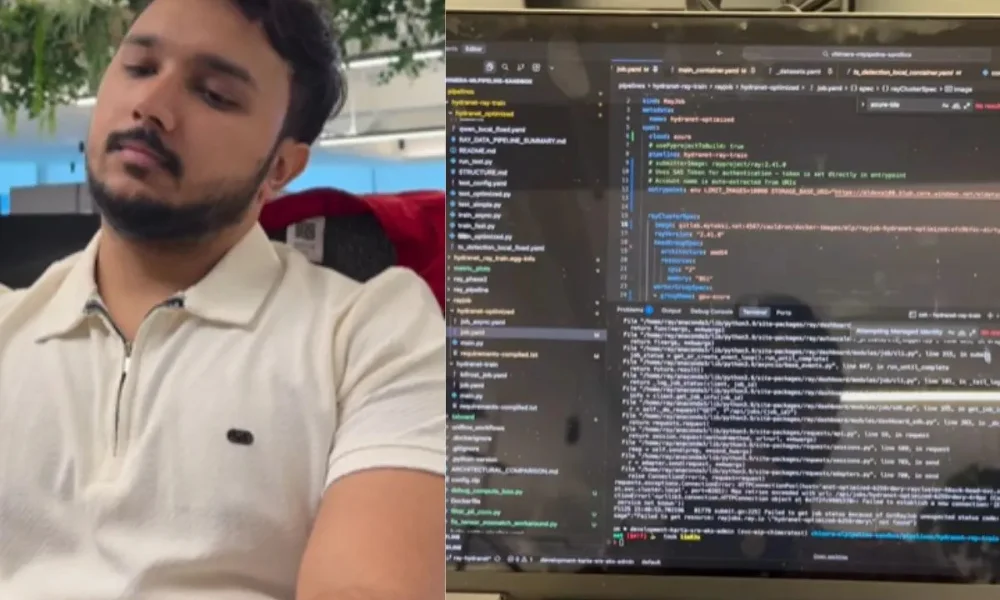
Comparing this to his experiences in India, Aman suggests that employees often face an unspoken expectation to be constantly reachable. Late calls, weekend messages, and last-minute tasks are frequently normalized in the name of dedication or team spirit. For some, this continuous availability has become part of the work culture, especially in fast-paced sectors where “urgent” has become a default label for many tasks. His comments reflect a growing concern that the absence of clear boundaries can slowly erode mental health, family time, and overall quality of life.
The latest reactions to his video show that many young employees, particularly in urban India, are starting to demand a similar respect for personal time. They are asking why they should be penalized, even silently, for logging out on time when they have completed their work. This shift in mindset is contributing to a broader conversation about what a modern, sustainable work-life balance should look like, especially in emerging economies.
Overtime, Commitment, and Perceptions of Hard Work
Aman also points to a major difference in how late working hours are perceived. In many Indian offices, staying late—sometimes past 8 pm or even longer—is often seen as a sign of dedication and loyalty. Employees who leave on time can be silently judged as less committed, regardless of how productive they were during regular hours. This culture indirectly rewards visibility over efficiency, making it harder for workers to set healthy limits.
In Singapore, according to Aman, consistently staying very late is more likely to be viewed as a symptom of an underlying problem. It might mean poor planning, unrealistic workloads, or inadequate staffing. Rather than celebrating late hours as a badge of honor, such patterns can prompt questions about whether the system is fair and efficient. This difference in interpretation is at the heart of his comparison: what is considered “hard work” in one culture might be seen as “being taken advantage of” in another.
As the discussion spreads, many users in the comments section of the viral post have shared real-life examples of burnout, health issues, and personal sacrifices made to keep up with long-hour expectations. They argue that genuine productivity should be measured by outcomes and quality of work, not just the number of hours spent inside the office. This angle adds another layer to the breaking news narrative, turning a single video into a mirror reflecting wider systemic concerns.
Staff Independence and Professional Autonomy
Central to Aman's message is the idea of autonomy. He stresses that workers should not have to justify basic breaks or time off in a sound professional environment. When employees are trusted to manage their own schedules, they are more likely to feel valued and respected. This independence does not mean a lack of accountability; instead, it shifts the focus from control to responsibility. Professionals are expected to plan ahead, coordinate with their teams, and deliver results, but they are not treated like children asking for recess.
In his caption, Aman contrasts two styles of communication: “Sir, may I please take leave for X reason?” versus “I shall be out of office from Monday to Wednesday.” The first sentence reflects a hierarchy-heavy context where permission feels uncertain, while the second reflects confidence and clarity in one's professional role. His update encourages viewers to adopt the second mindset wherever possible, seeing themselves as capable adults managing responsibilities rather than as subordinates constantly seeking approval.
This shift in language, though subtle, is part of a wider evolution in global workplaces, where employees increasingly expect transparency, fairness, and trust. The continuing discussion around his video highlights how even everyday phrases in emails and chats can reveal deeper attitudes about power and respect at work.
Digital Responses and Public Reaction to the Viral Video
The digital response to Aman's clip has been intense and immediate. His submission has connected broadly online, with thousands of users commenting, sharing, and stitching the video to add their own opinions. Many viewers, especially Indians working in traditional corporate setups, say they “totally identify” with what he calls detrimental work culture. They describe similar patterns of overwork, pressure to be always reachable, and the fear of being labeled “lazy” or “not serious” if they request time off or leave on time.
Others highlight that companies in places like Singapore often operate on a “high-trust” framework. In such environments, managers assume that employees are honest about their needs, and formal policies support them with clear leave structures and predictable working hours. For these users, Aman's experience is not just a personal story but a breaking news style reminder that many Indian organizations may need to modernize their approach if they want to attract and retain global talent.
At the same time, some voices in the debate mention that not all Indian workplaces fit the negative stereotype. There are companies in India that actively encourage work-life balance, promote flexible schedules, and provide structured leave without unnecessary questioning. This mix of viewpoints shows that the conversation is nuanced, but the central theme remains clear: professionals increasingly expect a healthier, more balanced, and more respectful work environment.
Comparable Encounters Abroad: The Germany Experience
Aman's story follows another widely shared Instagram submission by an Indian software engineer working in Germany. That earlier post also went viral, generating a major online report about how different work cultures can be. The engineer compared the demanding, often unsustainable routines common in parts of India's technology sector with the employee-focused environment he experienced after moving abroad. For him, the idea of “work-life balance” was almost unknown at the beginning of his career in India.
After relocating to Germany, he noticed that his workplace treated personal time, vacation, and rest as essential, not optional luxuries. Fixed working hours, predictable schedules, and respect for holidays were built into the system, not negotiated on a case-by-case basis. He stated that he observed a “superior culture” at the workplace and could not praise enough the positive aspects he encountered. For many readers, his testimony, followed by Aman's fresh update from Singapore, reinforces the pattern: a number of developed economies have already moved toward more balanced and humane workplace norms.
When seen together, these accounts from Germany and Singapore give Indian professionals a reference point to evaluate their own conditions. They show that it is possible to combine high performance with healthy boundaries and that modern workplaces can be both competitive and compassionate.
Evolving Expectations and the Future of Work Culture
The current wave of online discussion around Aman's video is more than a passing trend; it reflects evolving expectations about what a fair workplace should look like. Young professionals, especially in rapidly developing countries like India, are increasingly connected to global standards through social media, remote work, and international collaboration. They are exposed daily to updates, reports, and stories from colleagues abroad who enjoy clearer boundaries, predictable leave policies, and higher levels of trust at work.
As companies compete for skilled talent, the way they handle leave, working hours, and after-work expectations may become as important as salary and job title. Organizations that cling to old patterns of micromanagement and constant availability risk higher turnover, declining morale, and reputational damage. On the other hand, those that adopt a more balanced, professional approach to time off and work-life separation are likely to be seen as progressive and attractive employers.
For now, Aman's simple comparison between India and Singapore continues to circulate widely as a relatable case study in how work ethos can differ dramatically across borders. His experience, echoed by many others abroad, has become part of a larger, ongoing conversation about trust, respect, and balance in the modern workplace, and it remains a key talking point in the latest development of global work culture debates.
Facebook Comments











-
 Explore the upcoming Tamil film Maaman - cast, sto...
 -
 Read the ACE (2025) movie review starring Vijay Se...
 -
 Check out Maaman's 1st day box office collection a...
 -
 Explore tourist family reviews for Maaman movie –...
Popular Posts
Vote / Poll
Recent Posts




Recommended Posts

-
 Discover the best schools in Nagercoil f...
 -
 Discover the top-rated preschools in Nag...
 -
 Explore the best schools in Nagercoil th...

Comment / Reply From