Tharoor Invited to Putin's State Dinner: Congress Flags Exclusion of Opposition Leaders
Tharoor Invited to Putin's State Dinner: Congress Flags Exclusion of Opposition Leaders
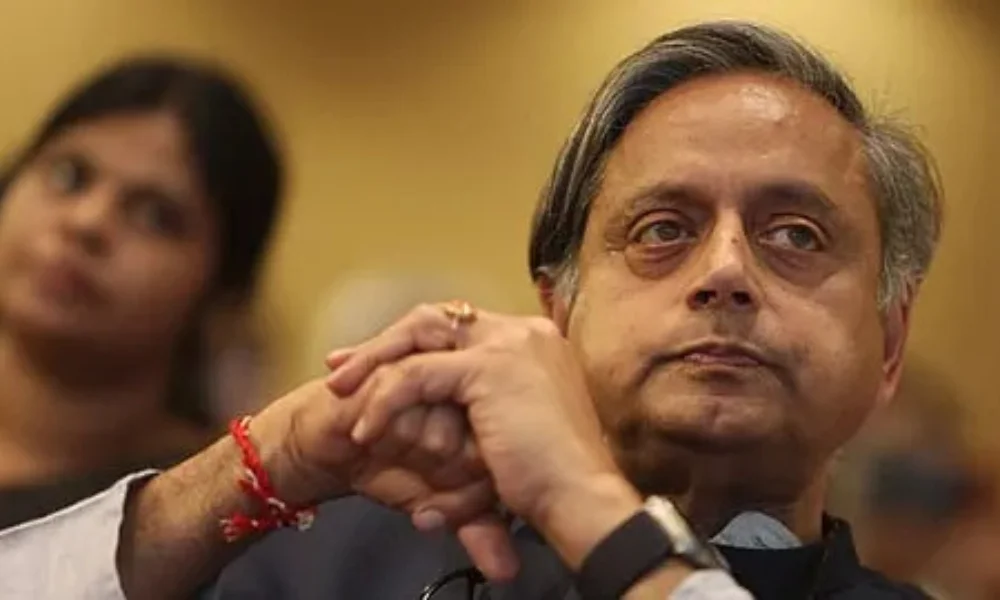
Congress MP Shashi Tharoor's presence on the guest list for the state dinner hosted in honour of Russian President Vladimir Putin has triggered a fresh political debate in New Delhi. While Tharoor has received an invitation to the official banquet, the Congress party has highlighted that the Leaders of the Opposition in both Houses of Parliament, Mallikarjun Kharge and Rahul Gandhi, have not been invited. The party has described this as a serious break from established protocol, pointing out that opposition leaders have traditionally been present at such high-profile state events held at Rashtrapati Bhavan.
Congress Highlights Protocol and Tradition Around State Banquets
The Congress has framed the exclusion of the Leaders of the Opposition as more than just a matter of invitations. For the party, it is being projected as a question of democratic norms and institutional respect. Over the years, whenever a major foreign leader has visited India, invitations to state banquets have typically been extended to key figures across the political spectrum, including those in opposition. According to the Congress, this tradition symbolised a broader national consensus on foreign policy and underscored that India's democratic institutions go beyond party lines, especially on visits involving important partners like Russia.
By drawing attention to this history, the party is signalling that the current episode is not a routine administrative choice but a deliberate departure from past practice. For a state banquet hosted for a visiting head of state or government, the visual message is almost as important as the formal discussions behind closed doors. The absence of opposition leaders from the guest list, the Congress suggests, sends a message that the government is keen on centralising both optics and access around the ruling establishment alone, rather than sharing the national stage with other elected voices.
Jairam Ramesh Confirms No Invite for Kharge and Rahul Gandhi
It was Congress communication chief Jairam Ramesh who publicly confirmed that Mallikarjun Kharge and Rahul Gandhi had not been invited to the official dinner for President Putin. Through a post on X, he clarified that both the Leader of the Opposition in the Lok Sabha and the Leader of the Opposition in the Rajya Sabha were missing from the guest list. This public clarification transformed what could have remained a quiet protocol issue into a visible political flashpoint, ensuring that the story reached a wider audience and entered the national news cycle as a breaking political development.
The choice to use social media to highlight the episode reflects how political parties now frame questions of access and protocol as part of a larger narrative about respect, institutional balance and the functioning of democracy. By explicitly naming both Kharge and Gandhi and underlining their constitutional positions as Leaders of the Opposition, the Congress sought to stress that this is not about individual personalities alone. Instead, it is positioning the matter as one where constitutional roles, and not merely party affiliations, should guide invitations to major state functions.
Shashi Tharoor's Balancing Act: Acceptance with Criticism
In contrast to the absence of invites for Kharge and Gandhi, Shashi Tharoor has received an invitation and has confirmed that he will attend the state dinner. Tharoor, who chairs the Parliamentary Standing Committee on External Affairs, occupies an important institutional role that often brings him into contact with foreign policy issues and visiting dignitaries. Speaking to the media, he noted that he did not know on what basis invitations were being decided but made it clear that he considered it inappropriate for the Leaders of the Opposition to be left out. His response has been a mix of acceptance of the invite and criticism of the broader approach.
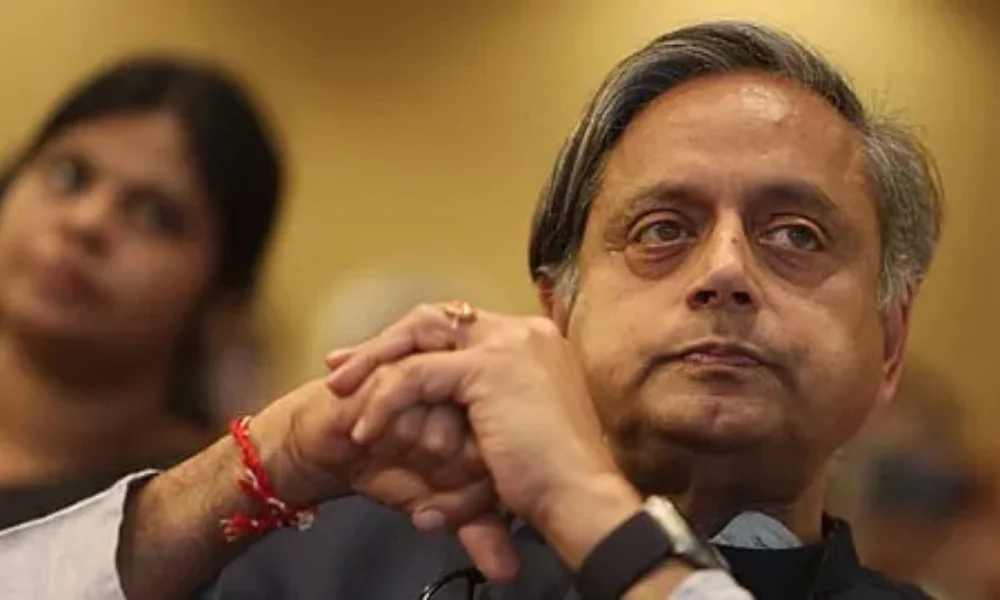
Tharoor's decision to attend while still publicly flagging concerns reflects the tightrope that many opposition leaders must walk when it comes to foreign policy events. On the one hand, there is a sense of responsibility to uphold India's diplomatic engagements and present a dignified, united front when interacting with key global partners. On the other hand, there is pressure from within the party and from the opposition space more generally to call out what they view as the ruling government's attempts to marginalise dissenting voices from national platforms. Tharoor's nuanced stance captures this dual responsibility.
Speculation Over Political Messaging and Kerala Context
Within Congress circles, there is also speculation that Tharoor's inclusion in the guest list carries an element of political calculation. Some party leaders suggest that the government may be signalling a form of selective engagement by inviting an opposition figure who has a distinct public image and a strong base in Kerala, where electoral battles remain intense. Such readings point to a larger pattern where invitations and access are seen not simply as administrative decisions but as carefully curated signals aimed at multiple audiences – domestic voters, party cadres, and international observers watching India's political climate.
Kerala's political landscape adds another layer to this development. Tharoor's profile in the state, his visibility in national debates and his image as a leader with international exposure make any outreach to him politically sensitive. For the Congress, questions may arise about whether such moves are intended to create internal rifts or to project a certain kind of “acceptable opposition” that suits the ruling establishment's narrative. These interpretations may or may not fully reflect the government's intent, but they shape how the news is read within political circles and amplify the story's resonance beyond a routine protocol issue.
Tharoor's Remarks on Symbolism and Diplomacy
Tharoor has earlier spoken about the significance of symbolic gestures in diplomacy, specifically referencing Prime Minister Narendra Modi's personal outreach to President Putin. His observations underline that foreign policy is not only about formal agreements and strategic calculations but also about carefully choreographed symbolism. Gestures such as receiving a visiting leader at the airport, hosting a private dinner, or presenting culturally meaningful gifts are meant to convey warmth, continuity and mutual respect between nations. Tharoor has acknowledged that such symbolism plays a role in signalling the importance India attaches to its relationship with Russia.
At the same time, he has emphasised that symbolic gestures are not substitutes for substantive policy. For a relationship as complex and long-standing as that between India and Russia, substance lies in areas such as defence cooperation, energy ties, multilateral coordination and long-term strategic alignment. Tharoor's comments attempt to strike a balance: they recognise the importance of strong optics while reminding audiences that the deeper test of foreign policy lies in safeguarding national interests, maintaining strategic autonomy and ensuring that partnerships translate into concrete benefits for the country.
Rahul Gandhi's Charge of Government “Insecurity”
Rahul Gandhi has taken a sharper line, accusing the government of “insecurity” in its approach to opposition leaders and foreign dignitaries. He has argued that, in earlier governments, it was routine for visiting leaders to call on the Leader of the Opposition, reflecting the idea that the opposition also speaks for a significant segment of the Indian electorate. According to him, there is now a pattern of discouraging such meetings, both in India and abroad, by signalling to foreign interlocutors that engagement should be limited to the ruling establishment alone.
Gandhi's criticism frames the current episode as part of a wider trend, where opposition voices are allegedly being edged out of spaces that were once open to multiple political actors. For him, the issue is not just protocol, but also the principle that the Leader of the Opposition provides an alternative perspective on national policy, including foreign policy. By keeping that perspective away from formal interactions with visiting leaders, he suggests, the government is narrowing the range of viewpoints that the world hears from India's political system, reducing the visible depth of the country's democratic discourse.
Opposition, Optics and the Image of Indian Democracy
The controversy over the guest list for President Putin's state dinner raises broader questions about how India presents itself as a democracy on the world stage. In official ceremonies, the presence of both government and opposition leaders has often been read as a strength, showcasing a system where political competition coexists with institutional respect. When opposition leaders are absent from such events, critics argue that it risks projecting a more centralised image, where power and representation appear to be concentrated in the hands of a single political formation, even on occasions meant to reflect the nation as a whole.
Supporters of the government may counter that the executive has the discretion to decide whom to invite, and that there is no rigid legal requirement to include specific individuals. However, in the public conversation, what matters is not only legality but perception. The unfolding debate shows how decisions that might appear purely procedural from within government circles can quickly become contested political signals once they enter the news cycle. With every such episode, the conversation around protocol, inclusiveness and the health of democratic norms gains new layers and becomes part of a larger, ongoing assessment of India's political culture.
Why This Guest List Debate Matters for Future Engagements
As India continues to host global leaders and participate in high-stakes international diplomacy, questions around who stands alongside the government in official ceremonies are likely to recur. The current debate over Shashi Tharoor's invitation to the Putin state dinner, combined with the exclusion of the Leaders of the Opposition, is therefore more than a one-off dispute. It serves as an indicator of how the ruling establishment views the role of the opposition in symbolic and substantive arenas of foreign policy. It also provides a glimpse into how the opposition plans to frame such decisions in the public eye, especially at a time when political polarisation is intense.
For citizens following the latest political developments, this episode offers a window into the intersection of protocol, power and perception. It highlights how state dinners, invitations and photo opportunities, though seemingly ceremonial, can become central to the narrative battles that define contemporary politics. As the story continues to attract attention, it will remain a reference point in future debates on inclusiveness, representation and the place of opposition voices in the conduct and presentation of India's foreign policy.
Facebook Comments



-
 Explore the upcoming Tamil film Maaman - cast, sto...
 -
 Read the ACE (2025) movie review starring Vijay Se...
 -
 Check out Maaman's 1st day box office collection a...
 -
 Explore tourist family reviews for Maaman movie –...
Popular Posts
Vote / Poll
Recent Posts

Recommended Posts

-
 Discover the best schools in Nagercoil f...
 -
 Discover the top-rated preschools in Nag...
 -
 Explore the best schools in Nagercoil th...

Comment / Reply From