New York Times Files Lawsuit Against Perplexity AI

New York Times Files Lawsuit Against Perplexity AI
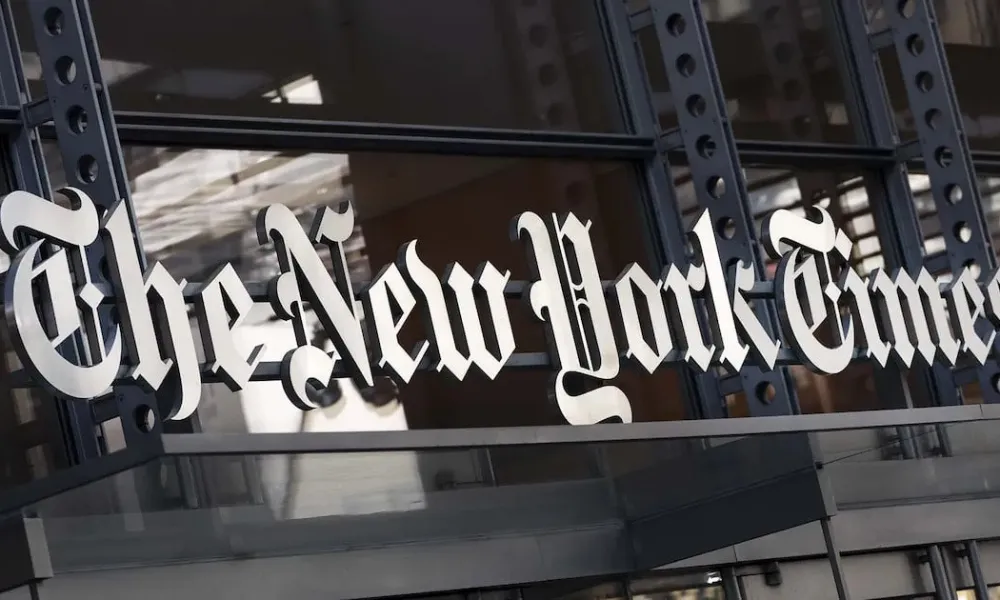
The New York Times has filed a high-profile lawsuit against artificial intelligence startup Perplexity AI, marking a significant moment in the ongoing battle between news publishers and technology companies. In this latest development, the newspaper alleges that Perplexity AI illegally used its articles to build and power its generative AI products. According to the report, the Times claims that millions of its news pieces, including premium and paywalled content, were copied, shared, and displayed without permission, raising serious questions about copyright, fair use, and the future of AI-driven news platforms.
This breaking news lawsuit comes at a time when generative AI tools are rapidly transforming how people access information. The case is being closely watched by media organizations, legal experts, and technology observers, as it could set an important precedent for how news content may be used in training and running AI systems. For the New York Times, the dispute is not only about money or traffic, but also about protecting its journalism, its brand, and its long-term business model in a digital ecosystem increasingly shaped by AI.
Background of the Legal Dispute
The lawsuit follows a period of rising tension between the New York Times and Perplexity AI. The newspaper reportedly raised concerns earlier and sent formal notices warning the startup against using its content without authorization. Despite those warnings, the Times claims that Perplexity continued to rely on its journalism as a key source of training data and as live material for its AI-driven answers and summaries. This legal action is framed as a decisive step taken after attempts at resolution did not succeed to the satisfaction of the Times.
Perplexity AI is positioned as a fast-growing player in the generative AI space, offering users conversational answers, detailed reports, and quick updates on a range of topics. According to the New York Times, this growth has come partly at the expense of publishers whose content is repackaged and presented to users without proper licensing. The lawsuit, therefore, is framed not only as a copyright case, but also as a challenge to the business strategy of AI firms that depend heavily on existing journalism.
Allegations of Unauthorized Use of Articles
At the center of the case is the allegation that Perplexity AI copied, stored, and redistributed a vast number of New York Times articles without securing the necessary rights. The newspaper asserts that its work, including investigative pieces, in-depth reports, analysis, and breaking news coverage, has been used as raw material to train Perplexity's AI models. By doing so, the Times argues, the startup has benefited from years of journalistic investment without providing compensation or following licensing agreements.
A particularly serious part of the allegation involves the use of paywalled content. The New York Times operates a subscription-based model where subscribers pay for full access to quality journalism. According to the lawsuit, Perplexity's systems have allegedly accessed and reused some of this paywalled material, effectively bypassing the restrictions meant to protect premium content. For the Times, this is presented as a direct attack on its revenue model and a threat to the sustainability of independent news organizations.
Claims of Fabricated and Misattributed Content
In addition to copyright concerns, the New York Times also raises the issue of accuracy and brand protection. The lawsuit states that Perplexity's generative AI tools sometimes produce fabricated or misleading information, commonly referred to as “hallucinations.” The problem, according to the Times, is not only that these hallucinations exist, but that they are presented alongside the newspaper's name and trademarks, giving the impression that the content comes directly from its newsroom.
Such misattribution can have serious consequences. Readers who see a response framed as a New York Times report may trust it as a verified update or factual news story. If the information is inaccurate or entirely invented, it risks damaging the newspaper's reputation for reliability. In the age of rapid information sharing, where news spreads across platforms in seconds, even a single hallucinated answer framed as a trusted report can influence public opinion or create confusion around complex topics.
How Perplexity AI's Technology Uses News Content
Perplexity AI positions itself as a powerful search and answer engine powered by generative AI. When users ask for an update on a breaking news topic or request a detailed report on a specific issue, the system collects information from multiple online sources and then generates a summarized response. The New York Times alleges that its work forms a substantial portion of the material behind these answers, making its journalism a quiet foundation for many of Perplexity's outputs.
From the perspective of the Times, this process does more than just quote or reference publicly available information. The claim is that Perplexity's systems are effectively replicating the value of original reporting while reducing the need for users to visit the publisher's own platforms. Instead of clicking through to read a full article, users may stay within the AI interface, reading generated summaries and updates. This shifts attention, traffic, and potential subscription revenue away from the original source.
Rising Conflict Between Publishers and AI Companies
The lawsuit reflects a broader conflict across the media landscape. Many news organizations are re-evaluating how their content is used by AI platforms that promise fast answers, instant summaries, and personalized reports. While some companies have entered licensing agreements with technology firms, others argue that their content has been scraped or copied without consent. The New York Times versus Perplexity AI dispute is part of this larger wave of challenges and negotiations shaping the rules of engagement between journalism and generative AI tools.
For publishers, the core issue is whether generative AI platforms can continue to build profitable products on top of copyrighted reporting without formal partnerships. For AI companies, meanwhile, stricter limits on data use could slow innovation, reduce the quality of answers, and require expensive licensing deals. The outcome of this and similar lawsuits will influence how both sides negotiate in the future and how users experience breaking news and in-depth coverage through AI interfaces.
Other Legal Challenges Facing Perplexity AI
The New York Times lawsuit is not the only legal challenge Perplexity AI is currently facing. Several other publishers and content owners have also raised concerns or initiated legal action, arguing that their material has been used in similar ways. These include prominent media houses and reference publishers that see their carefully curated content appearing in AI-generated responses without clear credit or compensation. Together, these cases paint a picture of a growing resistance from content creators against unlicensed AI training and distribution.
For Perplexity AI, this means navigating not just one lawsuit, but a broader cluster of disputes that could shape its public image and financial future. Each new complaint adds pressure to adjust its practices, clarify how it collects data, and reassess its reliance on copyrighted sources. At the same time, the company continues to position itself as an innovator in the AI search and answer space, emphasizing the value it provides to users seeking quick, comprehensive updates.
Also Read: Tesla Introduces a Cheaper Model 3 in Europe
Reaction from the New York Times
In public statements, the New York Times has emphasized that it supports innovation in AI, but only when it is built on ethical and lawful use of content. The organization stresses that journalism requires significant investment in reporters, editors, photographers, and fact-checkers. When AI platforms reuse that work without permission, the newspaper argues, they undermine the financial base that keeps independent reporting alive. The lawsuit is described as a necessary measure to defend not only the Times, but also the principle that original reporting must be respected and fairly compensated.
The Times is seeking damages as well as injunctive relief. This means it does not only want financial compensation; it also wants the court to order Perplexity to stop using its content without authorization. Such an outcome would send a strong signal to other AI firms that copyrighted material cannot be freely repurposed. As this report unfolds, industry observers are watching closely for updates on how the court will interpret the balance between innovation and intellectual property rights.
Response from Perplexity AI
Perplexity AI, on its part, has pushed back against the claims, arguing that its methods fall within accepted practices for indexing and summarizing information on the web. Representatives from the company have suggested that such lawsuits reflect attempts by some publishers to slow down emerging technologies. From their perspective, the service offers users a more efficient way to access information by compiling data from different sources into a single, coherent answer or update.
However, critics point out that this explanation does not fully address the concerns raised in the New York Times lawsuit. The questions of paywalled access, alleged large-scale copying, and hallucinated content attributed to the Times remain central issues in the legal debate. Whether Perplexity's defense will satisfy judges and regulators is still uncertain, but the case is already being seen as a key test of how far AI companies can go in using third-party content for training and real-time responses.
Impact on AI Innovation and Regulation
The outcome of this lawsuit could have long-lasting effects on the broader AI industry. If courts decide in favor of the New York Times, AI developers may be required to secure more licenses, pay higher fees, or limit the use of certain content in their models. This could slow the pace of development but might also encourage more structured collaboration between publishers and technology firms. If Perplexity's position prevails, it may give AI companies greater freedom to rely on existing web content, increasing the speed and scale at which new tools are launched.
Policymakers and regulators are following these disputes as they consider new rules for data use, transparency, and copyright enforcement in the digital age. The case adds to a growing body of legal and policy discussions around how AI should interact with creative industries, including news, books, music, and film. Each new ruling, settlement, or update from the courts contributes to a developing framework that will define what is allowed, what requires permission, and where lines must be drawn to protect both innovation and original work.
Implications for Readers and Subscribers
For everyday readers, this legal battle may seem distant, but it directly affects how people receive news. Many users now rely on AI tools to get a quick report, a summary of a complex issue, or an instant update on a breaking event. If those tools use news content without permission, they may contribute to weakening the very organizations that produce original reporting. Over time, that could reduce the diversity, depth, and independence of journalism available to the public.
On the other hand, responsible collaboration between AI platforms and publishers could create new ways for readers to access trusted information quickly, while still supporting the work behind it. Subscription models, licensing deals, and clearer attribution practices are some of the approaches being discussed. The New York Times versus Perplexity AI case is therefore more than a single dispute; it is part of a larger discussion about how technology and journalism can coexist in a way that benefits both creators and audiences.
Facebook Comments














-
 Explore the upcoming Tamil film Maaman - cast, sto...
 -
 Read the ACE (2025) movie review starring Vijay Se...
 -
 Check out Maaman's 1st day box office collection a...
 -
 Explore tourist family reviews for Maaman movie –...
Popular Posts
Vote / Poll
Recent Posts




Recommended Posts

-
 Discover the best schools in Nagercoil f...
 -
 Discover the top-rated preschools in Nag...
 -
 Explore the best schools in Nagercoil th...

Comment / Reply From