Thiruparankundram Hill Line: CJI Rejects TN Administration's Oral Presentation
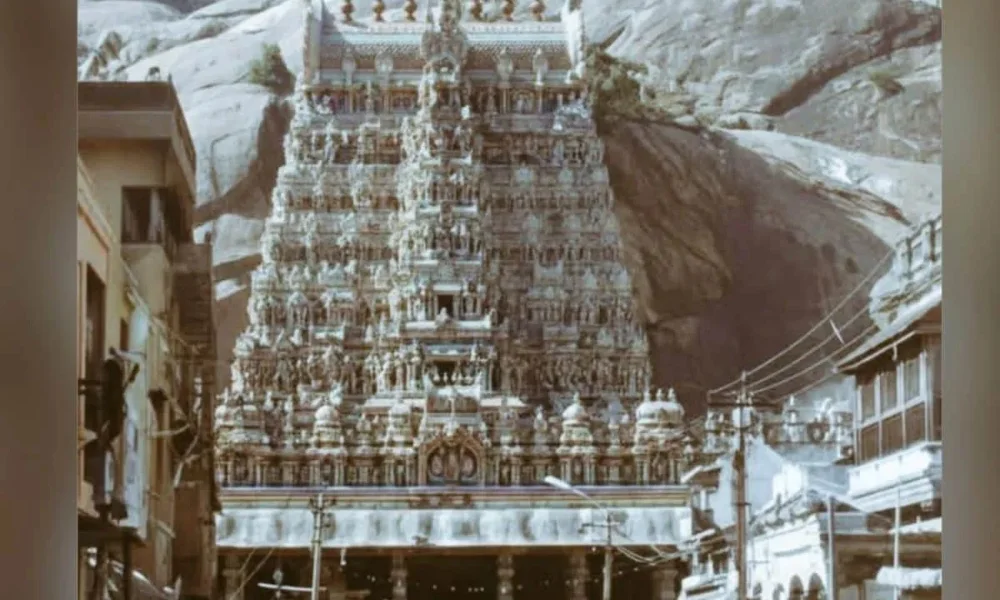
Thiruparankundram Hill Line: CJI Rejects TN Administration's Oral Presentation
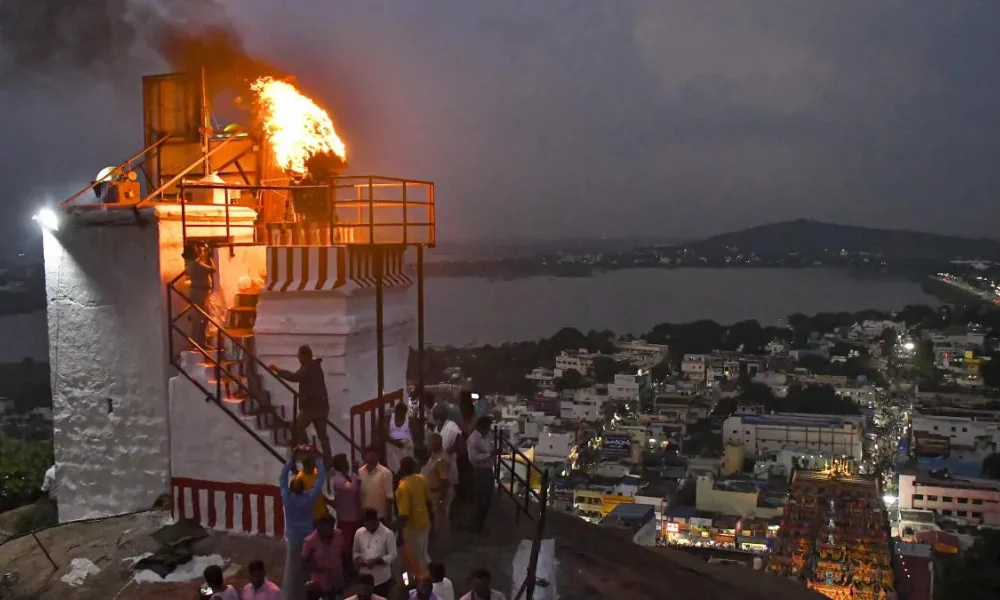
In a significant Supreme Court development, the Chief Justice of India declined to entertain an oral request made on behalf of the Tamil Nadu administration regarding its appeal in the Thiruparankundram hill lamp-lighting dispute. The State government had sought urgent consideration of its plea challenging the Madras High Court,s decision permitting devotees to light the Karthigai Deepam lamp at the Deepathoon atop the Thiruparankundram hills. The brief yet firm refusal by the Chief Justice has kept the focus on both the court,s procedural discipline and the larger religious rights controversy unfolding in Tamil Nadu.
The case, which has quickly turned into a breaking news highlight, centers on the balance between court orders, administrative control, and the rights of devotees to perform traditional rituals. While the Tamil Nadu government has formally approached the Supreme Court through a Special Leave Petition, its attempt to secure a swift hearing through an oral mention was firmly turned down, signalling the judiciary,s commitment to its revised norms on case listing and emergency mentions.
Background of the Thiruparankundram Lamp Dispute
Thiruparankundram, a prominent hill near Madurai, holds deep religious significance for devotees of Arulmighu Subramaniya Swamy Temple. The practice of lighting lamps, particularly during the Karthigai Deepam festival, is an important ritual for worshippers. At the center of the present dispute is the Deepathoon, a stone lamp post located at the summit of the hill, in the vicinity of a dargah. This geographical and religious proximity has made the issue highly sensitive, as it involves the management of religious practices in a shared or closely situated sacred space.
The controversy intensified when the Madras High Court, Madurai Bench, permitted devotees to light the Karthigai Deepam lamp at the Deepathoon, subject to security arrangements. The State administration, citing law and order concerns and other considerations, later found itself at odds with the court,s directions. This eventually led to contempt proceedings against senior district officials who were alleged to have failed to comply with the High Court,s orders. As a result, the matter evolved from a local religious and administrative issue into a high-profile legal confrontation now reaching the Supreme Court of India.
What Happened Before the Chief Justice of India
The Tamil Nadu government,s appeal, contesting the High Court,s decision on lamp illumination, was brought before the Chief Justice of India for urgent listing. The State,s counsel attempted to make an oral submission, seeking immediate consideration of the matter. A counter counsel opposed this move and argued that the administration merely wanted to create an appearance that it had approached the Supreme Court promptly, rather than genuinely seeking relief through the regular listing process.
The State,s representative maintained that he was only requesting that the plea be heard, emphasizing the urgency from the government,s perspective. However, the Chief Justice, Justice Surya Kant, refused to entertain the oral plea and firmly stated, “No presentation, thank you.” With this short remark, the CJI underlined that the court would not depart from its recently reinforced procedural discipline, even in a matter the State projected as urgent. The appeal remains on record, but it will move forward based on the established registry and listing process rather than through an oral fast-track mention.
Supreme Court,s Rule on Oral Mentions and Emergency Listing
The refusal to accept the Tamil Nadu government,s oral submission did not occur in isolation. Only a week earlier, the Supreme Court had issued a directive that verbal requests for listing or scheduling cases would generally not be entertained. The only exception carved out was for situations of extreme emergency, and even then, such requests would require the express authorization of the Chief Justice of India. This policy aims to ensure fairness, transparency, and discipline in how matters are prioritized and heard by the apex court.
In this context, the CJI,s remark during the Thiruparankundram hill case assumes particular importance. By declining the oral plea, the court reinforced that routine or political urgency cannot be equated with the kind of exceptional emergency envisaged by its own guidelines. For observers tracking breaking legal news and Supreme Court updates, this stands out as a clear signal that the top court intends to apply its listing rules uniformly, whether the request comes from an individual litigant, a corporation, or a State government.
Madras High Court Orders on Lamp Illumination
The Tamil Nadu government,s Special Leave Petition in the Supreme Court directly challenges orders passed by the Madras High Court, Madurai Bench. A single judge had earlier allowed devotees of the Arulmighu Subramaniya Swamy Temple to light the Karthigai Deepam at the Deepathoon atop Thiruparankundram hill, with security support from the Central Industrial Security Force (CISF). These directions were issued in the backdrop of concerns regarding access, security, and compliance with existing restrictions in the area near the dargah.
The State administration appealed this order before a division bench (referred to as a full bench in some descriptions), seeking to overturn the single judge,s directions. However, the division bench rejected the State,s challenge and upheld the earlier order allowing lamp illumination under security cover. This judicial affirmation meant that the administration was expected to facilitate the lighting of the lamp, while ensuring that law and order and safety considerations were duly managed at the hilltop location.
Contempt Proceedings Against District Officials
The present matter also carries a strong contempt-of-court dimension. The High Court orders were passed in contempt proceedings that arose from alleged non-compliance with an earlier decision dated 2 December by the single judge. After the State,s appeal against the single judge,s 3 December order was dismissed, the matter came back before the same judge in the contempt jurisdiction. The judge then directed the District Authority and the Police to ensure that the lamp-lighting ceremony went ahead on the same day and also quashed restrictive notifications in the surrounding region.
The case lists K.J. Praveenkumar, I.A.S., District Collector of Madurai, and J. Loganathan, I.P.S., Police Commissioner, Thallakulam, as the primary officials facing contempt proceedings. The matter was scheduled by the single judge for 10:30 AM the following day to verify whether the authorities had complied with the court,s directions. This tight timeline heightened the sense of urgency for the administration and formed part of the reason the State sought a rapid intervention from the Supreme Court through its appeal and attempted oral mention.
State,s Special Leave Petition and Case Registration
In procedural terms, the Tamil Nadu administration has already taken the formal legal step of filing a Special Leave Petition (SLP) before the Supreme Court of India. The SLP, registered under the title KJ Praveen Kumar v. Rama Ravikumar | Diary No. 70144/2025, represents the State,s effort to challenge the High Court,s orders that favored lamp lighting at the Thiruparankundram hilltop. Reports indicate that the appeal was formally registered at around 8:20 PM, underscoring the State,s attempt to move swiftly in the higher judicial forum.
However, registration of the case is only the first step in the Supreme Court process. Once the diary number is generated and the petition is scrutinized, the matter is placed before an appropriate bench as per the roster and listing norms. The State,s attempt to bypass the usual scheduling path through an oral request before the Chief Justice was clearly not accepted. As a result, the next developments in this breaking legal news story will depend on when the petition is listed in the normal course and how the bench eventually deals with the State,s challenge to the High Court,s rulings.
Local Accounts: Lamp Lighting Prevented and Detentions Reported
According to local accounts, despite the High Court,s clear directions, officials did not permit the lamp lighting on the specified day. Instead, they reportedly restrained and detained certain leaders who attempted to climb the hill and perform or support the ritual. These reports underline the tension between court-ordered facilitation of religious practices and the State,s on-ground decisions driven by law and order or administrative considerations. They also form part of the background that the courts will likely examine when evaluating allegations of contempt and disobedience.
For devotees and local residents following the latest updates, the events have added a layer of uncertainty around future religious observances at the hilltop Deepathoon. Each court hearing and each administrative action becomes part of a closely-watched sequence of developments, with implications not only for the immediate festival season but also for how similar rituals may be regulated in the coming years.
Religious Practices, Security Concerns, and Administrative Responsibilities
The Thiruparankundram hill dispute highlights the complex intersection of religious freedom, security considerations, and administrative responsibility. On one side are the devotees of the Arulmighu Subramaniya Swamy Temple, who see the lighting of the Karthigai Deepam lamp as an essential and time-honoured ritual. On the other side are State authorities, who must factor in crowd management, safety concerns, and sensitivities arising from the proximity of multiple religious sites on and around the hill.
Courts are often called upon to balance these competing concerns. In this case, the High Court sought to allow the ritual while minimizing risk by directing provision of CISF security and striking down restrictive notifications that were seen as unnecessarily limiting access. The State,s subsequent resistance, the contempt proceedings, and now the Supreme Court appeal together illustrate how questions of religious practice can transform into significant legal and administrative challenges, attracting state-wide and national attention.
Implications for Devotees and Ongoing Legal Monitoring
For devotees of the temple and residents of the region, the immediate concern is whether and how the lamp lighting at the Deepathoon will be permitted in practice. The single judge,s decision to schedule a hearing specifically to verify compliance shows that the High Court remains actively engaged in monitoring the situation on the ground. At the same time, the State,s appeal to the Supreme Court ensures that the dispute will continue to be watched closely by legal observers, faith communities, and the wider public seeking the latest updates on this developing story.
The eventual outcome will influence not only the immediate conduct of religious rituals at Thiruparankundram hill but also the broader understanding of how far executive authorities can go in restricting or reshaping traditional practices in the name of security or public order. As the Supreme Court processes the Special Leave Petition in due course, the case will likely remain a key reference point in discussions on religious rights, administrative power, and judicial oversight in India,s evolving legal landscape.
Facebook Comments








-
 Explore the upcoming Tamil film Maaman - cast, sto...
 -
 Read the ACE (2025) movie review starring Vijay Se...
 -
 Check out Maaman's 1st day box office collection a...
 -
 Explore tourist family reviews for Maaman movie –...
Popular Posts
Vote / Poll
Recent Posts




Recommended Posts

-
 Discover the best schools in Nagercoil f...
 -
 Discover the top-rated preschools in Nag...
 -
 Explore the best schools in Nagercoil th...

Comment / Reply From