Supreme Court Stays Waqf Act 5-Year Muslim Clause

Supreme Court Stays Waqf Act’s 5-Year Muslim Clause for Donations
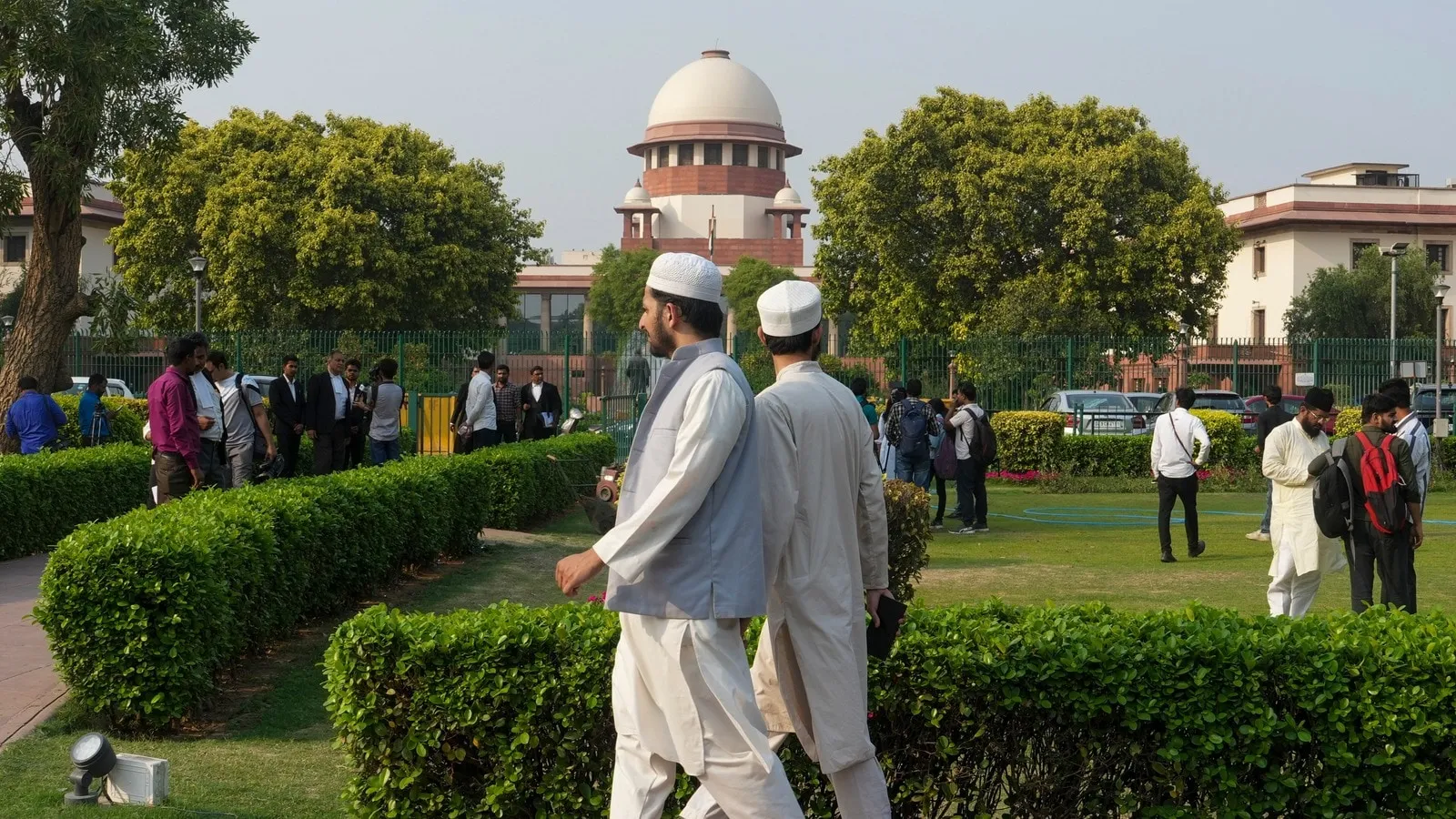
In a significant development, the Supreme Court of India has stayed a key provision in the Waqf (Amendment) Act, 2025, which mandated that an individual must have been a practising Muslim for at least five years to create a Waqf. The decision, announced on Monday, September 15, 2025, has sparked widespread discussions across legal and religious communities, as it temporarily halts the enforcement of this clause until state governments establish clear rules to determine who qualifies as a practising Muslim. This ruling is seen as a critical step in addressing concerns raised by petitioners regarding the new amendments to the Waqf Act.
Details of the Supreme Court’s Ruling
The Supreme Court, led by Chief Justice B R Gavai, issued the interim order after a series of hearings that culminated in the decision to reserve orders on May 22, 2025. The bench, which also addressed other contentious provisions of the Waqf (Amendment) Act, 2025, directed that the five-year practising Muslim clause remain in abeyance. This means that, for now, individuals wishing to create a Waqf—a charitable endowment under Islamic law—will not be required to prove they have been practising Muslims for five consecutive years. Instead, the court has tasked state governments with formulating guidelines to define what constitutes a practising Muslim, ensuring clarity and fairness in the application of the law.
The court’s decision comes in response to petitions challenging the constitutionality and practicality of the amended Waqf Act. Petitioners argued that the five-year clause could potentially discriminate against individuals and restrict their ability to contribute to Waqf properties, which are often dedicated to religious, charitable, or community purposes. The stay on this provision is expected to provide temporary relief to those affected while the legal process continues.
Background of the Waqf (Amendment) Act, 2025
The Waqf (Amendment) Act, 2025, introduced several changes to the existing Waqf Act, aiming to streamline the management and regulation of Waqf properties across India. One of the most debated provisions was the requirement that only individuals who have been practising Muslims for at least five years could create a Waqf. This clause was intended to ensure that Waqf properties were managed and created by individuals with a deep commitment to Islamic principles. However, critics argued that it imposed an unnecessary restriction and lacked clarity on how “practising Muslim” would be defined or verified.
The amendments also included provisions related to the denotification of properties declared as Waqf by courts, waqf-by-user, or waqf by deed. These provisions have also been challenged in court, with petitioners raising concerns about potential misuse and the undermining of existing Waqf properties. The Supreme Court’s recent order addresses these issues by temporarily halting the implementation of the controversial five-year clause while further deliberations continue.
Arguments Presented in Court
The Supreme Court bench, headed by Chief Justice B R Gavai, heard arguments from both sides over three consecutive days before reserving its interim orders. Advocates representing the petitioners challenging the Waqf (Amendment) Act argued that the five-year clause was arbitrary and could disproportionately affect individuals who wish to contribute to Waqf properties for charitable purposes. They contended that the provision lacked a clear mechanism for implementation and could lead to discriminatory practices.
On the other hand, Solicitor General Tushar Mehta, representing the Central Government, defended the amendments, stating that they were designed to ensure accountability and transparency in the management of Waqf properties. Mehta argued that the five-year clause was necessary to prevent misuse of the Waqf system and to ensure that only individuals with a genuine connection to the Muslim community could create such endowments. However, the court found merit in the petitioners’ arguments and decided to stay the clause pending further clarity from state governments.
Key Issues Identified by the Court
During the hearings, the Supreme Court identified three key issues in the Waqf (Amendment) Act, 2025, for which interim orders were sought. These included the five-year practising Muslim clause, the power to denotify Waqf properties, and other procedural aspects of the amended law. The court’s decision to stay the five-year clause addresses one of these issues, while the remaining concerns are expected to be dealt with in subsequent hearings. The bench emphasized the need for clear and fair guidelines to ensure that the law is applied uniformly across the country.
Implications of the Stay Order
The Supreme Court’s decision to stay the five-year practising Muslim clause has far-reaching implications for the management of Waqf properties in India. By halting the enforcement of this provision, the court has ensured that individuals are not unfairly restricted from creating Waqf endowments until clear guidelines are established. This move is likely to be welcomed by those who view the clause as restrictive and potentially discriminatory.
Furthermore, the court’s directive to state governments to frame rules for determining who qualifies as a practising Muslim highlights the need for a standardized and transparent process. This could lead to the development of more inclusive policies that balance the need for accountability with the right to contribute to charitable causes. Legal experts believe that the stay order will prompt further discussions on the broader implications of the Waqf (Amendment) Act, 2025, and its impact on religious and charitable institutions in India.
What Lies Ahead
The Supreme Court’s interim order is a temporary measure, and the final outcome of the case will depend on the court’s eventual ruling on the petitions challenging the Waqf (Amendment) Act, 2025. In the meantime, state governments will need to work diligently to establish rules that clarify the criteria for determining who qualifies as a practising Muslim. This process is expected to involve consultations with religious leaders, legal experts, and community stakeholders to ensure that the guidelines are fair and practical.
The stay order also underscores the judiciary’s role in upholding constitutional principles and ensuring that laws are applied in a manner that is just and equitable. As the case progresses, it will likely continue to attract attention from legal scholars, religious organizations, and the general public, all of whom are keenly observing how the Waqf (Amendment) Act, 2025, will shape the future of Waqf properties in India.
Facebook Comments













-
 Explore the upcoming Tamil film Maaman - cast, sto...
 -
 Read the ACE (2025) movie review starring Vijay Se...
 -
 Check out Maaman's 1st day box office collection a...
 -
 Explore tourist family reviews for Maaman movie –...
Popular Posts
Vote / Poll
Recent Posts




Recommended Posts

-
 Discover the best schools in Nagercoil f...
 -
 Discover the top-rated preschools in Nag...
 -
 Explore the best schools in Nagercoil th...

Comment / Reply From