Inflation May Curb Fed Rate-Cut Hopes in 2025
Could Inflation Dampen Federal Reserve Rate-Cut Hopes in 2025?
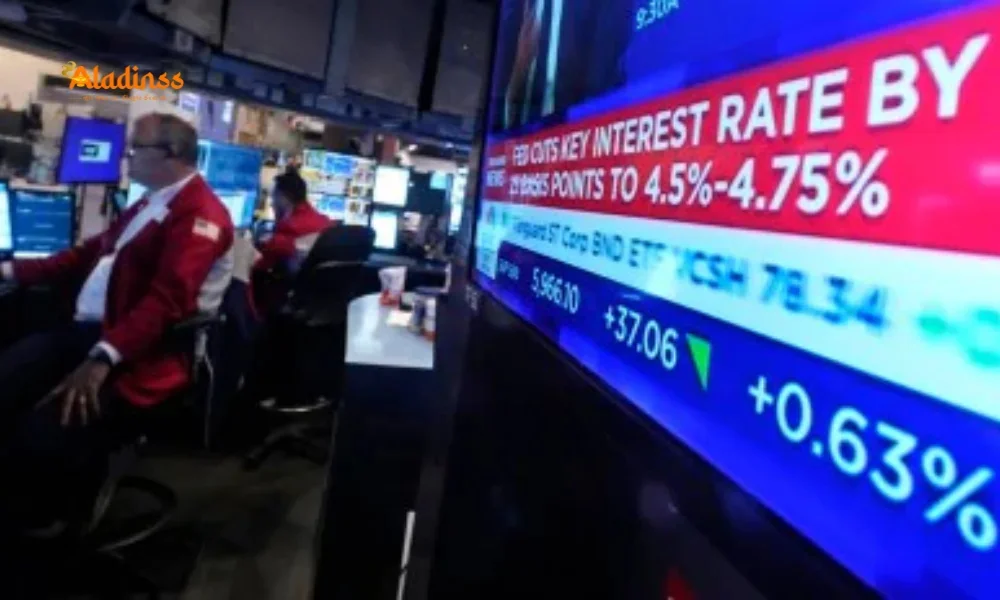
The Federal Reserve faces a critical juncture in 2025 as it navigates a weakening labor market and persistent inflationary pressures, potentially reshaping expectations for interest rate cuts. A recent weak jobs report has heightened market anticipation for a rate cut at the Fed's September 16-17 meeting, with an 87% probability of a 0.25% reduction, according to the CME Group's FedWatch tool. However, rising inflation, driven partly by tariffs, could temper hopes for aggressive cuts, complicating the Fed’s dual mandate of maximizing employment and ensuring price stability. This breaking news report explores the delicate balance the Fed must strike and the implications for the U.S. economy.
The labor market’s slowdown, with August job growth described as “anemic” by Bank of America economist Aditya Bhave, has shifted the Fed’s focus toward supporting employment. Yet, inflation, which stood at 2.9% year-over-year in July 2025, remains above the Fed’s 2% target, posing risks to further easing. As markets price in potential rate reductions to as low as 3.5%-3.75% by year-end, upcoming inflation data and tariff impacts will be pivotal in shaping the Fed’s next moves.

Weak Jobs Market Fuels Rate-Cut Expectations
The U.S. labor market has shown signs of deterioration, prompting markets to expect Federal Reserve action to bolster employment. The August jobs report revealed weaker-than-expected job growth, with nonfarm payrolls increasing by just 151,000 and underemployment reaching a three-year high, according to the U.S. Bureau of Labor Statistics. This slowdown has shifted the Fed’s focus from inflation to labor market weakness, as noted by Aditya Bhave, who predicts a 0.25% rate cut in September and another in December. Such cuts would lower the federal funds rate from its current 4.25%-4.50% range to 3.75%-4%, making borrowing cheaper for consumers and businesses.
Markets are more optimistic, pricing in a possibility of rates dropping to 3.5%-3.75% by year-end, according to the CME Group's FedWatch tool. This optimism stems from the Fed’s historical tendency to prioritize employment during economic slowdowns. However, the Fed’s cautious approach is driven by its dual mandate, which requires balancing job growth with price stability. With unemployment at 4.2% in July, up from 4.1% in June, the labor market remains resilient but shows cracks that could justify preemptive rate cuts to prevent further weakening.
Inflation Remains a Persistent Concern
Despite the labor market’s challenges, inflation continues to complicate the Fed’s decision-making. The Consumer Price Index (CPI) rose by 2.9% year-over-year in July 2025, with forecasts suggesting a similar rate for August, according to BMO chief economist Douglas Porter. This level, while lower than the post-COVID peak of 9.1% in June 2022, remains above the Fed’s 2% target, signaling persistent price pressures. The Personal Consumption Expenditures (PCE) index, the Fed’s preferred inflation gauge, hit 2.9% in July, the highest since February 2025, further highlighting the challenge.
Tariffs implemented by the Trump administration are adding to inflationary pressures. While July data showed subdued price increases for cars and appliances, furniture and electronics have become more expensive, as noted by Wells Fargo senior economist Sarah House. The “burst of inventory front-running” before tariffs took effect helped businesses avoid immediate price hikes, but dwindling stockpiles are now leading to higher customs bills, which may be passed on to consumers. Porter warns that inflation could rise further in the coming months as tariffs are fully absorbed, potentially dampening hopes for aggressive rate cuts.
August CPI Data: A Critical Indicator
The upcoming Consumer Price Index report for August, scheduled for release on September 11, 2025, by the Bureau of Labor Statistics, will be a pivotal factor in shaping the Fed’s rate-cut strategy. Analysts, including Douglas Porter, forecast a 2.9% year-over-year increase, consistent with July’s figures. While this is significantly lower than the 6%+ highs of 2022, it remains above the Fed’s 2% target, indicating that inflationary pressures are not fully under control. The report will provide critical insights into whether inflation is stabilizing or accelerating, particularly in light of tariff-driven price increases.
If the CPI data shows persistent or rising inflation, it could reduce the likelihood of multiple rate cuts in 2025, as the Fed may prioritize price stability over employment concerns. Conversely, a softer inflation reading could bolster market expectations for cuts in October and December, as Porter notes that markets are “heavily building in the odds of quick follow-up cuts.” The interplay between inflation data and labor market trends will be crucial in determining whether the Fed opts for a cautious or aggressive easing approach.
Will the Fed Opt for Aggressive Rate Cuts?
While the Fed typically adjusts rates by 0.25% increments, some investors speculate that weak jobs data could prompt a more aggressive 0.50% cut in September. This possibility, though, is considered unlikely by ING’s chief international economist James Knightley, who argues that tariff-driven inflation risks may prevent a majority of Fed voters from supporting a half-point cut. Instead, Knightley predicts three 0.25% cuts in September, October, and December, followed by additional reductions in early 2026, bringing the federal funds rate to 3.25%-3.5% by Q1 2026.
The rationale for cautious cuts lies in the Fed’s need to balance employment and inflation risks. While the labor market’s weakness justifies action, inflation remains “problematic,” as Bhave notes, requiring the Fed to proceed carefully. A University of Michigan consumer survey showing 60% of Americans expecting higher unemployment over the next year adds urgency to the Fed’s employment mandate. Knightley emphasizes that consumers often sense job market shifts before they appear in official data, citing hiring freezes and layoffs as early indicators.
Tariffs and Their Economic Impact
The Trump administration’s tariffs, implemented in early 2025, have introduced significant uncertainty into the Fed’s calculus. While initial price increases have been modest, with cars and appliances remaining stable, sectors like furniture and electronics are seeing higher costs. Sarah House from Wells Fargo notes that businesses initially mitigated price hikes by stockpiling inventory before tariffs took effect. However, as stockpiles dwindle, companies face rising customs bills, which could translate into higher consumer prices in the coming months.
Historically, a 1% increase in tariff rates has led to a 0.1% rise in annual inflation, according to PBS News. With the average U.S. tariff rate at 2%, a potential increase to 10% could significantly elevate prices, complicating the Fed’s efforts to achieve its 2% inflation target. This stagflationary risk—rising prices coupled with slowing economic growth—poses a unique challenge, as tariffs could dampen consumer spending, which accounts for 70% of U.S. economic activity, while simultaneously driving inflation.
Broader Economic Implications
The Fed’s decisions in 2025 will have far-reaching implications for the U.S. economy. Lower interest rates could stimulate borrowing and spending, providing a boost to sectors like housing and manufacturing, which have been sluggish due to high rates. The 30-year mortgage rate, at 6.8% in June 2025, has slowed homebuilding, a key economic driver. Rate cuts could alleviate this pressure, but they also risk overstimulating demand, potentially exacerbating inflation, as warned by analysts.
Consumer confidence, already shaken by trade conflicts and federal layoffs, has tumbled, with the S&P 500 down 8% from its mid-February peak, according to USA Today. This wealth effect could further curb spending among higher-income households, which have driven recent consumption gains. The Fed’s cautious approach, as articulated by Chair Jerome Powell, reflects the uncertainty surrounding tariff impacts and the need to monitor evolving economic data closely.
Market Sentiment and Future Outlook
Market sentiment, as reflected in posts on X, shows strong expectations for a September rate cut, with probabilities ranging from 83% to 94%. This optimism is driven by cooling inflation and labor market softness, but some analysts, like those at Evercore ISI, caution that a “narrative-changing” inflation spike could disrupt these expectations. The Fed’s projected terminal rate of 3%—the highest since 2016—suggests that the era of ultra-low rates may be over, as noted by Powell at the Jackson Hole symposium.
Looking ahead, the Fed’s path will depend on incoming data, particularly the August CPI and further jobs reports. A resilient economy, with 2% GDP growth projected by Deloitte for 2025, provides some flexibility, but stagflation risks loom large. As the Fed navigates these challenges, investors and consumers alike will be closely watching for signals of how monetary policy will shape borrowing costs, economic growth, and price stability in the months ahead.
Facebook Comments














-
 Explore the upcoming Tamil film Maaman - cast, sto...
 -
 Read the ACE (2025) movie review starring Vijay Se...
 -
 Check out Maaman's 1st day box office collection a...
 -
 Explore tourist family reviews for Maaman movie –...
Popular Posts
Vote / Poll
Recent Posts




Recommended Posts

-
 Discover the best schools in Nagercoil f...
 -
 Discover the top-rated preschools in Nag...
 -
 Explore the best schools in Nagercoil th...

Comment / Reply From