Maruti Suzuki to Launch 8 New SUVs Aiming for 50 Percent Market Share
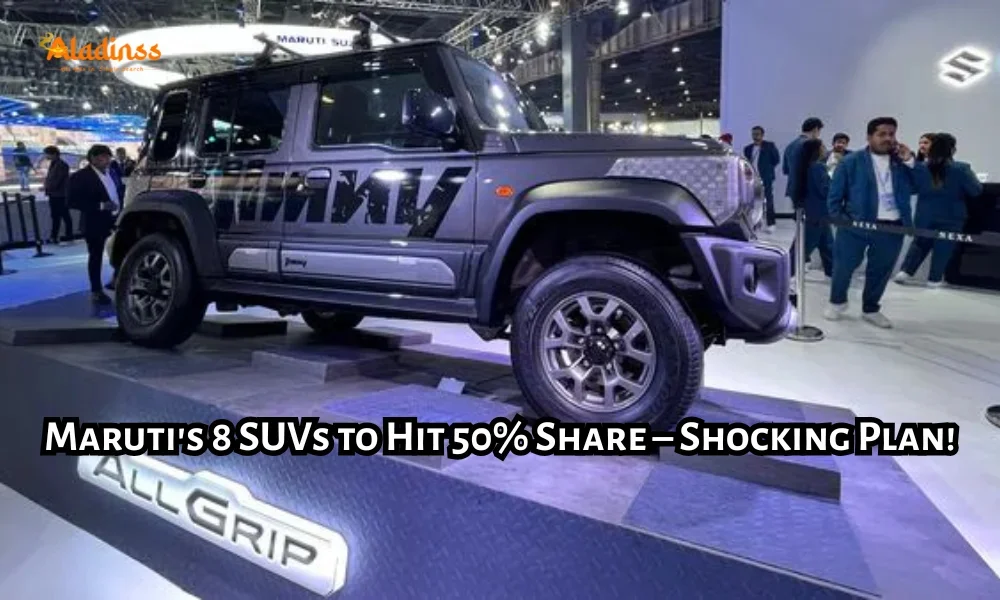
Maruti Suzuki Plans 8 New SUVs to Grab 50 Percent Market Dominance
Maruti Suzuki India Limited (MSIL) is gearing up for an aggressive expansion in the SUV segment, announcing the launch of eight new SUVs by FY 2030-31. Currently commanding around 40 percent of the Indian passenger vehicle market, the company aims to push this figure to an ambitious 50 percent market share through a multi-powertrain offensive. The roadmap was unveiled during the 2025 Japan Mobility Show, signaling Maruti’s intent to dominate the fast-growing SUV space.
This bold strategy builds on Suzuki’s global vision of offering diverse fuel options including petrol, CNG, biogas (CBG), electric vehicles (EV), flex-fuel vehicles (FFV), and advanced hybrid systems. Notably, the upcoming eight-SUV lineup excludes the recently launched Victoris and the soon-to-debut e Vitara, meaning these models are additional firepower in Maruti’s arsenal to conquer the market.
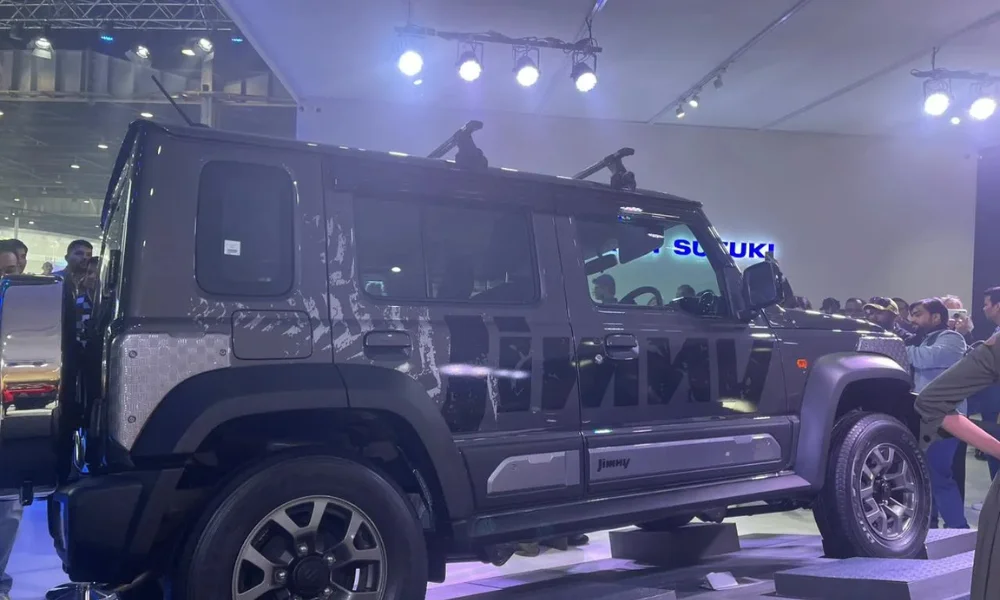
Multi-Powertrain Strategy: The Key to Cost-Effective Dominance
Suzuki’s global multi-powertrain approach is designed to cater to every customer preference while optimizing production costs. By sharing platforms, components, and technology across petrol, CNG, hybrid, and electric variants, Maruti can offer competitive pricing without compromising on features. This flexibility is crucial in a price-sensitive market like India, where affordability often dictates purchase decisions.
The Maruti Suzuki SUV lineup will feature a mix of internal combustion engines (ICE), compressed natural gas (CNG), compressed biogas (CBG), strong and mild hybrids, and pure electric powertrains. This diversification not only reduces dependency on a single fuel type but also future-proofs the portfolio against regulatory changes and fluctuating fuel prices.
For instance, CNG and CBG variants appeal to fleet operators and cost-conscious buyers due to low running costs, while hybrids attract urban users seeking fuel efficiency without range anxiety. The inclusion of FFVs (flex-fuel vehicles) capable of running on ethanol blends aligns with India’s push for alternative fuels. Meanwhile, the EV models will target tech-savvy, environmentally conscious consumers in metro cities.
VictorIS: A Smarter Grand Vitara with Segment-First Innovations
Maruti recently introduced the VictorIS SUV through its mass-market Arena dealership network, making premium features more accessible. Positioned as an intelligent evolution of the Grand Vitara, the VictorIS comes equipped with Level 2 ADAS (Advanced Driver Assistance Systems) – a significant upgrade in safety and convenience.
Powertrain options include mild-hybrid and strong-hybrid systems for superior fuel efficiency, along with a groundbreaking underbody-mounted CNG tank – a segment-first feature that preserves boot space unlike traditional trunk-mounted cylinders. This innovation enhances practicality, making the VictorIS ideal for families who want eco-friendly mobility without sacrificing utility.
The strong-hybrid variant promises class-leading mileage figures, potentially exceeding 25 kmpl, while delivering smooth performance in city traffic. The mild-hybrid setup offers a balance between power and economy, appealing to highway commuters. With Arena’s widespread reach, the VictorIS ensures easy availability, service, and resale value – key factors influencing Indian car buyers.
e Vitara: Maruti’s Flagship EV Set for Late-2025 Debut
The Maruti e Vitara is poised to be the cornerstone of Maruti’s electric vehicle strategy in India. Expected to launch by the end of 2025, this compact electric SUV will rival the Tata Curvv EV, Mahindra XUV400, and Hyundai Creta Electric. Built on a dedicated born-electric platform co-developed with Toyota, the e Vitara promises a range of over 500 km on a single charge.
Key highlights include fast charging (80% in under 30 minutes), vehicle-to-load (V2L) capability, and a tech-loaded cabin with a large touchscreen, digital driver display, and over-the-air (OTA) updates. Maruti’s partnership with Toyota ensures access to advanced battery technology and global expertise, giving the e Vitara a competitive edge in reliability and performance.
The e Vitara will be manufactured at Suzuki’s Gujarat plant, benefiting from localized production to keep costs in check. Expected pricing between ₹15-20 lakh will position it as an affordable yet premium electric SUV, tapping into the growing demand for sustainable mobility in Tier-1 and Tier-2 cities.
Eight New SUVs: What to Expect by 2030-31
While exact model names remain under wraps, industry insiders suggest the eight new Maruti SUVs will span multiple segments – sub-compact, compact, mid-size, and possibly a three-row family hauler. Here’s a speculative breakdown based on market trends and Maruti’s product gaps:
- Sub-4m Electric SUV: A smaller sibling to the e Vitara, competing with Tata Punch EV and Citroen eC3.
- Compact Hybrid SUV: An upgraded Brezza with strong-hybrid tech to challenge the Hyundai Venue Hybrid.
- Mid-Size Premium SUV: A larger rival to the Tata Harrier, possibly with AWD and diesel-hybrid options.
- CNG-Powered Mid-Size SUV: A seven-seater with factory-fitted biogas capability for rural and semi-urban markets.
- Flex-Fuel Compact SUV: Designed for ethanol blends, targeting states like Maharashtra and Uttar Pradesh.
- Micro SUV with EV Option: An entry-level model under ₹10 lakh to capture first-time buyers.
- Performance-Oriented SUV: A sporty variant with turbo-petrol and manual gearbox for enthusiasts.
- Three-Row Electric SUV: A family-oriented EV with 6/7 seats and 400+ km range.
Each model will leverage Maruti’s strengths – fuel efficiency, low maintenance, and extensive service network – while introducing segment-first features to stay ahead of rivals like Hyundai, Tata, Mahindra, and Kia.
Can Maruti Achieve 50 Percent Market Share?
Maruti’s current 40 percent market share is built on its dominance in the hatchback and compact sedan segments. However, SUVs now account for over 50 percent of total passenger vehicle sales in India – a segment where Maruti’s presence is still growing. The launch of eight new SUVs, combined with the Victoris and e Vitara, will significantly boost its SUV market share from the current ~20 percent to potentially 35-40 percent by 2030.
To reach the 50 percent overall target, Maruti will need to:
- Maintain leadership in entry-level cars (Alto, WagonR, Swift).
- Expand premium offerings via Nexa (Fronx, Jimny, Invicto).
- Strengthen rural penetration with CNG and biogas models.
- Build a robust EV charging ecosystem in partnership with oil companies and startups.
- Enhance brand perception through motorsport and experiential marketing.
Competition from Tata Motors (aiming for 30 percent EV share), Hyundai-Kia (aggressive hybrid push), and Mahindra (born-electric BE and XUV lines) will make the journey challenging. However, Maruti’s manufacturing scale, supplier ecosystem, and dealer network of over 3,800 touchpoints give it a structural advantage no rival can match.
Investment and Infrastructure: Backing the Ambition
Maruti Suzuki has committed ₹1.25 lakh crore in capital expenditure over the next decade, with a significant portion allocated to SUV and EV development. This includes expanding the Gujarat plant to 1 million units annually, setting up a dedicated EV battery facility, and upgrading R&D centers in Rohtak and Japan.
The company is also collaborating with Toyota for hybrid technology, Denso for electronics, and NDMC for biogas infrastructure. Dealer training programs are underway to handle high-voltage systems and ADAS calibration, ensuring seamless after-sales support for new-age SUVs.
Conclusion: A Transformative Decade Ahead
Maruti Suzuki’s plan to launch eight new SUVs by 2030-31 is more than an expansion – it’s a strategic overhaul to reclaim dominance in a rapidly evolving market. By offering petrol, CNG, hybrid, and electric options across segments, Maruti is future-proofing its portfolio while staying true to its core strength: value for money.
The Victoris and e Vitara are just the beginning. With a clear roadmap, massive investments, and unmatched scale, Maruti is well-positioned to achieve its 50 percent market share goal. For consumers, this means more choices, better technology, and lower ownership costs. The next five years will witness Maruti’s most transformative phase since the 1980s – and the Indian auto industry will never be the same.
Facebook Comments










-
 Explore the upcoming Tamil film Maaman - cast, sto...
 -
 Read the ACE (2025) movie review starring Vijay Se...
 -
 Check out Maaman's 1st day box office collection a...
 -
 Explore tourist family reviews for Maaman movie –...
Popular Posts
Vote / Poll
Recent Posts



Recommended Posts

-
 Discover the best schools in Nagercoil f...
 -
 Discover the top-rated preschools in Nag...
 -
 Explore the best schools in Nagercoil th...

Comment / Reply From