Google Unveils Android XR Smart Spectacles with Gemini
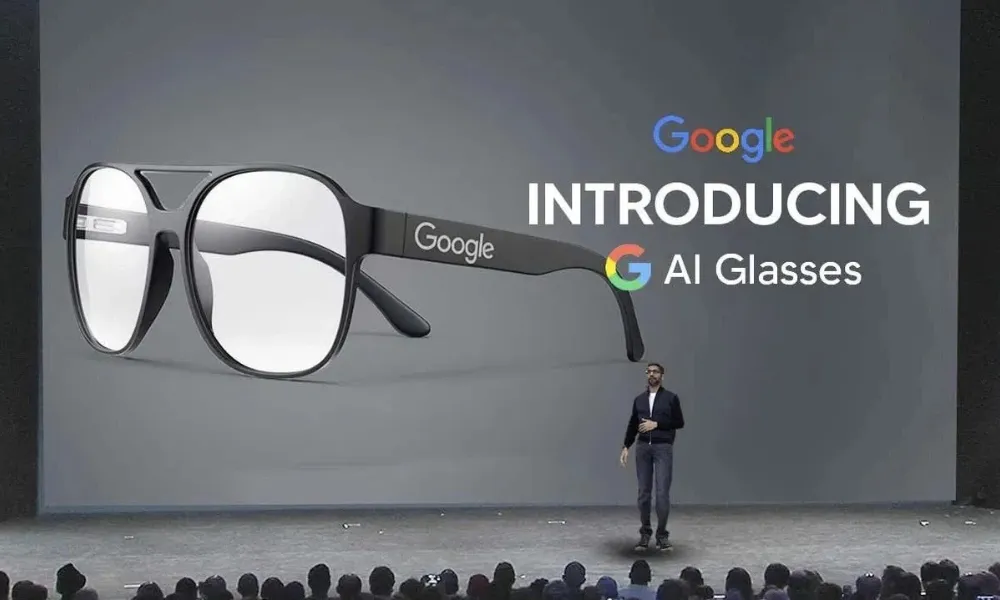
Google Unveils Android XR Smart Spectacles with Gemini
Google has lifted the curtain on its forthcoming Android XR smart spectacles, a new generation of wearable technology that tightly integrates the company’s Gemini AI assistant with everyday eyewear. Positioned as a key breaking news update in the extended reality space, the announcement outlines how Google plans to blend artificial intelligence, augmented reality elements, and familiar eyewear design into a single product line. Rather than presenting smart glasses as a futuristic novelty, the company is framing them as practical tools for travel, work, and daily life, with a strong focus on real-world problem solving and intuitive interaction.
The spectacles are powered by the Android XR operating system, an adaptation of Android tailored for smart spectacles and AR headsets. Linked directly with Gemini, Google’s AI assistant, the devices will be capable of listening to voice commands, interpreting the surrounding environment, and delivering context-aware responses. For users tracking the latest development in wearable computing, this marks a significant step in Google’s renewed push into smart eyewear after earlier experiments in the category.
A Fresh Chapter in Google's Smart Eyewear Strategy
The project was first previewed at Google I/O, the company’s annual developer conference, where it signaled a renewed commitment to extended reality and wearable devices. Rather than focusing solely on headsets or bulky mixed reality gear, Google is betting on a more familiar form factor: spectacles that resemble everyday glasses but are enhanced with sensors, microphones, cameras, and, in some models, displays. This approach aligns with the broader industry trend of making cutting-edge technology look and feel like regular fashion accessories rather than technical equipment.
By tying the product closely to Android XR, Google is also signaling that these devices are not one-off experiments. Instead, they are meant to be part of a broader ecosystem where phones, headsets, smart glasses, and other devices share applications, services, and user data in a consistent way. For developers and tech watchers following this report, the rollout of Android XR is as important as the hardware itself, since it will define how apps behave across different extended reality form factors.
Collaborations with Warby Parker and Gentle Monster
To make the spectacles appealing beyond the tech enthusiast crowd, Google has partnered with well-known eyewear brands Warby Parker and Gentle Monster. These collaborations suggest that design, comfort, and aesthetics are being treated as seriously as chipsets and software. Rather than forcing users to choose between style and functionality, Google appears to be aiming for frames that can be worn comfortably all day and still look at home in professional, casual, or social environments.
The partnerships also hint at a strategy where multiple frame styles and fits will be available, possibly catering to different fashion tastes and regional trends. For news readers tracking the latest update in wearable fashion-tech crossovers, this combination of Silicon Valley engineering and established eyewear design houses is a clear sign that smart spectacles are being positioned as mainstream consumer products rather than niche gadgets.
Two Product Variants for Different Use Cases
Google plans to introduce two main versions of its Android XR smart spectacles. The first is an audio-focused model, which does not include a display but uses microphones, speakers, and cameras to support voice-first interaction with Gemini. The second is a more advanced variant with an integrated screen built directly into the frame, enabling visual overlays and richer AR-style experiences. This two-tier strategy reflects Google’s understanding that not every user needs a full visual AR interface to benefit from smart eyewear.
The audio-only edition is likely to appeal to users who want hands-free assistance without the distraction of on-glass visuals. It can function as a discreet everyday companion for quick information checks, navigation prompts, and basic tasks. The display-equipped model, meanwhile, aims at more advanced scenarios where step-by-step visuals, diagrams, and contextual overlays are genuinely helpful. Together, these variations show that Google is approaching the product line with flexibility, offering multiple paths into the smart spectacles ecosystem rather than a single all-or-nothing device.
Gemini AI at the Core of the Experience
At the heart of both models is Gemini, Google’s AI assistant. The spectacles will accept voice instructions and can tap into input from forward-facing cameras and microphones, allowing Gemini to understand what the user is seeing and hearing. In practical terms, this means a wearer can ask the glasses to interpret a sign in a foreign language, summarize a restaurant menu, or provide information about an object captured in a photo taken earlier in the day. This type of multimodal understanding, combining voice and visual context, is where extended reality and AI intersect most clearly.
For many users, the promise of Gemini on smart spectacles is the ability to get instant, situation-aware answers without pulling out a phone. Whether a tourist walking through an unfamiliar city or a commuter trying to find the fastest route home, the idea is that relevant information appears or is spoken at the right moment. This latest development in AI-powered wearables underscores Google’s intention to make Gemini more than a phone-based assistant, turning it into a companion that quietly observes and supports the user in the background.
Screen-Equipped Smart Eyewear for Richer Interaction
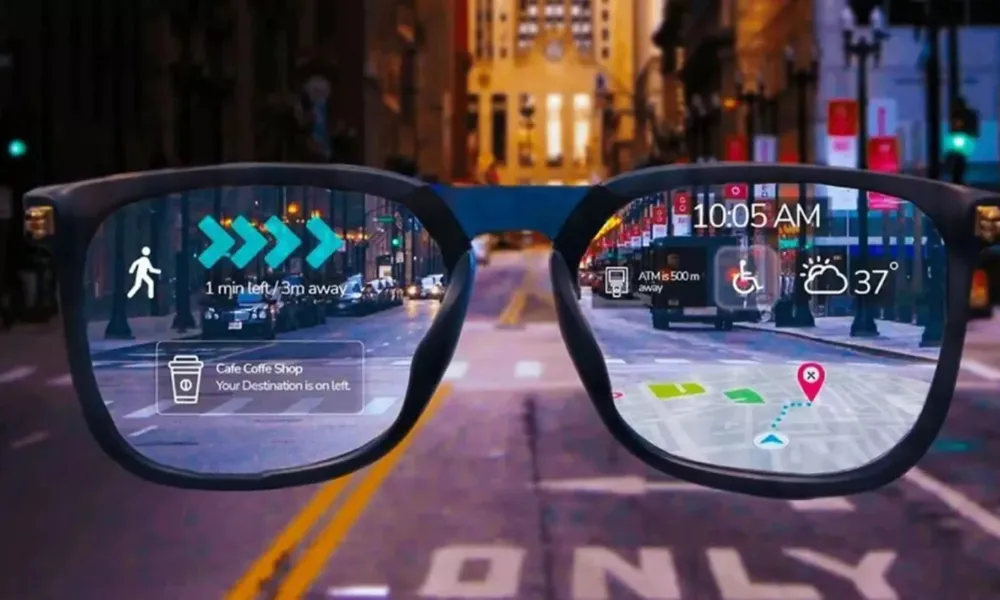
The display-enabled edition of the Android XR smart spectacles expands what users can do beyond audio responses. The integrated screen is designed to show navigation directions, so a wearer can glance slightly upward or to the side to see turn-by-turn prompts while walking. It can also display repair manuals, quick-reference instructions, or other visual guides in the user’s field of view. This aligns the device with practical, task-focused scenarios, such as fixing a household appliance, adjusting a gadget, or following a recipe without constantly checking a phone or tablet.
Rather than flooding the user with constant overlays, the design philosophy appears to be about contextual, on-demand visuals. When nothing is needed, the display can stay out of the way, allowing the spectacles to function like a normal pair of glasses. When helpful, Gemini and Android XR can bring up diagrams, text, or simple icons to nudge the user in the right direction. For readers looking for an in-depth report on emerging AR experiences, this combination of subtle display use and AI-driven content is a notable part of Google’s strategy.
How Google's Spectacles Compete with Meta's Ray-Ban Display
Google’s move inevitably draws comparisons with Meta’s Ray-Ban Display smart glasses, which also blend fashionable frames with advanced technology. Meta’s product includes a companion accessory known as the Neural Band, a wrist-worn device that lets users control their glasses with hand movements. While Google has not fully outlined any equivalent accessory, observers note that the company’s acquisition of Fitbit in 2021 gives it strong experience in wearables, sensors, and wrist-based input devices. This background may influence how Google eventually extends control options for its spectacles.
The Ray-Ban Display’s price point offers a rough indication of where Google’s hardware might land, even if no official pricing has been announced yet. For consumers tracking this breaking news story, the competition between Google and Meta is not just about devices, but also about ecosystems. Each company is trying to tie smart glasses into its broader platforms, services, and app stores, making it likely that users will choose based on which ecosystem they already rely on for social media, productivity, entertainment, and communication.
Also Read: Starlink Explains India Price Mix-up
Project Aura, XREAL Partnership, and Hardware Advancements
Beyond its own branded spectacles, Google is also working with third-party manufacturers to push Android XR forward. One highlight is Project Aura, a collaboration with wearable maker XREAL. Under this project, XREAL will release a pair of smart spectacles featuring a built-in display with a 70-degree field of view, paired with a tethered processing module. This module is powered by Qualcomm’s XR Gen 2 Plus chip, which is specially designed for extended reality workloads with a central processing unit, graphics processing unit, and AI-focused circuitry on board.
This approach allows the glasses themselves to remain relatively light while offloading intensive computation to the companion module. For power users and developers, it signals that Android XR is intended to scale from lightweight audio-first spectacles to more demanding, visually rich experiences. The Project Aura partnership also shows that Google wants Android XR to be a platform for multiple hardware brands rather than a closed, single-vendor ecosystem, echoing the way Android operates in the smartphone market.
Android XR, SDK Tools, and Developer Ecosystem
Alongside the hardware previews, Google has released a fresh preview version of the Android XR SDK. This toolkit is critical for developers who want to build apps specifically tailored to smart spectacles and AR headsets. It provides access to sensor data, making it possible for applications to react to head movement, orientation, and camera input. It also offers preconfigured user interface components, so developers do not need to design every element from scratch for this new class of devices.
From a news and industry analysis perspective, the SDK is a fundamental part of the story. Without compelling apps and services, even the most advanced wearable hardware struggles to gain traction. By delivering developer tools early, Google is encouraging experimentation and prototyping ahead of the consumer launch. This increases the likelihood that, when the spectacles arrive on the market, users will already find a selection of navigation aids, translation utilities, productivity tools, and creative applications waiting for them in the Android XR ecosystem.
Everyday Scenarios: Travel, Work, and Home Use
The most compelling part of Google’s Android XR smart spectacles announcement is how clearly it is rooted in everyday scenarios. While high-end AR demos often focus on futuristic gaming or complex 3D overlays, Google is highlighting practical uses like reading foreign-language signs while travelling, checking directions while walking, or getting quick explanations of objects captured in photos. These use cases feel grounded and relatable, making the technology easier to understand for a mainstream audience following this update.
In work settings, the glasses could help technicians follow step-by-step instructions while keeping their hands free, or assist office workers who want subtle notifications and reminders without constantly checking their phones. At home, they might be used for small tasks like following a recipe, checking a delivery status, or controlling smart devices through quick voice prompts. The consistent focus is on real tasks that people encounter every day, which can be enhanced by timely, context-aware information delivered through Gemini and Android XR.
Image Stability, Windows Sync, and User Comfort Features
As part of the broader Android XR roadmap, Google is working on features that directly affect comfort and usability. One of the newly highlighted capabilities aims to improve image stability when the user is moving. For anyone who has tried early AR or head-mounted displays, unstable visuals can be distracting or even uncomfortable. By prioritizing smoother, steadier visuals, Google is acknowledging that comfort is as important as raw processing power when it comes to long-term wearable use.
Another notable feature is the ability to synchronize content from Windows computers to Android XR headsets. This means users can operate Windows applications alongside Android apps within the extended reality environment. In practical terms, someone could access a familiar Windows program while still taking advantage of Android-based tools and Gemini AI assistance. For professionals, creators, and power users, this cross-platform capability strengthens the case for Android XR as a flexible, productivity-ready platform rather than a purely experimental space.
Imminent Launch and Outlook for Android XR Smart Spectacles
Google plans to release its initial smart spectacles next year, aligning the hardware debut with continued upgrades to Android XR. As the launch approaches, more details about pricing, regional availability, and specific frame designs are expected to emerge, but the core vision is already clear. The company wants Android XR smart spectacles to feel like natural extensions of daily life, powered by Gemini and strengthened by collaborations with established eyewear makers and technology partners.
For readers following this report as a breaking news update in the wearable technology segment, the story is not just about a single device. It is about an evolving platform where eyewear, extended reality, and artificial intelligence converge. With audio-first models, display-equipped variants, third-party projects like XREAL’s Project Aura, and an expanding SDK for developers, Google is laying the groundwork for an ecosystem in which smart spectacles become a regular, practical part of the technology landscape rather than a distant concept.
Facebook Comments









-
 Explore the upcoming Tamil film Maaman - cast, sto...
 -
 Read the ACE (2025) movie review starring Vijay Se...
 -
 Check out Maaman's 1st day box office collection a...
 -
 Explore tourist family reviews for Maaman movie –...
Popular Posts
Vote / Poll
Recent Posts



Recommended Posts

-
 Discover the best schools in Nagercoil f...
 -
 Discover the top-rated preschools in Nag...
 -
 Explore the best schools in Nagercoil th...

Comment / Reply From