
Nifty Begin Flat as Investors Await RBI MPC Decision
Sensex, Nifty Begin Flat as Investors Await RBI MPC Decision
The domestic equity market started the session on a cautious note as benchmark indices Sensex and Nifty opened nearly unchanged, reflecting the wait-and-watch mood among traders and investors ahead of the Reserve Bank of India's Monetary Policy Committee (MPC) decision. With the monetary policy outcome expected to set the tone for market direction over the coming weeks, participants preferred to avoid large, directional bets at the opening bell and instead focused on selectively building positions in rate-sensitive and defensive sectors.
The upcoming policy announcement is being viewed as a crucial event for equity, currency, and bond markets alike. While headline inflation has eased and growth remains robust, the recent softness in the rupee and global interest rate dynamics have introduced fresh layers of complexity for the central bank. Against this backdrop, the opening trades on the street largely mirrored the uncertainty surrounding the policy path and the commentary that will accompany the decision.
Market Opening Overview
At the start of trade, the Sensex and Nifty opened almost flat, with only a marginal positive or negative bias being registered on the screen. This subdued start underlines how closely the street is tracking the MPC outcome rather than reacting to overnight global cues or isolated stock-specific developments. For many market participants, the session is less about intraday volatility and more about positioning for what the central bank may signal on inflation, growth, and liquidity over the medium term.
Traders also remained conscious that, in the run-up to major policy events, price action can often be choppy yet shallow, with strong moves typically materialising only after the announcement and the subsequent press conference. The flat start, therefore, reflects not a lack of interest, but a deliberate decision by market participants to wait for clarity before committing fresh capital in a significant way.
Early Market Movement
Around 9:36 am, the Sensex was seen fluctuating near the flat line, at one point down about 60 points around the 85,325 mark, while the Nifty hovered slightly above the 26,000 level with a modest 11-point advance. These narrow moves highlight the absence of a decisive directional trend in the opening minutes of trade. Both indices appeared to be consolidating within a tight range as investors tried to gauge market breadth and sectoral trends ahead of the policy event.
Broader market indices, including mid-cap and small-cap segments, were mostly in the red during early deals. This underperformance of the wider market compared to the frontline indices suggested a degree of risk aversion, with traders preferring relatively liquid large-cap names while trimming exposure to more volatile counters. Such a pattern is typical on major event days, when participants seek safety in benchmark-heavy stocks instead of aggressively chasing high-beta opportunities.
Sectorally, banking, financial services, automobiles, and real estate counters remained at the centre of attention, given their direct sensitivity to interest rate expectations. At the same time, defensives such as fast-moving consumer goods and select healthcare names showed relative stability, serving as safe havens for investors unwilling to take on excessive risk before the policy announcement.
Investor Sentiment and Expectations
Investor sentiment heading into the MPC meet remains cautiously optimistic but clearly divided. A section of the market believes that the central bank could consider a measured rate cut in light of moderating inflation and sustained economic growth momentum. Another section expects the RBI to hold rates steady, using the opportunity to carefully assess the evolving global backdrop, including foreign capital flows, commodity price trends, and monetary policy moves by major central banks.
The anticipation around the policy statement is not just about the headline repo rate action but also about the tone of the accompanying commentary. Market participants will be closely watching the RBI's language on future inflation risks, its assessment of domestic demand, and its stance on liquidity management. Any change in wording related to policy stance, such as a subtle shift in emphasis from inflation control to growth support, could have a meaningful impact on short-term market direction.
For traders, this means that intraday positions are likely to remain light until the policy details are fully digested. For longer-term investors, the focus is more on how the MPC's decision fits into the broader interest rate cycle and what it might mean for corporate earnings, borrowing costs, and overall market valuations over the next few quarters.
Expert Insight on RBI Policy
Commenting on the set-up ahead of the decision, Dr VK Vijayakumar, Chief Investment Strategist at Geojit Financial Services, noted that the focus today extends beyond the simple question of whether the RBI cuts rates or keeps them unchanged. According to him, market participants are particularly keen to understand how the governor frames the current macroeconomic environment and the balance of risks that the central bank is monitoring.
He pointed out that the combination of low inflation, strong economic expansion, and a recently weakened rupee makes the rate decision especially challenging. On one hand, easing price pressures and resilient growth could provide the RBI with some room to support activity through a calibrated rate cut. On the other hand, currency volatility, external sector dynamics, and the need to anchor inflation expectations may encourage a more conservative approach, favouring a pause over aggressive easing.
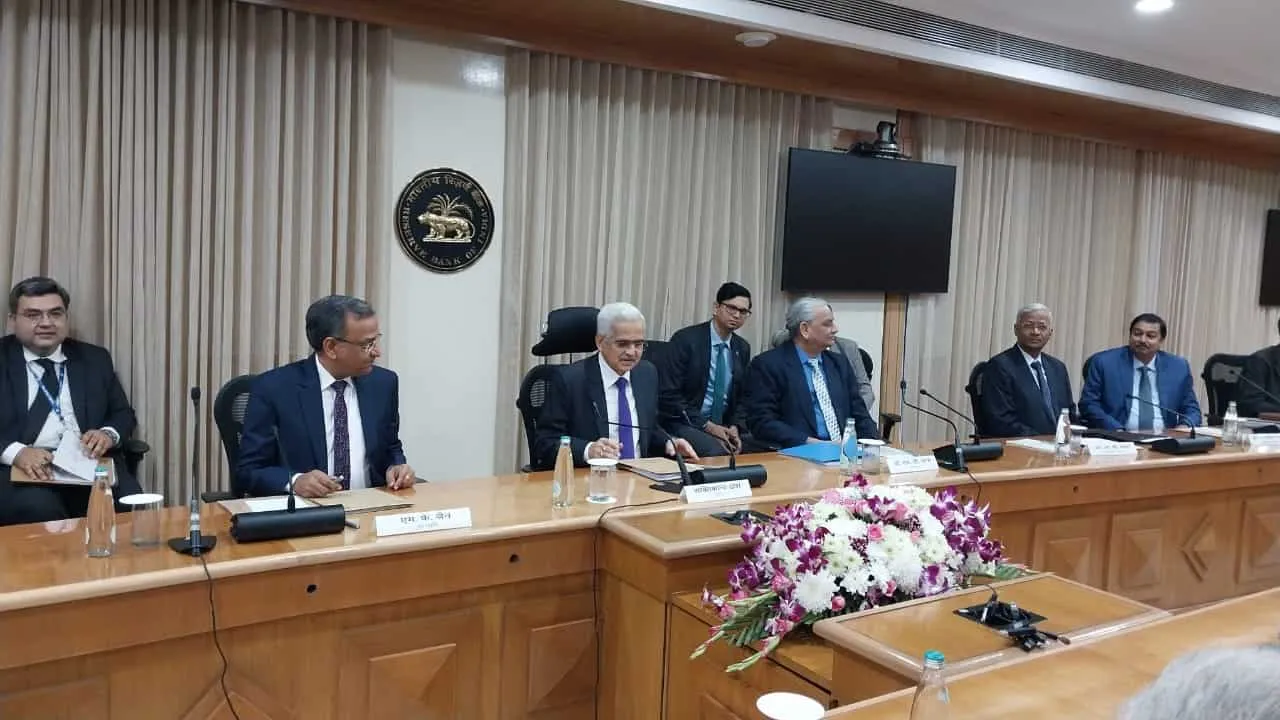
Dr Vijayakumar emphasised that market reaction may hinge less on the binary outcome of a cut or a pause and more on the guidance offered about future moves. If the policy communication signals that the current phase of the cycle is nearing its end, or that the RBI intends to remain data-dependent with a flexible approach, it could help calm nerves and provide clearer cues to equity, bond, and currency markets simultaneously.
Impact of Policy Decision on Sectors
In the expert's view, if the RBI chooses to deliver a rate cut at this stage, it is likely to be the last one in the ongoing cycle. Such a move could have a nuanced and sector-specific impact on the equity market. Banking and financial stocks may face immediate pressure as a cut could compress net interest margins and potentially slow deposit mobilisation if lending rates are reduced more quickly than deposit rates. This dynamic often weighs on profitability in the near term, especially for lenders with a higher share of fixed-rate loan books or tighter funding profiles.
At the same time, a reduction in policy rates would generally be seen as a positive for interest-sensitive segments such as automobiles, real estate, and consumer durables. Lower borrowing costs can stimulate demand for home loans, vehicle financing, and big-ticket consumer purchases, supporting volume growth for companies operating in these spaces. Developers and housing finance companies, in particular, tend to benefit from an environment of declining or stable rates, as affordability and sentiment both improve for end buyers.
On the other hand, if the RBI decides to maintain the status quo on rates, banking counters could see renewed buying interest. A pause would allow lenders to retain relatively comfortable margins while continuing to benefit from healthy credit growth. In such a scenario, investors may favour well-capitalised private sector banks and select public sector banks with improving asset quality and strong retail franchises, expecting them to deliver steady earnings even without additional policy support.
For other sectors, a no-change outcome would likely reinforce the existing trend rather than trigger abrupt shifts. Export-oriented businesses may continue to track currency movements and global demand, while domestic consumption-driven sectors follow income growth and sentiment indicators. Market participants will, however, watch the RBI's comments on liquidity conditions very closely, as these can influence short-term funding costs, money market rates, and the overall appetite for risk across asset classes.
What Traders and Investors Will Track After the Decision
Once the MPC verdict is out, the immediate focus on the street will shift to how quickly markets digest the decision and reprice expectations. Traders will keep an eye on intraday volatility in banking, financial services, and rate-sensitive counters, while also monitoring movements in bond yields and the rupee. Any sharp divergence between equity and bond market reactions could indicate differing interpretations of the policy stance and may create short-term trading opportunities.
For medium-term investors, the key will be to assess whether the policy outcome aligns with their existing portfolio strategy. Those positioned heavily in cyclical sectors may reassess allocations if the RBI strikes a more cautious tone on growth, while investors overweight in defensives may consider adding selectively to quality financials and consumption plays if policy commentary remains supportive. In all cases, the combination of the decision, the governor's remarks, and incoming macro data will together help shape the trajectory of Sensex, Nifty, and broader indices in the days ahead.