Top Private Universities Transforming India’s Education Future in 2025

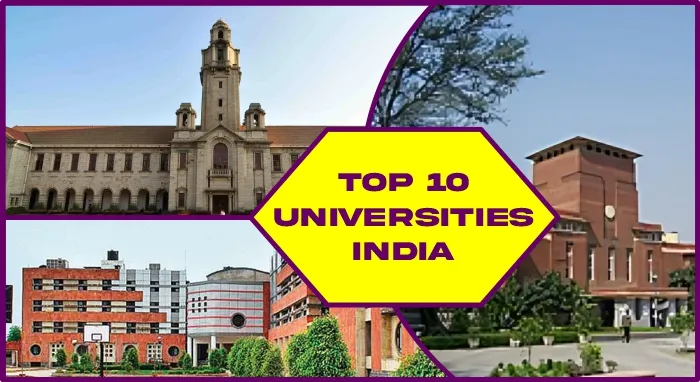
Top Private Universities Transforming Higher Education in India
The landscape of higher education in India is undergoing a seismic shift, driven by visionary private universities that blend global standards with local relevance. These institutions are not just filling gaps left by public systems—they are redefining excellence through cutting-edge infrastructure, industry-aligned curricula, and research ecosystems that rival Ivy League benchmarks. From AI-driven learning to startup incubators, top private universities in India are producing graduates who lead Fortune 500 boards and unicorn ventures.
As India aims for a $5 trillion economy, these universities are the talent engines powering innovation. With over 400 private universities now operational, the sector has attracted ₹50,000+ crore in investments since 2014. This article explores the best private universities transforming higher education, their disruptive models, and why they’re outpacing traditional institutions in employability and global rankings.
Also Read: How to Fix 'No Battery Detected' Error Fast
The Rise of Autonomous Private Universities
The National Education Policy (NEP) 2020 has been a game-changer, granting greater autonomy to private universities in India. Institutions like Ashoka, Shiv Nadar, and OP Jindal now design interdisciplinary programs without UGC micromanagement. This freedom has led to bold experiments—Ashoka’s Liberal Arts model integrates economics with data science, while Flame University offers a "Discovery Term" where students shadow CEOs.
Autonomy = Agility. When IIT Delhi took 3 years to approve a blockchain course, Plaksha University launched it in 6 months with IBM partnerships. This speed is why 68% of private university alumni secure jobs within 3 months (vs. 41% from public institutions, per AISHE 2024).
Infrastructure That Rivals Silicon Valley
Forget crumbling hostels. Top private universities are building smart campuses with biometric attendance, 5G connectivity, and VR labs. Manipal’s 400-acre campus in Jaipur features a 10,000 sq.ft. Innovation Factory with 3D printers and drone testing zones. Bennett University’s media labs use AR for virtual newsrooms—students "report" from digital war zones.
These investments pay off. A 2025 Deloitte study found that students trained in industry-grade labs earn 42% higher starting salaries. SRM Institute’s supercomputer cluster enabled a B.Tech team to develop an AI model for early cancer detection—published in Nature Medicine.
Industry-Academia Fusion: The New Normal
Private universities are dismantling the ivory tower. VIT Vellore mandates 6-month internships with stipend guarantees. NMIMS Mumbai’s MBA students manage live ₹10 crore investment portfolios. This hands-on approach has flipped placement stats—95% of Krea University’s 2024 batch received pre-placement offers (PPOs).
Corporate boardrooms are now classrooms. Google’s Site Reliability Engineering course is co-taught at IIIT Hyderabad. Tesla engineers mentor B.Tech students at Ahmedabad University on EV battery design. This isn’t guest lectures—it’s co-created curricula updated every semester.
Research Output That’s Breaking Barriers
Private universities now file more patents per faculty than most IITs. Amity University topped India’s patent filings in 2024 with 1,200+ applications. Shiv Nadar’s quantum computing lab published in Physical Review Letters—work that attracted $20M from Intel.
Funding follows excellence. The Anant National University received a ₹500 crore grant from the Bill & Melinda Gates Foundation for climate-resilient agriculture research. This isn’t charity—it’s recognition of private universities as R&D powerhouses.
Global Rankings: The Proof Is in the Pudding
QS World University Rankings 2025 tells the story:
- Ashoka University: #1 in India for International Faculty Ratio
- OP Jindal Global University: #1 in India for Law
- Flame University: Top 50 Young Universities Globally
- VIT: #791-800 band (highest for any private Indian university)
These aren’t vanity metrics. Global rankings drive international collaborations—MIT Media Lab partners with Plaksha, while Oxford’s Saïd Business School co-designs programs with SP Jain.
Affordability vs. ROI: Busting the "Expensive" Myth
Yes, fees range from ₹5-25 lakh/year. But scholarships cover 40% of students at institutions like Azim Premji University (100% need-blind admission). More importantly, ROI is unmatched:
- Ashoka economics grad: ₹18 LPA average (vs. ₹6 LPA from DU)
- NMIMS MBA: 100% ROI within 2 years
- Manipal engineering: ₹12 LPA median package
Education loans at 8% interest are repaid in 3-4 years. Compare that to government college graduates waiting 2 years for ₹3 LPA jobs.
The Dark Horses: Emerging Private Universities
Beyond the usual suspects, institutions like Krea University (interwoven learning), Plaksha (tech-grand challenges), and ATLAS SkillTech (future-of-work skills) are rewriting rules. Krea’s IFMR Graduate School of Business placed 100% of its 2024 batch in BCG, McKinsey, and Goldman Sachs.
These universities target niche dominance—ATLAS focuses on digital marketing and esports management, areas ignored by traditional academia but valued at $2 billion in India.
Challenges on the Horizon
Growth isn’t without hurdles. Regulatory delays, faculty poaching by foreign universities, and regional disparities (80% of top private universities in South/West India) remain concerns. Yet, solutions are emerging—virtual faculty from Stanford, government land grants in Tier-2 cities, and AI proctoring for pan-India exams.
The Future: A Hybrid Higher Ed Ecosystem
By 2030, private universities are projected to enroll 50% of India’s 40 million students. The future is hybrid—online degrees from UPES validated by IBM, micro-credentials from Coursera integrated into Flame University transcripts, and metaverse campuses where students collaborate globally.
The message is clear: India’s higher education revolution is privately powered. For students, parents, and policymakers, the choice isn’t between public and private—it’s between stagnation and transformation.