
Absolutely Filthy' After Being Left Out of Consecutive Pink-Ball Tests
Lyon 'Absolutely Filthy' After Being Left Out of Consecutive Pink-Ball Tests
Nathan Lyon's exclusion from Australia's XI for another home pink-ball Test has intensified debate around selection strategy, team balance, and the evolving role of spin bowling in Australian conditions. For a cricketer who has been a mainstay of the Test side for over a decade, being left out at the Gabba for a day-night contest, not long after missing the Jamaica pink-ball Test, represents far more than a routine tactical tweak. It signals a possible shift in how the selectors view certain match-ups and conditions, especially under lights, and raises questions about how long-established roles are being redefined in modern Test cricket.
A Shift in Selectors' Strategy
Lyon being excluded from Australia's XI for a second time at home marks a notable change in the selectors' approach. Earlier this year in Jamaica, selector Tony Dodemaide had framed Lyon's omission from the day-night Test against West Indies as an “exceptional” call and a “one-off” decision driven by unusual conditions. Yet just three Tests later, history has effectively repeated itself. At the Gabba, with Australia again playing a pink-ball Test, the selectors opted for an all-pace attack, leaving Lyon “absolutely filthy” at missing out. For a bowler with over a hundred Tests and a proven record in almost every scenario, such a decision underlines how heavily Australia now lean on pace as their primary weapon in home conditions, especially when the pink ball is in use and swing and seam are expected to dominate.
This shift also hints at a more flexible, horses-for-courses mindset, in contrast to the long period where Lyon's name was among the first inked on the team sheet. The move suggests that even pillars of the side may not be guaranteed a place when selectors believe the match environment overwhelmingly favours a different type of attack. For fans and analysts following the latest cricket news and updates, this is seen as one of the most significant selection developments in recent Australian Test history.
Reasons Behind the Omission
Lyon's omission for the Gabba Test did not come entirely out of nowhere. The idea had been afloat since the conclusion of the opening match, where Lyon bowled relatively few overs against England's aggressive batting line-up. On top of that, he had delivered just a single over in the previous home day-night Test at Adelaide against India, further indicating that the pink-ball format has not always showcased his skills to the fullest in recent seasons. Despite this, his overall day-night numbers remain impressive, with 43 wickets at an average of 25.62, a record that would usually demand selection. Many observers believed those figures, combined with concerns that the pink ball can soften at the Gabba and leave quick bowlers working harder for wickets, would tilt the balance in Lyon's favour.
However, the selectors chose to read the conditions differently. Their planning appeared to centre on maximising pace from both ends, particularly in the crucial twilight and night sessions where the pink ball often moves sideways dramatically. With a limited number of overs expected to be bowled in full daylight and the likelihood of heavy reliance on fresh new-ball spells, they decided that an additional seamer offered more tactical flexibility than a specialist spinner. From a purely strategic standpoint, this is a bold but defensible call. From Lyon's perspective, though, it is another reminder that his place, particularly in pink-ball fixtures, is no longer untouchable, even on home soil.
Lyon's Reaction to the Decision
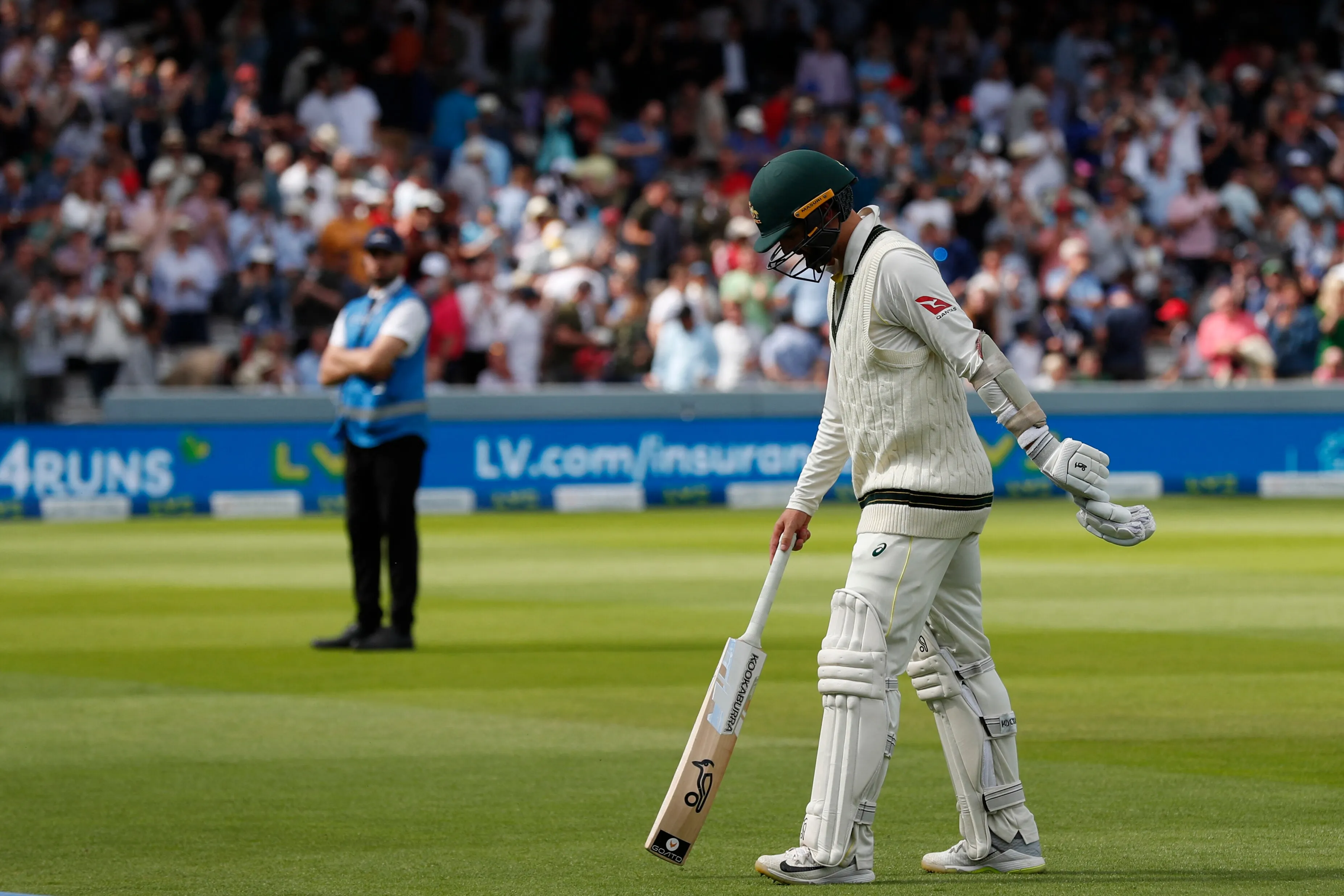
Lyon discovered he had been left out roughly half an hour after arriving at the ground, following a final pitch inspection involving Steven Smith, head coach Andrew McDonald, and chair of selectors George Bailey. Speaking to Channel 7, Lyon did not hide his emotions, describing himself as “absolutely filthy” when the news was delivered by Bailey. Despite his frustration, Lyon struck a professional tone, stressing that there was nothing he could do about the decision in that moment and that his focus would shift to helping the team prepare as best as possible from the sidelines.
He also mentioned that he had not yet sat down properly with McDonald or Bailey to unpack the reasoning, preferring to let his thoughts settle first. Lyon acknowledged that he is far from the first player to miss a Test match and will not be the last, but he openly admitted to being upset, especially given how clearly he understands the role he can play in Australian cricket and at a venue like the Gabba. His candid response offers a real-time glimpse into how elite players handle tough selection calls: a mixture of pride, disappointment, and a determination to remain ready for the next opportunity.
Selectors' Perspective on the Call
From the selectors' side, George Bailey emphasised that the decision was a “one Test” choice, even though it has now occurred twice in relatively quick succession. He accepted that Lyon would disagree with the call, and even suggested that such disagreement is a healthy sign in a competitor who always believes he can influence the game. Bailey explained that the selection panel had weighed different combinations, including the option of picking Lyon or an all-round option like Beau Webster, before finally committing to a pace-dominated line-up. In their planning, the key factors were how the ball would behave once it got dark, when seam movement was likely to be at its peak, and how many overs would realistically be available for a spinner to make an impact.
Bailey's comments underline that this was not a judgement on Lyon's abilities, but rather a tactical decision tailored to specific conditions. He was clear that Lyon would return for the Adelaide Test, a day-game traditionally more accommodating to spin, followed by the Boxing Day Test at the MCG and the New Year's Test at the SCG. Yet, for all the reassurance, the broader message is hard to ignore: when Australia play day-night Tests, especially at grounds where the pink ball is expected to aid fast bowlers, even a proven match-winner like Lyon is no longer an automatic pick. For fans tracking the latest team news and selection updates, that is a striking development.
A Rare Absence from the Test XI
Lyon's omission at the Gabba is particularly notable because it breaks a remarkable personal streak. Since his debut, he had missed only one home Test prior to this, against India at the WACA in 2012, when Australia again fielded an all-pace attack on a historically fast and bouncy surface. Between that match and the latest day-night clash, he had played 69 consecutive home Tests, a testament to his durability, form, and importance in the side. For Australia, Lyon has long been the dependable spin option who not only provides control but also takes key wickets in long spells, often in conditions that do not heavily favour spin.
The break in that sequence therefore feels symbolic. It does not mean that Lyon's career is winding down immediately, but it does indicate that the era of automatic selection in all formats and conditions may be fading. For a senior player, adjusting to being part of a broader rotation, or being used more selectively in pink-ball fixtures, can be one of the more challenging transitions late in a career. How Lyon responds over the rest of the summer will be closely watched by followers of Australian cricket and by younger spinners hoping to understand what it takes to survive at the top for so long.
Opportunity for Michael Neser
Lyon's omission opened the door for Michael Neser, who was selected to play his third Test, all of them in day-night conditions. Neser had previously featured in pink-ball matches at Adelaide, facing England during the 2021–22 Ashes and West Indies in the following season. The Gabba is his home ground, and his intimate knowledge of its bounce, carry, and subtle variations made him a compelling option when the selectors chose to go with an all-seam attack. In commentary on Channel Seven, Ricky Ponting acknowledged that Neser's home-ground advantage was significant but still described the call to leave out Lyon, who has an excellent record at the Gabba, as a “massive decision.”
For Neser, the selection represents both a reward for persistence and an audition for a longer-term role in Australia's pace rotation. With intense competition among fast bowlers and constant discussion around workload management and format balancing, strong performances in such high-profile fixtures can reshape the pecking order. Every spell he bowls under lights, with a pink ball on his home turf, will be scrutinised as part of the latest performance reports and match analysis by fans, experts, and selectors alike.
What This Means for Lyon Going Forward
Lyon has repeatedly stated that he believes he can contribute in any conditions, and his career record supports that confidence. After missing the Jamaica Test, he said he had come to terms with the selection but remained disappointed, insisting that he could be effective with the pink ball as well. He maintains a simple but powerful principle: every cricketer should have the conviction that they can play a role in all conditions. That mindset has helped him excel over the years, particularly in tough, holding spells where he builds pressure and creates dismissals through persistence as much as turn.
The challenge now is adapting that conviction to a new reality in which he might sit out certain Tests not because of form, but because of tactical reshuffling. For Lyon, it becomes crucial to remain mentally sharp and physically ready, even when he is told on the morning of a match that he will not be taking the field. How he prepares in the nets, how he supports the playing XI from the dressing room, and how he bounces back in Adelaide and beyond will shape the narrative of this phase of his career. For Australian selectors, his response will help them measure how far they can push the idea of tailored selections without destabilising the core of their Test side.
The Declining Role of Spinners in Australia
Lyon's recent experiences also reflect a broader trend: the diminishing role of specialist spinners in Australian home Tests. Last season, his tally of 122.4 overs against India was the lowest number he had bowled in a home summer, an indicator of how surfaces and strategies have become increasingly geared towards fast bowling. With pitches offering more assistance to seam and bounce, captains often rely on prolonged pace spells, leaving fewer overs and fewer high-impact windows for spin. Lyon himself has voiced concern about this pattern, extending his worries beyond his own career to the future of spin bowling worldwide.
He has pointed out that younger spinners are not consistently receiving the chance to bowl long spells on day-three or day-four surfaces, or to work with turning pitches and challenging conditions. Instead, fast bowlers frequently dominate, especially on green seamers and in pink-ball matches where swing and seam are at the forefront. This has implications for player development and for the balance of attacks in domestic competitions. If emerging spinners are rarely trusted with extended workloads, the pipeline of high-quality Test-ready slow bowlers could thin over time, a concern that impacts not only Australia but the global game.
Looking Ahead to Adelaide, Melbourne, and Sydney
Lyon is scheduled to return for the next Test in Adelaide, which will be a day match rather than a day-night encounter, followed by the traditional fixtures at the MCG and SCG. These venues, particularly the SCG, have historically offered more assistance to spin, and they remain key stages for Lyon to showcase why he still deserves to be considered indispensable in most conditions. Strong performances in those Tests would reinforce his status and help restore a sense of stability around his place in the side, even if pink-ball selections remain more fluid and conditions-driven.
For now, however, one fact is clear: when Australia contest day-night Tests, even on home soil, Lyon can no longer assume he will be part of the starting XI. That reality marks a significant transition in his journey and highlights an evolving selection philosophy that places supreme value on pace in pink-ball conditions. It is a storyline that will continue to attract attention in upcoming series, as fans, analysts, and players themselves watch closely to see how the balance between spin and seam evolves in the latest chapter of Test cricket.