The Short Game That Changed Cricket: A Deep History of T20

The Short Game That Changed Cricket: A Deep History of T20
Twenty20 cricket arrived as a compact, radical reimagining of a sport long defined by endurance. In little more than two decades T20 has reshaped professional cricket's economics, playing styles, and global footprint. This article traces T20's origins and early concept, plots the key milestones and rule evolutions that steered its course, examines its global expansion and impacts on longer formats, and profiles the players and administrators whose choices and personalities accelerated its rise. The aim is analytical and narrative - to explain not just what happened, but why those changes mattered.

Origins and the Initial Concept
T20 did not spring fully formed; it emerged as a pragmatic answer to modern pressures on cricket boards: falling domestic attendances, compressed broadcast windows, and competition for leisure time. Administrators in charge of domestic competitions - looking for a format that would pack a full match into an evening and appeal to new audiences - experimented with heavily truncated overs games through the late 1990s and early 2000s.
The key idea was deceptively simple: cut each side's innings to 20 overs, which makes a match playable in roughly three hours. That constraint forced attention on immediacy - every ball mattered in a way rarely true in 50-over one-day internationals or multi-day Tests. The format's designers leaned hard into entertainment: clear rhythm, late-evening scheduling, and room for visual spectacle (floodlights, music, scoreboard graphics). T20 married cricket's tactical depth to the pace and accessibility commercial broadcasters wanted.
Early Milestones and Institutional Adoption
Although domestic short-format experiments had precedents, the formal institutionalization of Twenty20 as a recognized domestic competition took place in the early 2000s. National boards ran local tournaments to test the format; crowd response, especially among younger spectators and families, validated the concept and nudged administrators to expand it.
The first international fixtures and the ICC's embrace were crucial turning points. Once boards and broadcasters saw that T20 could produce large in-stadium audiences, high television ratings, and sponsorship dollars, the format moved from experimental novelty to strategic priority. The staging of organized international T20 competitions (both bilateral T20 internationals and multilateral tournaments) legitimized the format and created performance standards, record-keeping, and trophies that further anchored it in world cricket.

Rule Changes and Match Mechanics
T20's competitive and commercial success depended on consistent, spectator-friendly playing conditions. Over time both the ICC and domestic leagues tuned the laws and playing conditions to amplify excitement and reduce ambiguity. Several broad categories of change stand out:
Fielding restrictions and powerplays. Compacting innings to 20 overs made early scoring runs especially valuable. Powerplays - timed periods with defensive fielding limits - intensified the opening overs and created tactical trade-offs between aggressive batting and cautious consolidation.
Tiebreakers and match finality. Unlike multi-day cricket, T20 matches must produce a result for league tables and audiences. Mechanisms such as the Super Over were adopted to resolve ties, and leagues standardized procedures to ensure decisive outcomes even in rain-affected contests.Penalties and enforcement. With three-hour match windows, over-rate penalties and fines became more consequential. Leagues instituted strict penalties for slow over rates and for disciplinary breaches, reinforcing the fast, continuous tempo central to the format.
Innovations borrowed across formats. Some interventions - for example free hits after certain no-balls, or the use of DRS (where permitted) - were adapted into T20 with modifications that respected the format's pace. Leagues also experimented with in-game elements such as tactical timeouts and substitution rules; several innovations proved controversial but underscored T20's use as an experimental laboratory for cricket governance.These adjustments show a pragmatic pattern: rules were refined to preserve the game's integrity while enhancing broadcast-friendly drama and strategic complexity.

Global Growth and League Expansion
The defining moment for T20's global ascendancy was not a single match but the emergence of franchise-based, commercially driven leagues. When private capital and aggressive broadcast deals met cricket's fanbase, the result was explosive.Franchise leagues. Franchised tournaments packaged teams as city-based brands, sold central media rights, and created seasons that became sporting and cultural events. These leagues professionalized support staff, sports marketing, and fan engagement, bringing practices from global franchise sports such as football and basketball into cricket.
Broadcasting and sponsorship economics. T20's condensed schedule is ideal for prime-time television and digital highlights. Sponsorships followed, and player salaries rose. The direct financial incentives attracted international stars to domestic T20 leagues, which in turn increased their global appeal and commercial value.
Impact on Traditional Formats
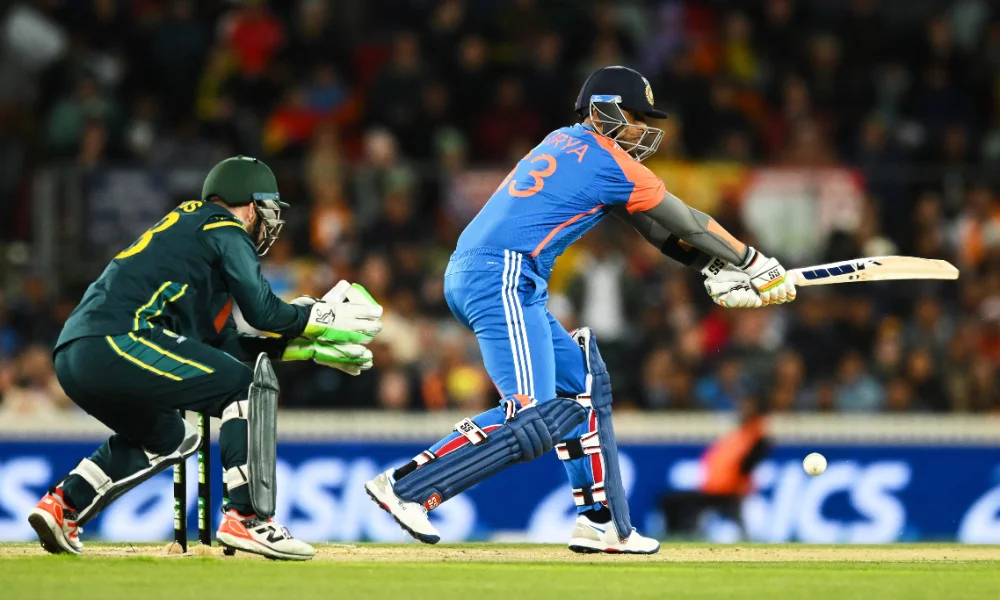
T20's influence on Test and one-day cricket is deep and multifaceted. It changed how batsmen score, how bowlers train, and how teams plan. Tactical evolution. The power-hitting and scoring innovations developed in T20 - inventive shot-making, aggressive rotation of strike, specialized death-overs bowling - crossed into ODIs and even Tests. Players learned to score at higher strike rates without conceding control, pushing coaching to emphasize versatility. Player specialization. T20 incentivized specialists (the death-overs specialist bowler, the finisher, the power-hitter). While specialization broadened roles, it also raised debates about the dilution of skills required for longer forms and about talent pathways for Test cricket.
Selection and scheduling pressure. National boards faced trade-offs: protecting Test integrity versus monetizing players' participation in leagues. T20's calendar pressure led to revamped international scheduling, with more concise bilateral series and clearer windows for ICC tournaments. Fan expectations and aesthetics. Viewers accustomed to T20's tempo often demanded faster scoring and more entertainment in longer formats. Boards and broadcasters responded with changes in presentation - faster cameras, improved graphics, in-match analytics - that altered the spectator experience across formats. In short, T20 acted less like an isolated branch of cricket and more like an accelerant whose fires altered the whole ecosystem.
Players, Innovators, and Administrators
T20's story is as much about personalities as policies. A handful of players, coaches, and administrators catalyzed or embodied the format's defining features: Players who redefined possibility. Iconic batsmen who combined power and timing showed what could be achieved with the 20-over constraint; dynamic bowlers developed a repertoire of yorkers and slower balls tailored to the format's high-pressure moments. Equally important were finishers - players who thrived in the final overs and reimagined endgame batting. Coaches and analysts. Coaching philosophies shifted to emphasize strike rates, wicket-to-wicket thinking, and situational analytics. Teams with forward-looking analytics units and adaptable coaching staffs gained a strategic edge in player recruitment and match planning.
Administrators and entrepreneurs. Executives who packaged franchises, negotiated media rights, and created compelling season narratives were central to T20's commercial success. Those who prioritized centralized marketing, uniform branding, and cross-platform broadcasting converted league seasons into sustained revenue generators. Collectively, these figures turned T20 from a scheduling experiment into a high-performing industry. Their choices - about how to market the game, how much to emphasize spectacle versus sport, and how to balance international commitments - still define cricket's institutional contours.
Several analytical lessons emerge from T20's history:
Design for constraints creates creativity. The 20-over limit forced innovation; constraints made invention economically valuable and immediately visible to audiences. Commercial architecture drives sporting change. Once broadcast and sponsorship models approved a format, the incentives to iterate and professionalize it multiplied rapidly.
Formats can coexist, but equilibrium is fragile. T20 expanded cricket's audience and revenue, but managing the relationship between franchise interests and international cricket is an ongoing governance challenge. Experimentation scales quickly. Many features that began as league-level experiments (from tactical timeouts to novel fielding restrictions) migrated to the international game - a reminder that domestic innovation can reshape global sport.
Closing: the continuing evolution
T20's first two decades taught cricket how to be deliberately shorter, spectacle-aware, and commercially modern while retaining the sport's strategic heart. Its future will be a balancing act: sustaining the commercial and participatory gains T20 delivered while preserving the technical rigor and historical continuity that define longer formats. For players, administrators, and fans, the ongoing question is not whether T20 changes cricket - it already has - but how the game can manage that change so cricket's full diversity remains vibrant.
Facebook Comments














-
 Explore the upcoming Tamil film Maaman - cast, sto...
 -
 Read the ACE (2025) movie review starring Vijay Se...
 -
 Check out Maaman's 1st day box office collection a...
 -
 Explore tourist family reviews for Maaman movie –...
Popular Posts
Vote / Poll
Recent Posts



Recommended Posts

-
 Discover the best schools in Nagercoil f...
 -
 Discover the top-rated preschools in Nag...
 -
 Explore the best schools in Nagercoil th...

Comment / Reply From