MS Dhoni Legendary Captain Of Indian Cricket
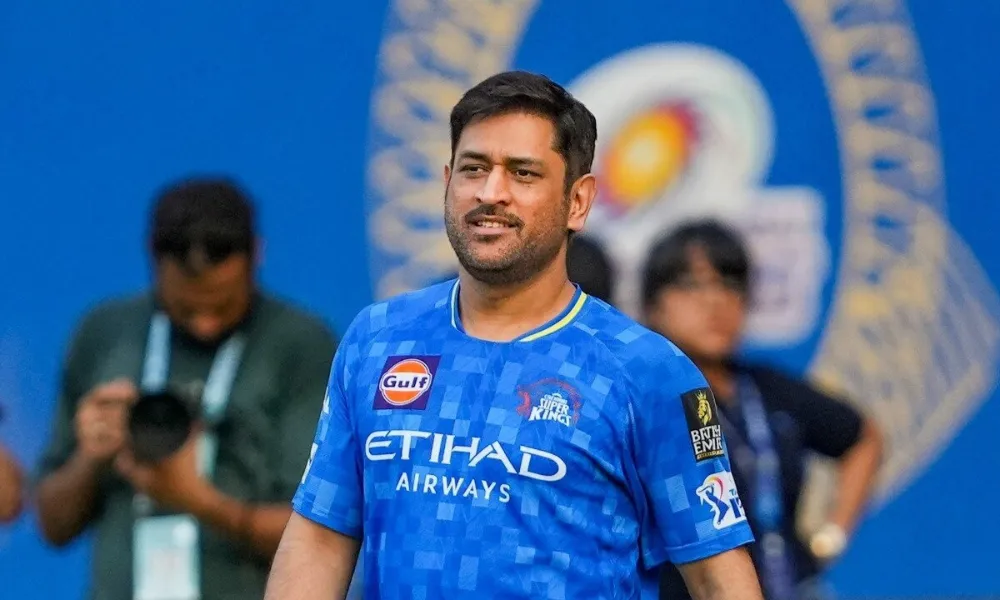
The Legendary Introduction of MS Dhoni
Mahendra Singh Dhoniis widely celebrated as one of the greatest wicketkeeper-batters and captains in the history of cricket. Born on 7 July 1981 in Ranchi, he rose from humble beginnings to become a defining figure in Indian cricket. Known for his calm attitude, sharp decision-making, and powerful finishing ability, Dhoni built a reputation as a player who could handle pressure better than most. He played as a right-handed batter and wicketkeeper for the India national cricket team and eventually became one of the most successful captains the country has ever had. His leadership qualities and unique tactical thinking made him a respected figure not only among teammates but also across the global cricketing community.Dhoni's international journey began in 2004 when he made his One Day International debut against Bangladesh national cricket team. Within a few years, he became an essential part of the Indian squad due to his aggressive batting style and exceptional wicketkeeping skills. By 2007, he was entrusted with the responsibility of leading India in limited-overs cricket, and soon he became captain across all formats. Under his leadership, India achieved historic victories, including the ICC World Twenty20 2007, the 2011 Cricket World Cup, and the 2013 ICC Champions Trophy. These achievements made him the only captain to win all three major ICC limited-overs tournaments. Over the course of his international career, he accumulated more than 17,000 runs, including over 10,000 runs in ODIs with an impressive average above fifty.
Apart from international cricket, Dhoni also built a remarkable legacy in the Indian Premier League. He has been the long-time leader of Chennai Super Kings and guided the franchise to multiple titles. Under his captaincy, CSK reached numerous finals and secured championship victories in 2010, 2011, 2018, 2021, and 2023. His consistent performances with the bat and his calm leadership style have made him one of the most influential players in IPL history. Dhoni also helped the franchise win the Champions League Twenty20 titles in 2010 and 2014. With more than five thousand runs in the league, he became the first wicketkeeper-batter to achieve this milestone.Dhoni's achievements extend beyond the cricket field as well. In recognition of his exceptional contributions to sport, he received India's prestigious Major Dhyan Chand Khel Ratna Award in 2008. He was later honoured with the civilian awards Padma Shri and Padma Bhushan. The Indian Army also awarded him the honorary rank of Lieutenant Colonel in the Territorial Army, recognizing his dedication and inspiration to the nation. In 2025, his remarkable career was further acknowledged when he was inducted into the ICC Cricket Hall of Fame. Through his achievements, leadership, and influence, Dhoni remains a legendary figure whose impact on Indian cricket will be remembered for generations.
Early Life and his Background
MS Dhoni was born on 7 July 1981 in Ranchi, which at that time was part of Bihar. He was raised in a Hindu Rajput family by his parents, Pan Singh and Devaki Devi. His father originally came from Lwali, a small village located in the Almora district of present-day Uttarakhand. Dhoni grew up as the youngest child in the family and spent his childhood with his two elder siblings. Interestingly, the family's original surname spelling was “Dhauni,” but due to an error in his school documents it was recorded as “Dhoni,” and the spelling remained unchanged even after attempts to correct it.During his school years at DAV Jawahar Vidya Mandir, Dhoni initially showed more interest in football than cricket. He played as a goalkeeper for his school team and was known for his athletic abilities. His sports teacher, Keshav Banerjee, noticed his quick reflexes and suggested that he try wicketkeeping in cricket. Taking his coach's advice, Dhoni shifted his focus to cricket, which eventually changed the direction of his sporting career.
Before gaining recognition as a professional cricketer, Dhoni also held a regular job. Between 2001 and 2003, he worked as a Travelling Ticket Examiner (TTE) at the Kharagpur railway station under the Indian Railways in the South Eastern Railway zone. While working there, he continued practicing cricket and playing in local tournaments. Balancing his job with his passion for the sport helped him build discipline and determination, qualities that later played a significant role in his rise to international cricket.
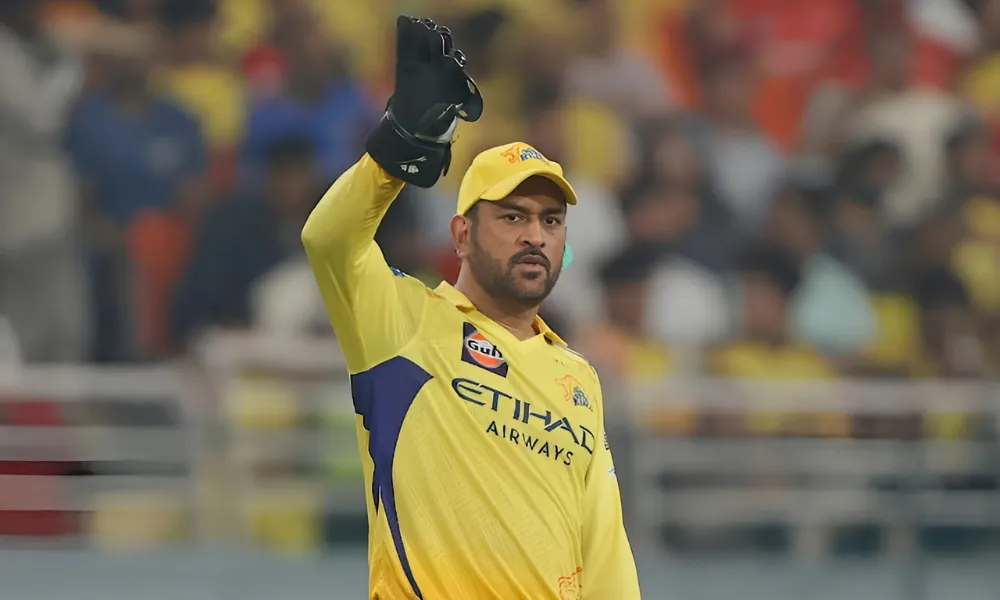
Youth Career
MS Dhoni began building his cricketing foundation during the mid-1990s while playing as a wicketkeeper for the Commando Cricket Club in Ranchi. Between 1995 and 1998, he developed his early skills behind the stumps and gradually gained attention for his reflexes and athleticism. In 1998, he also represented the Central Coal Fields Limited (CCL) cricket team. While playing for CCL, Dhoni was promoted higher in the batting order, where he started showcasing his aggressive batting approach. His performances at the club level impressed selectors and earned him a place in the Vinoo Mankad Trophy Under-16 tournament during the 1997-98 season, marking one of his earliest appearances in competitive age-group cricket.Soon after, Dhoni progressed to the Bihar Under-19 team and competed in the Cooch Behar Trophy during the 1998-99 season. Although his team did not dominate the tournament, Dhoni contributed useful runs across several matches. In the following season, Bihar reached the final of the competition, where Dhoni played an important innings of 84 runs despite the team eventually losing the match. Over the course of the tournament, he delivered strong all-round contributions by scoring close to five hundred runs while also making numerous dismissals as a wicketkeeper through catches and stumpings. His consistent performances helped him earn selection to the East Zone Under-19 squad for the C. K. Nayudu Trophy, though the team struggled during that tournament.
Dhoni's transition into senior domestic cricket began when he made his first-class debut for Bihar in the 1999-2000 Ranji Trophy season at the age of eighteen. In his debut match against Assam, he showed promising ability with the bat by scoring a half-century in the second innings. Throughout that season he accumulated several valuable runs, which established him as a developing young cricketer. During the 2000-01 Ranji Trophy campaign, he achieved a major milestone by scoring his first first-class century against Bengal. While his performances during the next few seasons were inconsistent at times, he continued to develop his aggressive batting style and reliable wicketkeeping skills.By the early 2000s, Dhoni-s reputation began to grow further when he started representing Jharkhand in domestic competitions and played for East Zone in inter-zonal tournaments such as the Deodhar Trophy. His powerful lower-order batting and ability to accelerate the scoring rate made him stand out among other players. In the 2003-04 domestic season, he delivered a notable unbeaten century against Assam in a Ranji one-day match and also contributed significantly to East Zone's Deodhar Trophy success. His talent was soon noticed through a talent-identification program conducted by the Board of Control for Cricket in India. This recognition eventually earned him a place in the India A squad for a tour of Zimbabwe and Kenya in 2004, where he impressed with strong batting performances and sharp wicketkeeping, further strengthening his chances of breaking into the national team.
International Career
MS Dhoni entered the Indian ODI team in 2004 during a period when the team was experimenting with wicketkeeper-batters. At that time, players like Rahul Dravid were occasionally keeping wickets to strengthen the batting lineup, while youngsters such as Parthiv Patel and Dinesh Karthik were also being tested. After performing well for India A, Dhoni was selected for the Bangladesh tour in December 2004. Although he was run out for a duck on debut, he soon proved his potential. In just his fifth ODI, he played a remarkable innings of 148 runs against Pakistan national cricket team. A year later, he produced another memorable performance by scoring an unbeaten 183 against Sri Lanka national cricket team in Jaipur, which at that time became the highest score by a wicketkeeper in ODIs and helped India secure victory.Following these performances, Dhoni quickly became a regular member of the Indian team. He made his Test debut in 2005 against Sri Lanka and soon scored his first Test half-century in the next match. During the subsequent tours and series, including those against Pakistan national cricket team and England national cricket team, he contributed valuable runs and even scored his maiden Test century. While his aggressive batting impressed fans, he also faced criticism at times for a few missed chances behind the stumps. Despite these challenges, Dhoni continued to grow as a player, made his T20 international debut in 2006 against South Africa national cricket team, and was later recognized by the International Cricket Council by being included in the ODI Team of the Year for 2006.
2007 World T20 and Captaincy
MS Dhoni had both challenging and successful moments during the period between 2007 and 2009. In early 2007, India won ODI series against both West Indies national cricket team and Sri Lanka national cricket team, where Dhoni performed impressively with the bat. However, the team faced a major disappointment in the 2007 Cricket World Cup after being eliminated in the group stage following defeats to Bangladesh national cricket team and Sri Lanka. Dhoni struggled in the tournament and scored very few runs, which led to strong criticism from fans. Soon after, he regained form by playing an unbeaten 91 against Bangladesh in an ODI series, earning the Player of the Match award and later the Player of the Series honour. Around the same time, he also represented the ACC Asia XI in the Afro-Asia Cup and delivered a notable innings of 139 runs.
Later in 2007, Dhoni's leadership abilities were recognized when he was appointed vice-captain of the ODI team and eventually chosen to lead India in the inaugural ICC World Twenty20 2007. Under his captaincy, India defeated Pakistan national cricket team in the final to win the tournament, which marked the beginning of a new era in Indian cricket. In the following years, Dhoni continued to achieve important milestones. He equalled a wicketkeeping record by completing six dismissals in a single ODI innings against England national cricket team and even took his only international wicket during the ICC Champions Trophy 2009 against West Indies. The year 2009 turned out to be particularly successful for him as he scored more than a thousand ODI runs with an impressive average, helped India reach the top position in the ICC Test rankings, and was selected as captain and wicketkeeper of the ICC ODI Team of the Year.
2011 World Cup Win and Later
MS Dhoni played a major role in one of India's greatest cricketing achievements when he captained the team to victory in the 2011 Cricket World Cup, which was co-hosted by India. In the final against Sri Lanka national cricket team, Dhoni produced a memorable unbeaten 91 and guided India to its second World Cup title, earning the Player of the Match award for his match-winning innings. A year later, during Pakistan's tour of India, he continued his strong performances by being the top scorer in all three ODIs, including a century in the Chennai match. In 2013, Dhoni achieved another historic milestone by leading India to victory in the 2013 ICC Champions Trophy, becoming the first captain in international cricket to win all three major ICC limited-overs trophies.After the Champions Trophy triumph, Dhoni remained an important figure in India's success in limited-overs cricket. Despite suffering an injury during a tri-nation series in the West Indies, he returned for the final and helped India secure a narrow win with a crucial late contribution, earning the Player of the Match award. During this period, he also reached several personal milestones, including scoring more than 8000 ODI runs and becoming only the second Indian batter after Sachin Tendulkar to score over a thousand ODI runs against Australia national cricket team. In 2014, he led India to the final of the 2014 ICC World Twenty20, where the team finished as runners-up, and he was again recognized by the International Cricket Council as the captain and wicketkeeper in the tournament's best team.
Test Retirement and 2015 World Cup
MS Dhoni played his final Test series during India's tour of Australia in December 2014. After the third Test at Melbourne, he announced his retirement from the longest format of the game. In his last Test match, Dhoni achieved an impressive milestone behind the stumps by completing nine dismissals, including eight catches and one stumping. This performance helped him surpass the stumping record previously held by Kumar Sangakkara in international cricket and also set a record for the most dismissals in a match by an Indian wicketkeeper at that time. Soon after, India participated in a triangular ODI series in Australia, but the team struggled and could not secure a single victory during the tournament.During the 2015 Cricket World Cup, Dhoni once again demonstrated his leadership by guiding India to victories in all the group-stage matches, becoming the first Indian captain to achieve that feat. In the match against Zimbabwe national cricket team, he scored an important 85 runs, which became the highest score by an Indian captain in New Zealand during a World Cup match. India progressed to the semi-finals after defeating Bangladesh national cricket team in the quarter-final. However, their campaign ended when they were defeated by eventual champions Australia national cricket team. Despite the loss, Dhoni had a productive tournament with the bat, scoring consistently and maintaining an impressive average and strike rate throughout the competition.
Final Years and Retirement
Dhoni led India national cricket team to an unbeaten victory in the 2016 Asia Cup and stepped down as captain in January 2017 before the ODI series against England national cricket team, where he scored 134 runs, his 10th ODI century. He was later selected as the wicketkeeper in the Team of the Tournament at the 2017 ICC Champions Trophy. In 2017 he became the first wicketkeeper to complete 100 ODI stumpings by dismissing Akila Dananjaya off Yuzvendra Chahal, and in 2018 he reached 400 ODI dismissals after stumping Aiden Markram. During the 2018 Asia Cup he also became the first player to captain India in 200 ODIs while leading against Afghanistan national cricket team. In the same year, he made the fastest stumping in cricket history by dismissing Keemo Paul in 0.08 seconds during a series against the West Indies cricket team. Later, in Australia he scored three consecutive half-centuries to help India win a historic ODI series and was named Player of the Series. Dhoni played his 350th and final ODI in the semi-final of the 2019 Cricket World Cup against New Zealand national cricket team, announced his retirement from international cricket on 15 August 2020, and later served as mentor for India in the 2021 ICC Men's T20 World Cup.
Domestic career
Dhoni began his domestic cricket journey with the Bihar cricket team in 1999 and later represented the Jharkhand cricket team. Apart from these teams, he also played domestic matches for the Rajasthan Cricket Association President's XI, the East Zone cricket team and the Rest of India cricket team. In the BCCI Corporate Trophy, Dhoni represented Air India until he left the company in 2013. Earlier in 2005, he played for the India Seniors side in the NKP Salve Challenger Trophy and scored an impressive 102 runs against India B. Later, in February 2017, the Jharkhand State Cricket Association appointed him captain of the Jharkhand team for the 2017-18 Vijay Hazare Trophy, where he scored his first domestic List-A century against the Chhattisgarh cricket team and guided Jharkhand to the quarter-final before losing to the Delhi cricket team.
Franchise Career
Dhoni was signed by Chennai Super Kings for $1.5 million in the first Indian Premier League auction, becoming the most expensive player of that season. He scored 414 runs in the inaugural IPL and helped CSK reach the final. Under his leadership, CSK won the IPL title in 2010 and 2011 and also lifted the Champions League Twenty20 in 2010 and 2014. Across the first eight IPL seasons, Dhoni scored 2987 runs in 129 matches for CSK. When CSK was suspended for two years, he played for Rising Pune Supergiant in the 2016 and 2017 seasons, scoring 574 runs in 30 matches. After returning to CSK in 2018, he scored 455 runs and guided the team to another IPL title, later winning again in 2021 and 2023, making CSK one of the most successful IPL teams with five titles and ten finals under his captaincy. Dhoni also became the first player to appear in 200 T20 matches for CSK and holds the record for the most IPL appearances. Before the 2022 season he stepped down as captain and Ravindra Jadeja took charge, but the captaincy returned to Dhoni mid-season. Ahead of the 2024 season, he handed over leadership to Ruturaj Gaikwad and marked his 250th CSK match against Mumbai Indians on 14 April 2024, scoring an unbeaten 20 off four balls to help CSK win by 20 runs.
Playing Style
Dhoni is known as a right-handed batsman and skilled wicket-keeper with a unique and unconventional playing style. Unlike traditional batting methods, he often targets powerful shots toward the long-on, long-off and midwicket areas and plays aggressive pull and hook shots against short deliveries. Holding the bat firmly near the bottom of the handle, Dhoni generates strong power to hit boundaries and is also extremely quick while running between the wickets. One of his most famous batting techniques is the “helicopter shot,” which he learned from his childhood friend Santosh Lal. Dhoni is widely respected for finishing matches under pressure. As a wicket-keeper, he is praised for his quick reflexes behind the stumps, though some critics have questioned his traditional technique. His calm attitude, innovative captaincy and friendly leadership style have made him one of cricket's most successful captains, earning him the popular nickname “Captain Cool.”
Personal Information
MS Dhoni married Sakshi Singh Rawat on 4 July 2010 in Dehradun. The couple later welcomed their daughter, Ziva Dhoni, who was born on 6 February 2015. Dhoni currently lives in a farmhouse located on the outskirts of Ranchi. Apart from cricket, he has a strong interest in automobiles and is well known for maintaining an impressive collection of motorcycles and cars.
Latest News 2026
MS Dhoni took to social media to congratulate the indian cricket team after their T20 world cup triumph at the narendra modi stadium in ahmedabad on march 8 sunday 2026. India defeated new Zealand by 96 runs to become the first team ever in history to win the competition three times. It was a special post frm dhoni, the ex-india captain who led the side to victory in T20 world cup 2007, as a legendary cricketer is not quite active on social media. Dhoni;s message had a special message for head coach gautam gambhir and he also praised star pacer jasprit bumrah by calling him a "champion bowler".
Facebook Comments





-
 Explore the upcoming Tamil film Maaman - cast, sto...
 -
 Read the ACE (2025) movie review starring Vijay Se...
 -
 Check out Maaman's 1st day box office collection a...
 -
 Explore tourist family reviews for Maaman movie –...
Popular Posts
Vote / Poll
Recent Posts


Recommended Posts

-
 Discover the best schools in Nagercoil f...
 -
 Discover the top-rated preschools in Nag...
 -
 Explore the best schools in Nagercoil th...

Comment / Reply From