History, Rules, and Regulations of Tennis: Latest Overview and Complete Guide
History, Rules, and Regulations of Tennis: Latest Overview and Complete Guide
Tennis continues to be one of the most widely followed sports across the world, attracting millions of fans and players at both amateur and professional levels. From prestigious tournaments to recreational matches played in local courts, tennis remains a sport that combines strategy, athletic ability, and precise technique. Recent reports and sports updates highlight how tennis is evolving with improved technology, global competitions, and new training methods for athletes. Understanding the history, rules, and regulations of tennis helps players and enthusiasts appreciate how the game developed into the modern sport that dominates international sporting events today.
The sport is known for its unique scoring system, clearly defined court structure, and well-established regulations governing equipment and player conduct. Tennis has maintained its popularity because it offers both simplicity and complexity at the same time. Beginners can quickly learn the basics, while advanced players must master strategy, endurance, and mental strength. Sports analysts frequently report that tennis remains one of the fastest growing individual sports globally, with new players joining clubs and academies every year.
Early Origins of Tennis and Its Historical Development
The history of tennis dates back several centuries and has undergone numerous transformations before becoming the modern game played today. Historical reports suggest that a primitive version of tennis was played in France during the twelfth century. This early game was known as “jeu de paume,” which translates to “game of the palm.” Players initially struck the ball using their hands instead of rackets. Over time, gloves were introduced to protect the hands, and eventually wooden paddles and stringed rackets were developed.
During the fifteenth and sixteenth centuries, tennis gained significant popularity among European royalty. Kings and nobles often constructed indoor courts within palace grounds to play the sport. This form of the game eventually became known as real tennis. Historical accounts show that the game was especially popular in France and England, where it became a symbol of aristocratic entertainment and competition.
The transformation into modern lawn tennis began in the nineteenth century. In 1873, Major Walter Clopton Wingfield introduced a new version of the game that could be played outdoors on grass courts. His innovation helped popularize tennis among the general public rather than limiting it to royal circles. Soon after, tennis clubs began forming throughout Europe and North America, making the sport accessible to a wider population.
Growth of International Tennis Competitions
As tennis expanded in popularity, formal tournaments and championships began to emerge. One of the most significant developments in tennis history occurred in 1877 when the first Wimbledon Championship took place in London. Wimbledon remains the oldest tennis tournament in the world and continues to be a major highlight in international sports news every year.
Over time, several other prestigious tournaments were introduced, forming what is now known as the Grand Slam events. These competitions include the Australian Open, the French Open, Wimbledon, and the US Open. Sports reports regularly highlight these tournaments as the pinnacle of professional tennis, attracting elite players from around the world.
International governing bodies also played an important role in regulating tennis. The International Tennis Federation established standardized rules, equipment regulations, and tournament guidelines to ensure fairness across global competitions. These regulations help maintain consistency in professional matches and ensure that players compete under equal conditions.
Understanding the Basic Rules of Tennis
Tennis is played between two players in singles matches or four players in doubles matches. The objective of the game is simple: players must hit the ball over the net and land it inside the opponent’s court in a way that prevents the opponent from returning it successfully. Matches begin with a serve, which must be delivered diagonally into the opponent’s service box.
Each player is given two opportunities to complete a valid serve. If the ball lands outside the correct service area during both attempts, the server commits a double fault and the opponent automatically wins the point. Players must also remain behind the baseline while serving. Stepping over the baseline before striking the ball results in a foot fault.
Once the serve is successful, players continue rallying by hitting the ball across the net until one player fails to return it within the boundaries of the court. Points are awarded when the opponent hits the ball out of bounds, fails to return it, or commits a fault.
Tennis Scoring System Explained
One of the most unique aspects of tennis is its scoring system. Instead of counting points in a straightforward sequence, tennis uses traditional terms such as love, fifteen, thirty, and forty. When a player wins the first point, the score becomes fifteen. The second point is called thirty, and the third point is called forty.
If both players reach forty points, the score is known as deuce. From this position, a player must win two consecutive points to win the game. The first point won after deuce gives the player an advantage. If the same player wins the next point, they secure the game. However, if the opponent wins the next point, the score returns to deuce and the contest continues.
Games are grouped together to form sets. Typically, a player must win six games to win a set, but they must lead by at least two games. If the set score reaches six games each, a tiebreak is usually played to determine the winner. In most professional tournaments, matches are played as best of three sets, while certain major events may use best of five sets.
Regulations Governing Tennis Equipment
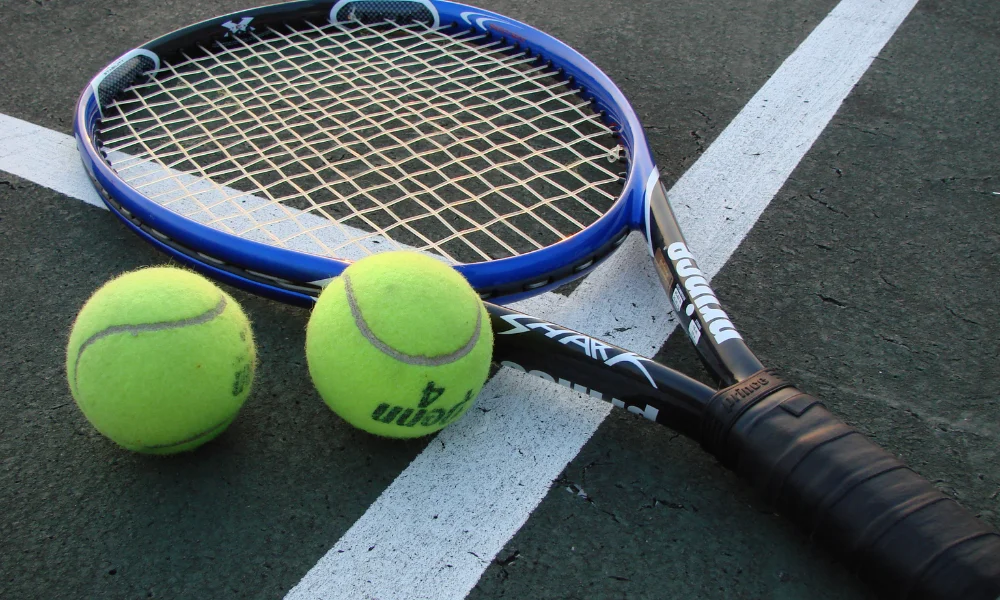
Tennis equipment must meet specific international standards to ensure fairness and consistency during matches. The tennis racket is the most essential piece of equipment used in the game. Modern rackets are typically made from lightweight materials such as graphite or composite fibers. The racket must have a stringed hitting surface and must not exceed official size limits set by governing organizations.
Tennis balls are also standardized. They are covered with felt and designed to provide consistent bounce and visibility. Most professional tournaments use bright yellow balls because they are easier for players and spectators to track during fast rallies. Regular replacement of tennis balls during matches ensures that the bounce and speed remain consistent throughout the game.
Players are also required to wear appropriate footwear designed specifically for tennis courts. Tennis shoes provide strong grip and support, helping players move quickly while reducing the risk of injury. Equipment regulations are regularly reviewed to keep up with technological developments while maintaining the integrity of the sport.
Court Structure and Playing Surface Regulations
A standard tennis court has specific dimensions that are recognized worldwide. The court measures seventy-eight feet in length. For singles matches the width is twenty-seven feet, while doubles matches use a wider court measuring thirty-six feet. The net divides the court into two equal halves and serves as the central barrier that players must hit the ball over during rallies.
Tennis courts can be constructed using different surfaces, each influencing the speed and style of play. Grass courts are known for their fast pace and low ball bounce. Clay courts slow down the ball and create longer rallies, requiring players to demonstrate endurance and strategic shot placement. Hard courts provide a balanced playing environment and are widely used in international tournaments.
These surfaces contribute to the variety of playing styles seen in professional tennis. Players often specialize in certain surfaces depending on their strengths and tactical preferences. As reported in recent sports updates, training programs are increasingly focusing on surface-specific strategies to improve player performance in major tournaments.
Player Conduct and Etiquette Regulations
Tennis is widely recognized as a sport that emphasizes discipline, respect, and sportsmanship. Players are expected to follow strict codes of conduct during matches. Respect toward opponents, officials, and spectators is considered an essential part of the game.
Unsportsmanlike behavior such as racket abuse, verbal arguments, or deliberate distractions may result in penalties. Officials can issue warnings, deduct points, or impose fines depending on the severity of the violation. These regulations help maintain fairness and professionalism in competitive tennis.
Another important tradition in tennis is the handshake between players at the end of a match. This gesture symbolizes respect and recognition of the opponent’s effort. Even in highly competitive tournaments, players are expected to maintain composure and professionalism throughout the match.
Facebook Comments














-
 Explore the upcoming Tamil film Maaman - cast, sto...
 -
 Read the ACE (2025) movie review starring Vijay Se...
 -
 Check out Maaman's 1st day box office collection a...
 -
 Explore tourist family reviews for Maaman movie –...
Popular Posts
Vote / Poll
Recent Posts




Recommended Posts

-
 Discover the best schools in Nagercoil f...
 -
 Discover the top-rated preschools in Nag...
 -
 Explore the best schools in Nagercoil th...

Comment / Reply From