Naam Tamilar Katchi History and Political Growth Analysis
The Evolution of Naam Tamilar Katchi A Comprehensive Historical and Ideological Analysis
The political landscape of Tamil Nadu has long been shaped by powerful ideological movements rooted in language, identity, and regional autonomy. Among the contemporary forces attempting to redefine this landscape, the Naam Tamilar Katchi NTK stands out as a distinctive political formation that seeks to reframe Tamil identity beyond the dominant Dravidian narrative. Emerging from historical precedents and revived in the 21st century, NTK represents a fusion of cultural nationalism, political activism, and ideological assertion. Its journey, however, is neither linear nor simple it is deeply intertwined with Tamil history, diasporic concerns, and evolving electoral dynamics.
Origins of Tamil Nationalist Thought and Pre NTK Foundations
The ideological roots of NTK can be traced back to the mid 20th century a period when linguistic identity movements were gaining momentum across India. Tamil Nadu then known as Madras State witnessed intense debates about identity governance and cultural preservation. Tamil nationalism emerged as a counter narrative to both pan Indian nationalism and Dravidian ideology emphasizing linguistic purity and ethnic distinctiveness. This ideological foundation laid the groundwork for the eventual formation of political entities that would prioritize Tamil identity as the central axis of governance. The socio political climate of the 1950s marked by anti Hindi agitations and demands for regional recognition created fertile ground for such movements to take shape.
Founding of the Original NTK Under S P Adithanar 1958
The formal establishment of the original NTK dates back to 1958 when S P Adithanar founded the We Tamils Party. Adithanar a prominent politician and media entrepreneur envisioned a political platform that would exclusively advocate for Tamil identity and interests. The party was born during a time of political flux when regional parties were beginning to challenge the dominance of national parties. Adithanar mission was clear to create a political movement that prioritized Tamil sovereignty cultural pride and linguistic integrity. His leadership brought intellectual rigor and organizational discipline to the party enabling it to gain early traction.
Early Political Activities and the Demand for Tamil Sovereignty
During the early 1960s NTK actively participated in political campaigns advocating for a separate Tamil nation. This demand though controversial reflected deeper anxieties about cultural dilution and political marginalization. The party also played a role in the movement to rename Madras State as Tamil Nadu a symbolic yet significant achievement in reinforcing Tamil identity. These activities positioned NTK as a radical yet culturally grounded political force willing to challenge established norms in pursuit of its ideological goals.
Electoral Participation and Alliance with Dravidian Politics 1967
The year 1967 marked a significant turning point for NTK as it aligned with the Dravida Munnetra Kazhagam a dominant force in Tamil Nadu politics. Contesting under the DMK Rising Sun symbol NTK managed to secure representation in the legislative assembly. This alliance highlighted a pragmatic shift in NTK strategy as it sought to gain political relevance through collaboration rather than isolation. However this partnership also exposed ideological differences particularly regarding the scope and definition of Tamil identity within the broader Dravidian framework.
Dissolution and Dormancy The Merger into DMK
Later in 1967 in a surprising move S P Adithanar dissolved NTK and merged it with the DMK. This decision effectively ended the party independent existence for several decades. The dissolution reflected both strategic considerations and the challenges of sustaining a niche ideological party in a competitive political environment. While NTK as an organization ceased to exist its core ideas continued to influence political discourse in subtle ways.
Revival of NTK Under Seeman 2010
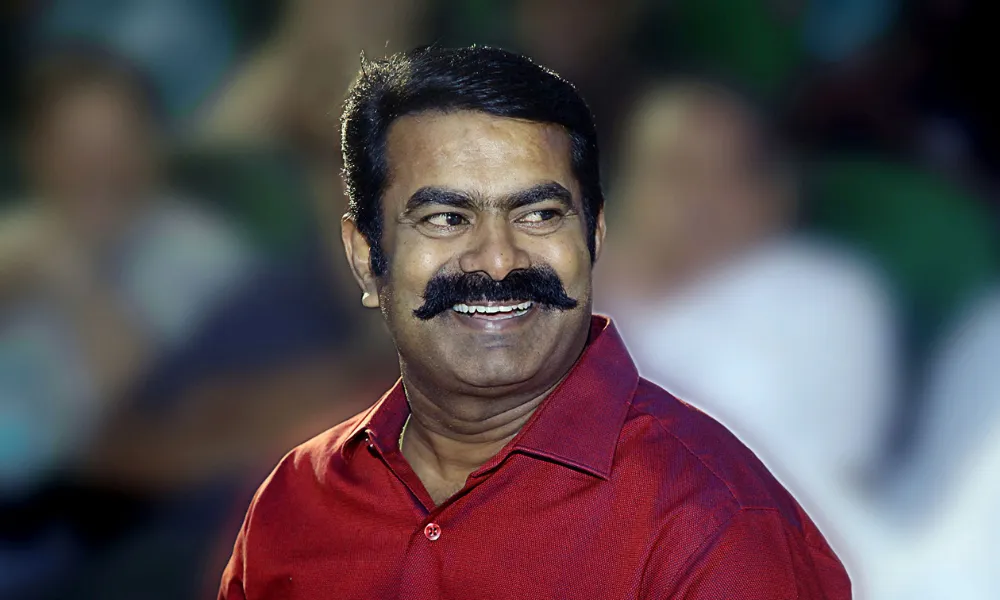
The modern incarnation of NTK emerged on 18 May 2010 when filmmaker turned politician Seeman announced the revival of the party. This revival was framed as a continuation of Adithanar original vision adapted to contemporary realities. Seeman leadership brought renewed energy and visibility to NTK. His oratory skills media presence and uncompromising stance on Tamil issues resonated with a new generation of voters. The revival also coincided with increased global attention on Tamil issues particularly in the context of Sri Lankan Tamil struggles.
Ideological Framework Tamil Identity Beyond Dravidianism
One of NTK most defining characteristics is its rejection of the Dravidian identity paradigm. Instead the party advocates for a purely Tamil identity rooted in language culture and historical continuity. This ideological stance distinguishes NTK from mainstream parties and positions it as a challenger to the established political order. The party argues that Dravidian politics has diluted Tamil identity by subsuming it under a broader linguistic grouping.
Advocacy for Sri Lankan Tamils and Tamil Eelam
NTK has consistently positioned itself as a vocal advocate for the rights of Sri Lankan Tamils. The party supports the idea of Tamil Eelam an independent Tamil state in Sri Lanka. Seeman has openly expressed admiration for Velupillai Prabhakaran the leader of the LTTE a stance that has generated both support and controversy.
Electoral Journey From Margins to Measurable Influence
Since its revival NTK has steadily increased its electoral presence. It contested its first major election in 2011 followed by full scale participation in subsequent elections. In the 2016 Tamil Nadu Assembly elections NTK contested all 234 constituencies securing over 1 percent of the vote share. By the 2019 general elections its vote share had risen to approximately 3.1 percent indicating growing support.
Social Policies and Progressive Positions
Beyond identity politics NTK has articulated positions on various social issues. The party advocates for gender equality often allocating a significant proportion of electoral tickets to women candidates. It has also expressed support for LGBTQ rights and has fielded transgender candidates signaling a progressive stance on social inclusion. Additionally NTK has called for the abolition of the death penalty and emphasized humanitarian approaches to criminal justice.
Environmental and Economic Activism
NTK has been actively involved in environmental issues opposing projects perceived as harmful to Tamil Nadu ecology. The party has protested against infrastructure projects like the Chennai Salem expressway citing environmental concerns. It has also taken positions on economic issues such as opposing the disinvestment of public sector units like Neyveli Lignite Corporation. These interventions highlight NTK broader engagement with governance and policy beyond identity based politics.
Leadership Style and Mass Mobilization Strategies
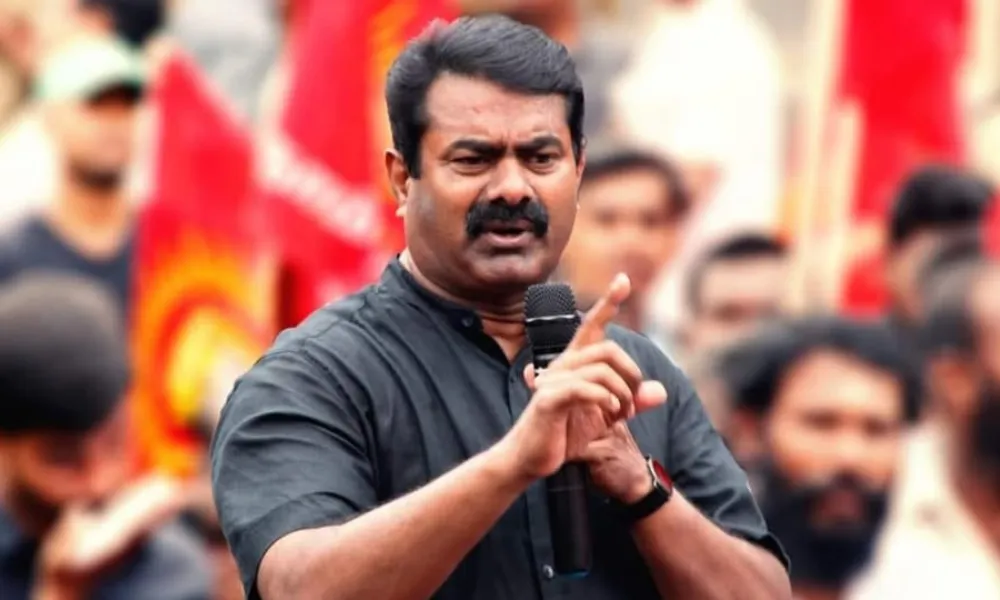
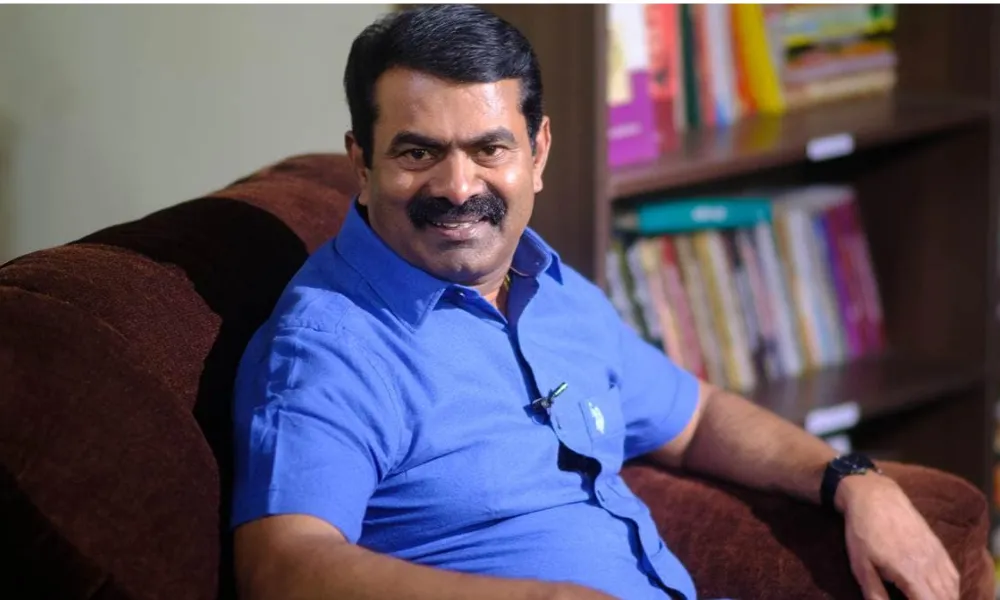
Seeman leadership style is characterized by direct communication emotional appeal and grassroots mobilization. His speeches often blend historical references with contemporary issues creating a compelling narrative for supporters. The party relies heavily on youth engagement and digital platforms enabling it to reach a wider audience. This approach has helped NTK maintain visibility despite limited electoral success.
Criticism Controversies and Political Challenges
NTK rise has not been without challenges. The party has faced criticism for its strong emphasis on ethnic identity with opponents accusing it of fostering division. Seeman statements on Tamil identity and governance have sparked debates with critics labeling them as exclusionary. Additionally the party support for Tamil Eelam has drawn scrutiny from authorities and political rivals.
The Future Trajectory of NTK in Tamil Nadu Politics
As Tamil Nadu approaches future elections NTK role remains a subject of intense speculation. The party has announced plans to contest independently signaling confidence in its growing support base. Its ability to convert vote share into electoral victories will depend on several factors including alliance strategies grassroots expansion and policy articulation. NTK future trajectory will ultimately be shaped by its capacity to balance ideological purity with political pragmatism.
Facebook Comments







-
 Explore the upcoming Tamil film Maaman - cast, sto...
 -
 Read the ACE (2025) movie review starring Vijay Se...
 -
 Check out Maaman's 1st day box office collection a...
 -
 Explore tourist family reviews for Maaman movie –...
Popular Posts
Vote / Poll
Recent Posts




Recommended Posts

-
 Discover the best schools in Nagercoil f...
 -
 Discover the top-rated preschools in Nag...
 -
 Explore the best schools in Nagercoil th...

Comment / Reply From