Who Was the Woman Officer Who Halted Anand?
December 09, 2025

Who Was the Woman Police Official Who Halted Anand?
The question on many people's minds after a recent political gathering in Puducherry has been simple yet powerful: who was the woman police official who halted Anand? The officer at the centre of this breaking news story is Senior Superintendent of Police (SSP) Isha Singh, an IPS officer with a strong background in law, human rights work and anti-corruption investigations. Her firm stand at TVK chief Vijay's first major event in Puducherry has turned into a widely discussed episode across social media, news updates and public debates about law and order.
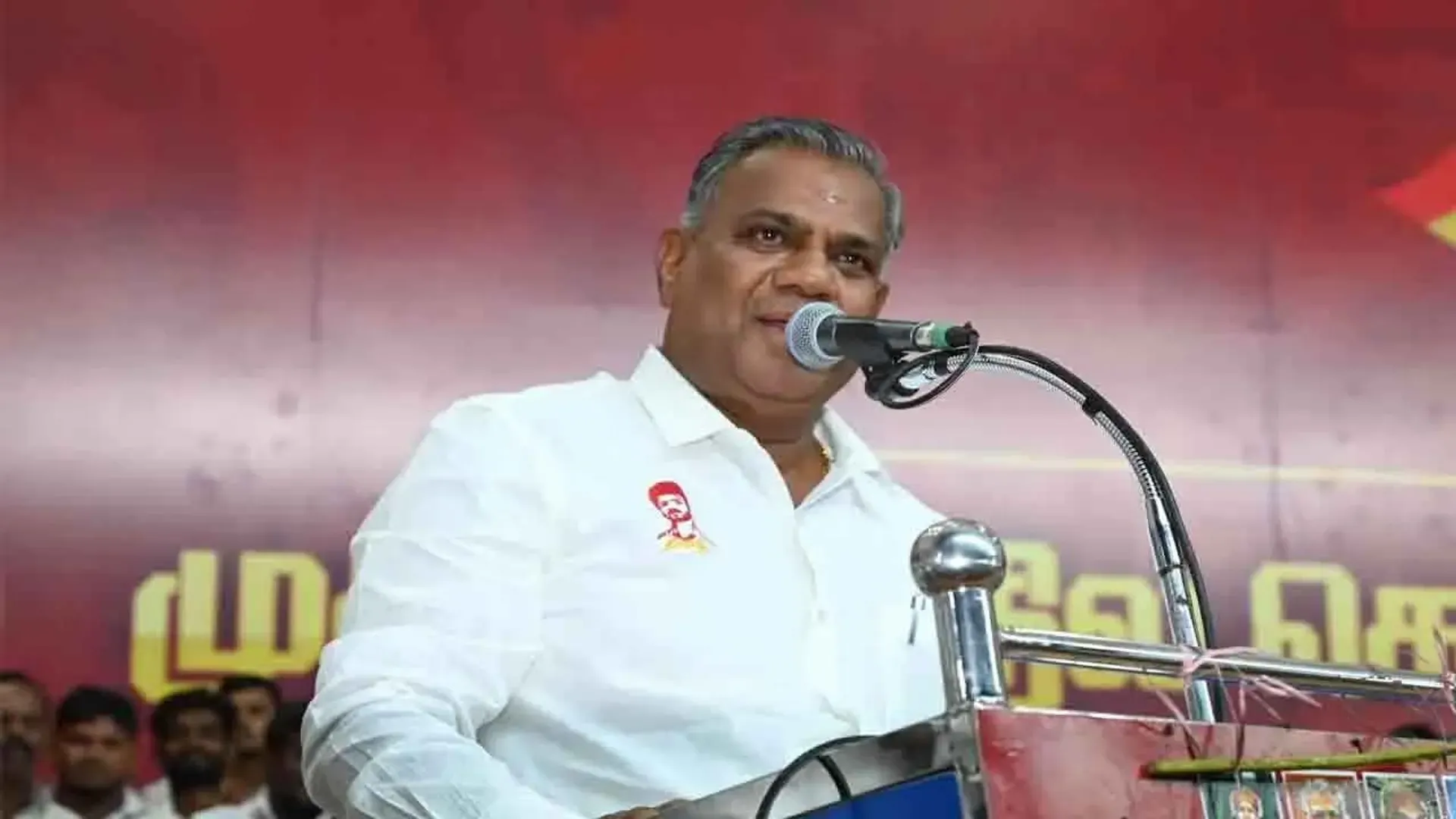
During the public function, TVK General Secretary Anand is reported to have tried to bring in supporters without valid authorization slips. In response, SSP Isha Singh stopped the attempt at the entrance, firmly insisting that only those with proper passes would be allowed inside. The short exchange, captured on video and shared widely online, has now become a trending report, with many praising her strong and uncompromising enforcement of the rules. In an environment where influential political figures often expect special treatment, this moment has stood out as a rare example of a police officer publicly placing rules above pressure.

Crowd Limits, Pass System and Tense Scenes at the Venue
The event where SSP Isha Singh halted Anand was not an ordinary gathering. It was described as TVK chief Vijay's first major public meeting in Puducherry after the organization was formed, and naturally it attracted huge public attention. Authorities, however, had laid out clear conditions: no one from Tamil Nadu was to attend the public forum without permission, and the overall crowd limit was capped at around 5,000 people. To manage this, a pass or authorization slip system was introduced, meant to ensure that only approved participants would enter the venue.
On the ground, things did not unfold smoothly. As supporters poured in, many did so without the required passes. They surrounded the entrance area and attempted to move closer to the stage, hoping to gain access despite the restrictions. In this tense atmosphere, TVK General Secretary Anand and several district secretaries are said to have requested that some of these members be allowed inside even without proper authorization. It was at this crucial moment that SSP Isha Singh drew a clear line, choosing to uphold the instructions and security protocol rather than yield to pressure.
According to accounts of the incident, she refused to allow the group without passes to enter, stressing that the rules were not negotiable. She reportedly told Anand not to instruct her on how to do her job and invoked the memory of lives lost in previous situations linked to crowd mismanagement and unsafe practices. Her words, tone and body language resonated with many viewers when the video surfaced online, turning what might have been a routine law-and-order intervention into a viral news moment and a symbol of firm policing.
SSP Isha Singh: From Legal Activism to Police Leadership

The woman police officer who halted Anand is not just another face in uniform. SSP Isha Singh has a rich personal and professional history rooted in law, public interest work and a deep sense of justice. She was born in Maharashtra into a family closely connected to the Indian Police Service. Both her paternal grandfather and her father served as IPS officers, giving her an early, direct view of what it means to work inside the system and face institutional pressures while trying to remain honest.
Her father, Y. P. Singh, is described as having been sidelined after pursuing sensitive corruption-related investigations. Disillusioned by the consequences of doing his duty with integrity, he chose to take voluntary retirement from the service in 2004. For a young Isha, this episode appears to have left a strong mark. Rather than pushing her away from public service, it strengthened her determination to pursue a path where she could work to ensure that the law is applied fairly, regardless of who is in front of her - an ordinary worker or a powerful political figure.
Before joining the police, she studied law at the National School of Law, one of the country's most respected institutions for legal education. She later practiced as a lawyer in the Bombay High Court, where she focused on issues impacting marginalized and vulnerable communities. Her legal background set the foundation for her approach as an IPS officer: deeply aware of rights, constitutional values and the importance of due process.
Human Rights Work and Fight for Sanitation Workers' Families
One of the most notable chapters in SSP Isha Singh's journey came during her years as a practising lawyer. She took up cases on behalf of some of the poorest and most invisible workers in urban India: sanitation workers who risk their lives daily in unsafe environments. After several sanitation workers reportedly died due to toxic gas inhalation while on duty, she intervened to secure justice for their surviving family members, especially their wives who were left without support.
She moved the Bombay High Court seeking compensation for these families, arguing that their lives and labor had been undervalued for too long. The legal action resulted in financial relief, with compensation reported at around ten lakh rupees for the affected women. Beyond the money, the case sent a strong signal that the lives of workers in dangerous, underpaid jobs cannot be treated as expendable. This experience also reinforced her belief that the law can be a powerful tool to challenge social indifference and institutional neglect when used with courage and persistence.
It is this same background - of fighting for those without a voice and demanding accountability - that gives additional meaning to the recent breaking news moment in Puducherry. The woman police officer who halted Anand is the same person who once stood in court on behalf of widows of sanitation workers, insisting that their suffering be recognized and compensated under the law.
“Everyone Is Equal Before the Law”: A Principle in Action
In public talks, SSP Isha Singh has spoken about her experiences meeting two very different types of people while working as a lawyer: on one side, the wives of laborers who died in hazardous conditions and were often ignored by society; on the other, powerful individuals who seemed able to bend systems and outcomes in their favour. In theory, the law treats all citizens equally. In reality, as she observed, those with money, influence or political connections often have greater access to justice, while the poor struggle even to be heard.
She has emphasized that the legal system, at its core, is built on the promise of equality before law. Yet this equality exists clearly in the text of statutes and constitutional provisions, while the lived experience on the ground is very different. Her decision to become an IPS officer was shaped by a desire to move into a position where she could directly influence how the law is implemented in day-to-day situations, whether at a protest, a public gathering or a high-stakes political event.
The images and clips from the Puducherry event show this principle in action. When Anand and others tried to push for exceptions in favour of their supporters, she refused to dilute the rules. Her response signalled that the crowd limits and pass system applied equally to everyone, regardless of rank inside the party. For many viewers, this felt like a rare moment where the idea of “everyone is equal before the law” was not just a constitutional slogan, but a real-time decision taken in front of cameras and hundreds of party workers.
Viral Video, Online Reactions and Public Debate
In the age of smartphones and instant sharing, it took very little time for the footage of the confrontation to spread. Within hours, the woman police officer who halted Anand had become a trending search phrase, with users wanting to know who she was, what exactly had happened and why she spoke so sharply. Many praised her for standing her ground and refusing to allow political pressure to override written instructions. Supporters described her as a role model for young officers, especially women joining the police and civil services.
The incident also sparked a wider conversation about crowd control, safety and accountability at mass political meetings. In a country where stampedes and overcrowding have, in the past, led to tragic loss of life, the reminder that “many people have died because of you” - a line linked to her response - resonated with audiences. It underlined the reality that bending rules for short-term convenience can have permanent and irreversible consequences when thousands gather in tightly packed spaces without proper management.
At the same time, the exchange has encouraged fresh debate on the relationship between political parties and the police force. While some argued that the officer's tone was too harsh, many more felt that a firm, clear stance is precisely what is needed to ensure that security protocols are respected, no matter who is asking for exceptions. The breaking news angle here is not just about a single confrontation, but about what it reveals regarding power dynamics, institutional independence and the daily challenges faced by officers tasked with implementing orders on the ground.
Anti-Corruption Posting and Rise to Senior Superintendent of Police
Long before the Puducherry event made her name trend in news updates, Isha Singh had already spent time in demanding roles within the police structure. She previously served as Superintendent of Police in the Anti-Corruption Bureau of Puducherry, a posting that typically involves probing sensitive cases and dealing with allegations of misconduct in public offices. Such positions often require a combination of discretion, independence and a strong capacity to withstand interference.
Recently, she was promoted to the rank of Senior Superintendent of Police (SSP), a sign that her work and performance had earned recognition within the system. It was in this capacity that she was deployed to handle security arrangements at TVK chief Vijay's gathering. As SSP on duty, she carried responsibility not just for the safety of the leader, but also for the thousands of ordinary people who came to attend, the officers stationed across the venue and the overall enforcement of the conditions laid down by the authorities.
The way she handled the situation at the gate - insisting that passes were mandatory and directly confronting a senior party functionary who tried to sidestep the restrictions - reflects the same no-nonsense approach that is often required in anti-corruption work. For many observers, the episode offered a rare glimpse into how an officer with both legal training and field experience responds under pressure in a high-visibility setting.
A Symbol of Firm Policing and Women's Leadership in Uniform
The story of the woman police officer who halted Anand has also become part of a larger narrative about the role of women in policing and public life. Scenes of a woman officer speaking firmly to male political leaders, in front of their supporters, are still not very common in public imagination. That is one reason why the video attracted so much attention - it captured a moment where authority, professionalism and gender intersected in a powerful way.
For young aspirants considering careers in the civil services, this latest development offers a live example of what it can mean to wear the uniform with conviction. SSP Isha Singh's legal background, her previous work for sanitation workers' families, her exposure to anti-corruption investigations and her belief in equality before law all came together at the Puducherry venue, in a split-second decision at the gate. She could have quietly allowed an exception and avoided confrontation. Instead, she chose to uphold written orders in full view of cameras and crowds.
As discussions, reports and analyses continue to circulate, one central fact remains clear: when supporters tried to bypass the rules at a high-profile political event, it was SSP Isha Singh - the woman police officer who halted Anand - who stood her ground and ensured that law and order, rather than pressure and influence, guided the outcome at the entrance gate.
AD
Comment / Reply From
No comments yet. Be the first to comment!







AD
AD