Dementia May Start in Feet, Not Brain: Neurologist

Dementia May Start in the Feet, Not the Brain: Neurologist Explains
A groundbreaking perspective from a leading neurosurgeon at the All India Institute of Medical Sciences (AIIMS), Delhi, suggests that dementia, commonly associated with memory loss, may manifest its earliest signs in the feet rather than the brain. Dr. Arun L. Nayak has highlighted a significant connection between walking patterns and cognitive health, emphasizing that changes in gait could serve as an early warning sign of dementia. This revelation challenges traditional views of dementia and underscores the intricate link between physical movement and brain function, offering new insights into early detection and prevention strategies.
The Brain-Feet Connection: A New Perspective on Dementia
Dr. Nayak’s assertion that “dementia may start in the feet, not the mind” has sparked significant interest in the medical community. According to a 2022 study cited by the Times of India, older adults who exhibit a slower walking speed are at a higher risk of experiencing reduced brain volume and early cognitive decline, which are precursors to dementia. This finding suggests that a slow gait may reflect underlying issues in brain function, as walking is a complex activity that requires coordination between multiple brain regions and the body’s musculoskeletal system.
Walking is far more than a simple physical act; it involves a sophisticated interplay between the brain and the body. The frontal lobe is responsible for planning movements, the cerebellum ensures balance and coordination, and the spinal cord transmits signals to the muscles. Simultaneously, sensory feedback from the feet informs the brain about the body’s position and movement, creating a continuous loop of communication. When this loop is disrupted—evidenced by a slower, uneven, or unsteady gait—it may indicate early neurological changes associated with dementia.
Why Walking Speed Matters
The connection between walking speed and brain health is rooted in the brain’s reliance on physical activity to maintain optimal function. Walking promotes the flow of oxygen-rich blood to the brain, which nourishes neurons and supports cognitive processes. Conversely, prolonged periods of inactivity can reduce blood flow, leading to brain fog, impaired cognitive function, and, over time, brain shrinkage. A slow or altered gait may signal that the brain is not receiving adequate stimulation or that neurological pathways are beginning to deteriorate, both of which are early indicators of dementia.
Medical research supports this link, with studies showing that gait abnormalities, such as shuffling steps or difficulty initiating movement, can precede noticeable cognitive symptoms by years. For instance, a study published in 2016 by the University of California at Irvine found that poor physical performance, including balance and walking difficulties, was associated with an increased risk of dementia in adults over 90. These findings highlight the importance of monitoring physical changes as potential early markers of cognitive decline.
The Role of Blood Flow and Brain Health
Physical activity, particularly walking, plays a crucial role in maintaining healthy blood flow to the brain. Each step stimulates circulation, delivering oxygen and nutrients that support neuronal health and flush out toxins that can impair brain function. Sedentary behavior, on the other hand, restricts this vital process, leading to reduced cognitive clarity and increased risk of neurodegenerative conditions. Regular movement, even something as simple as a short walk around the house, can counteract these effects and promote brain health.
Walking also stimulates the production of Brain-Derived Neurotrophic Factor (BDNF), a protein often referred to as the “fertilizer” for the brain. BDNF supports the growth, survival, and connectivity of brain cells, enhancing memory and cognitive function. Research has shown that regular physical activity increases BDNF levels, which can help protect against cognitive decline and improve mental acuity. By maintaining an active lifestyle, individuals can bolster their brain’s resilience against conditions like dementia.
Strong Legs, Strong Brain
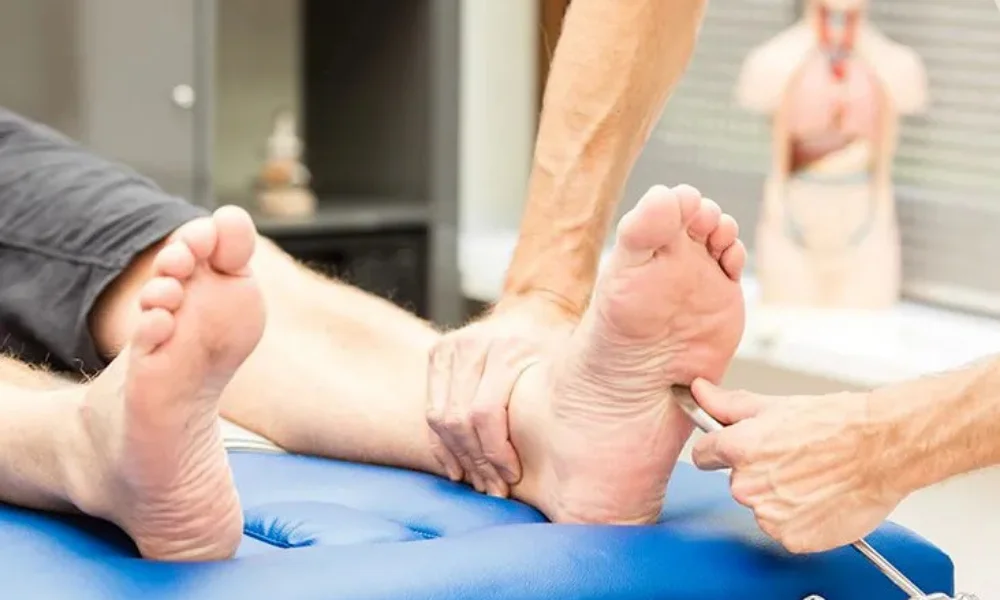
Dr. Nayak emphasizes that muscle strength in the legs is a critical indicator of brain health. Weak legs can signal not only mobility issues but also underlying neurological problems that may contribute to cognitive decline. Strengthening exercises, such as resistance training or balance-focused activities like yoga or tai chi, can enhance leg strength and improve brain function. These exercises promote better coordination and stability, reducing the risk of falls and supporting overall cognitive health.
For individuals at risk of dementia, incorporating regular physical activity into their daily routine can be a proactive step toward prevention. Simple activities like walking, leg lifts, or ankle rotations can improve muscle strength and stimulate brain activity. These exercises are accessible to most people and can be performed at home, making them an effective strategy for maintaining both physical and cognitive health.
Dual-Task Walking: A Brain-Boosting Strategy
One innovative approach recommended by medical experts is dual-task walking, which involves combining physical movement with cognitive challenges. For example, walking while talking, counting backwards, or solving simple puzzles engages both the brain and body simultaneously. This method enhances cognitive function by stimulating neural pathways and improving coordination between motor and cognitive processes. Studies have shown that dual-task training can improve gait stability and cognitive performance in older adults, making it a valuable tool for dementia prevention.
Dual-task walking is particularly effective because it mimics real-world scenarios where individuals must process multiple stimuli at once, such as navigating a busy street while holding a conversation. By practicing these activities regularly, individuals can strengthen the brain’s ability to multitask, potentially delaying the onset of cognitive decline. This approach is simple to implement and can be tailored to an individual’s fitness level, making it an accessible option for people of all ages.
Early Detection and Prevention
The link between gait changes and dementia offers new opportunities for early detection and intervention. By monitoring walking patterns, healthcare providers can identify individuals at risk of cognitive decline before traditional symptoms like memory loss become apparent. Simple assessments, such as measuring walking speed or observing gait stability, can be incorporated into routine medical checkups to screen for early signs of dementia. These non-invasive tests are cost-effective and can provide valuable insights into an individual’s neurological health.
Preventive measures, such as regular physical activity and targeted exercises, can also play a significant role in reducing dementia risk. Lifestyle factors like maintaining a healthy diet, staying socially active, and managing cardiovascular health further support brain function and complement the benefits of physical activity. By adopting these habits, individuals can take proactive steps to protect their cognitive health and improve their quality of life.
Implications for Future Research
The connection between gait and dementia opens new avenues for research into early detection and treatment. Scientists are exploring advanced technologies, such as wearable devices and gait analysis tools, to monitor walking patterns and detect subtle changes that may indicate cognitive decline. These innovations could lead to more precise diagnostic methods and personalized interventions, improving outcomes for individuals at risk of dementia.
Additionally, further studies are needed to understand the precise mechanisms linking gait changes to brain health. Factors such as inflammation, oxidative stress, and neurodegenerative processes may contribute to both gait abnormalities and cognitive decline, and unraveling these connections could lead to new therapeutic approaches. By integrating physical and cognitive assessments, researchers can develop comprehensive strategies to prevent and manage dementia effectively.
Disclaimer: This article is for informational purposes only and is not intended to be medical advice. For any medical condition, always seek the advice of a qualified physician.
Facebook Comments














-
 Explore the upcoming Tamil film Maaman - cast, sto...
 -
 Read the ACE (2025) movie review starring Vijay Se...
 -
 Check out Maaman's 1st day box office collection a...
 -
 Explore tourist family reviews for Maaman movie –...
Popular Posts
Vote / Poll
Recent Posts




Recommended Posts

-
 Discover the best schools in Nagercoil f...
 -
 Discover the top-rated preschools in Nag...
 -
 Explore the best schools in Nagercoil th...

Comment / Reply From